Month 4 after Hair Transplant: What to Expect + Real Results
The month four after hair transplant is the moment most patients have been waiting for and the moment many are not fully prepared for. Following the anxiety caused by the shock loss experienced in the second and third months, the month 4 after hair transplant marks a true milestone. New hair begins to grow, the new hair strengthens and takes form, the scalp’s sebum levels balance out, and the results of your surgery begin to become noticeable for the first time. However, the month 4 after hair transplant also brings with it a unique set of questions, disappointments, and misunderstandings.
This guide explains exactly what is happening inside your follicles on day 120, what you should and shouldn’t do, and what a realistic picture of progress looks like at month 4 following a hair restoration.
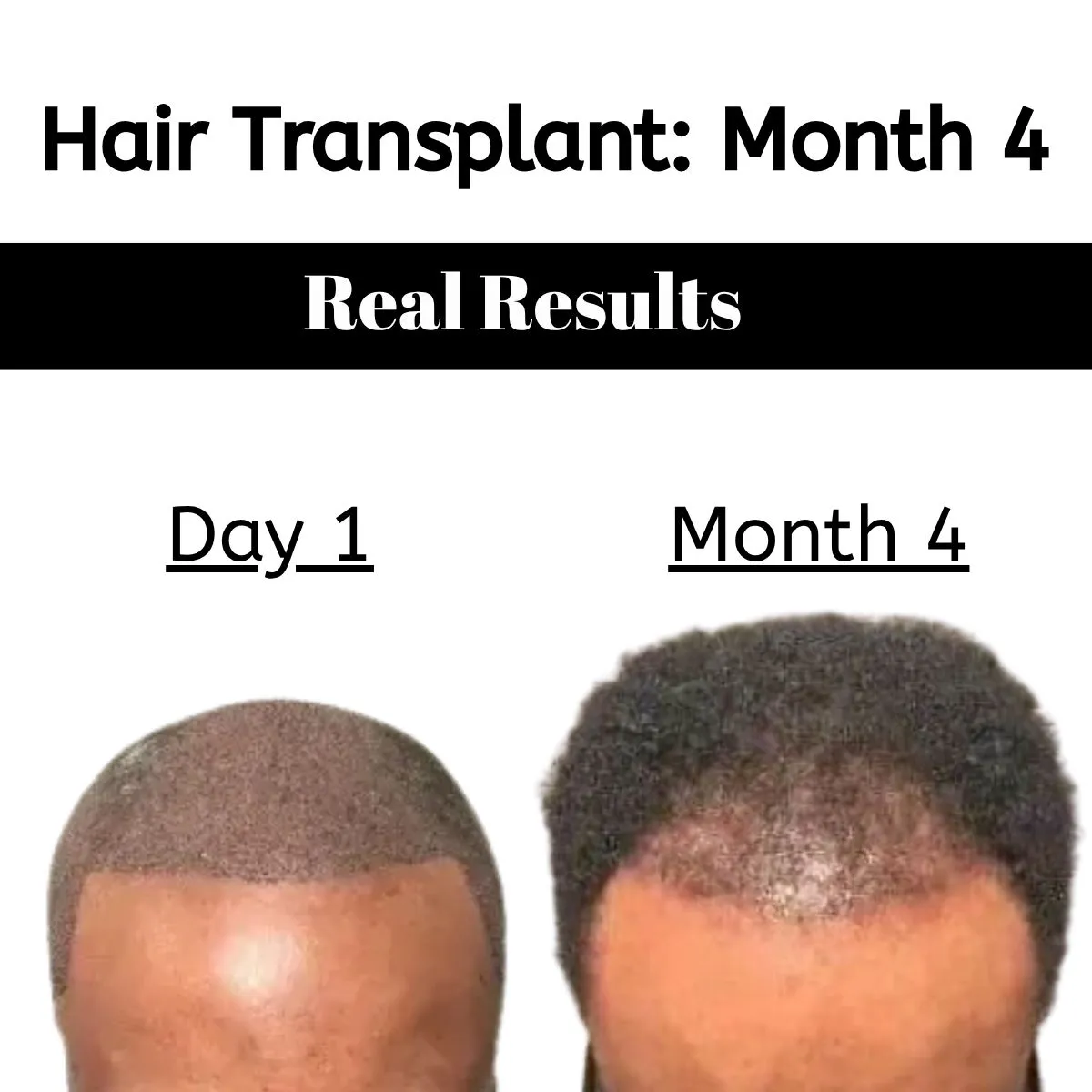
What Is Happening to Your Hair at Month 4 after Hair Transplant?
By days 90–150, most of the transplanted follicles have completed shock transplanted hair loss and have re-entered the active growth. This is not a sudden transition; it is a gradual renewal process that progresses follicle by follicle.
Not all grafts wake up at the same time; therefore, hair density appears patchy and uneven during month 4 after hair transplant. Please rest assured that this is normal. It may be concerning to see some areas showing results from the hair transplant while others show no change. They will begin to return to a normal state after 1 to 3 months. Just remember, it’s still very early.
By month 4 after hair transplant, the scalp enters a productive phase where the following physiological changes occur:
After the shedding phase, your dormant hair follicles are now waking up.
New permanent hairs are starting to emerge
The sebaceous glands at the hair roots are starting to function again. Your scalp is becoming more supple and hydrated.
The tissues in the donor area are fully healing. The numbness and tightness at the back of your head are resolving.
A realistic picture of month 4
Has it been four months since your hair transplant? Don’t be misled, you haven’t seen the final results yet. In fact, what you see right now is just the beginning. Your hair is in the earliest stage of its growth cycle. So, it’s fine, soft, and sparse. This appearance doesn’t reflect the true density, texture, or coverage you will have soon.
- 15–30% of transplanted hairs are visible at the surface by month 4 after hair transplant.
- New growth is usually concentrated in certain zones.
- The hairline area tends to show earlier growth than the crown, which lags by four to six weeks.
- Hairs may not be visible in photographs, even when they are clearly visible in person.
Track Your Growth
If you need a growth timeline to track your recovery after a hair transplant, we invite you to check out our Hair Transplant Timeline — First Day to One Year guide. You can follow your hair transplant progress month-by-month and add the Perseus post-hair transplant products you need to your cart.
View Timeline Guide →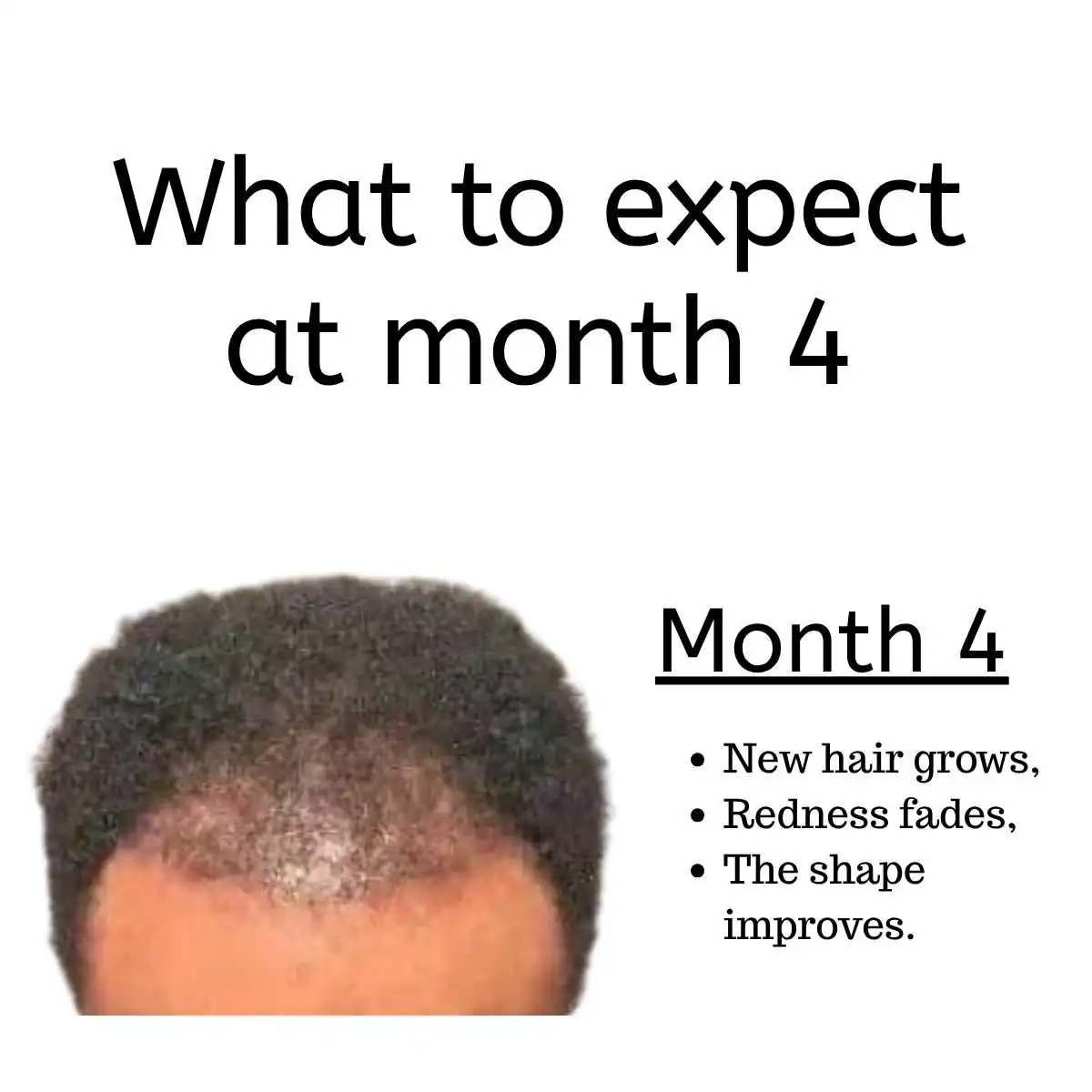
How to Care for Your Hair at Month 4
The time has come to shift from simply protecting your hair to a plan that supports future hair growth and scalp health.
Washing
You can wash your hair normally by month four after hair transplant, using gentle, high chemical-free foam and shampoo. Harsh commercial shampoos with high pH levels can disrupt the scalp microbiome and slow follicle recovery. Continue using a post-transplant formulated shampoo. Your scalp is not yet back to its pre-surgery state even if it looks like everything okay.
Check out our article on shampoo pH levels to learn about the ideal pH range for shampoo and discover how shampoo ingredients can affect your hair.
Care for the scalp
If you experience itching at month 4, this is not a negative signal. Indeed, new hairs breaking through the skin surface and this creates irritation as they emerge. If you need to soothe your skin, you can apply the Perseus mesotherapy serum with light touches. You can leave it on until your skin absorbs the serum. Yuor follicle openings are still sensitive so do not use prodocts with alcohol, fragnances, or any harsh preservatives & chemicals.
Month four is an excellent time to continue nourishing care serums.
Perseus Recommends
If you're bothered by itching, redness, and poor hair growth in the fourth month, why not try Perseus Nourishing Scalp Care Mesotherapy Serum? It helps relieve itching, subcutaneous acne, and redness while nourishing your new follicles.
Explore Mesotherapy Serum →How to Tell If Month 4 is Going Well
A few good signs to look for in the fourth month:
✓ The appearance of fine, new hair in at least some areas of the recipient site
✓ Occasional scalp itching (a sign of new hair follicle activity)
✓ The donor area is fully healed, with no scarring visible anymore
✓ Redness and sensitivity in the recipient area have subsided
✓ The irregularities observed in the second and third months decrease day-by-day
Signs that warrant a call to your clinic:
– No visible growth whatsoever in any part of the recipient zone by week 18
– Persistent redness, tenderness, or swelling on transplanted scalp tissue.
– Small red pustules that do not resolve within a week (possible folliculitis)
– Any area that looks consistently darker or thicker than surrounding skin (possible cyst formation).
Frequency |
What to Do |
|---|---|
| Every Day | Gentle wash with sulfate-free, pH-balanced shampoo. Apply a lightweight oil or serum to the recipient area. No heat drying air dry or use a diffuser on the lowest setting. |
| Every Other Day | Gentle scalp massage with fingertips (not nails) to support circulation. This can be done during or after washing. |
| Every Two Weeks | Dermaroller-assisted serum application. This is the optimal frequency for most patients at month four enough to stimulate without over-irritating the recovering scalp. |
| Monthly | Photograph your progress in consistent lighting and from consistent angles. Month-to-month photography is the most reliable way to track growth that is too gradual to notice day to day. |
Month 4 after hair transplant with photos
The progress recorded in the 4th month marks a turning point for discovering the visible, noticeable results of hair growth. This is the stage following the most critical phase of the hair transplant, when you begin to enjoy the results. Here are a few photo analyses from the 4th month:
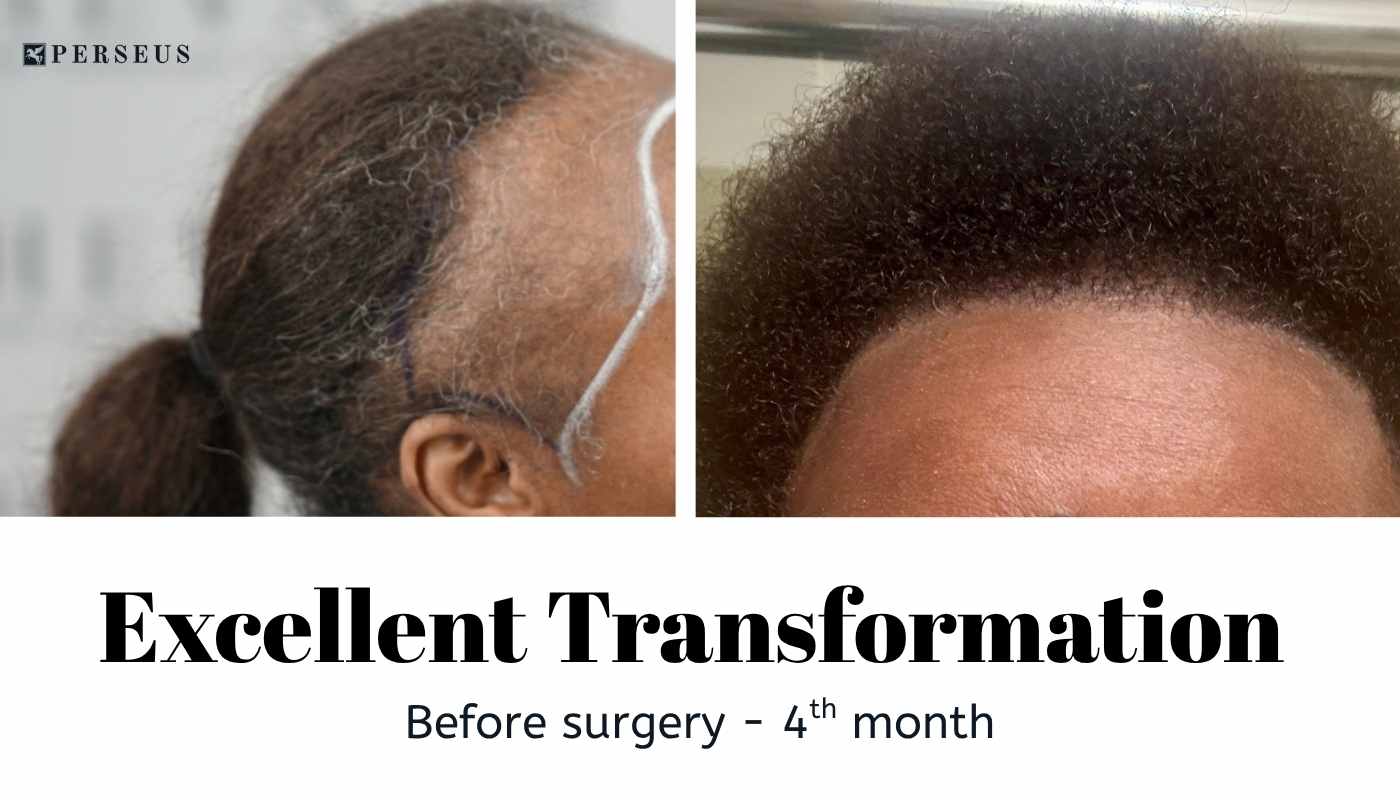
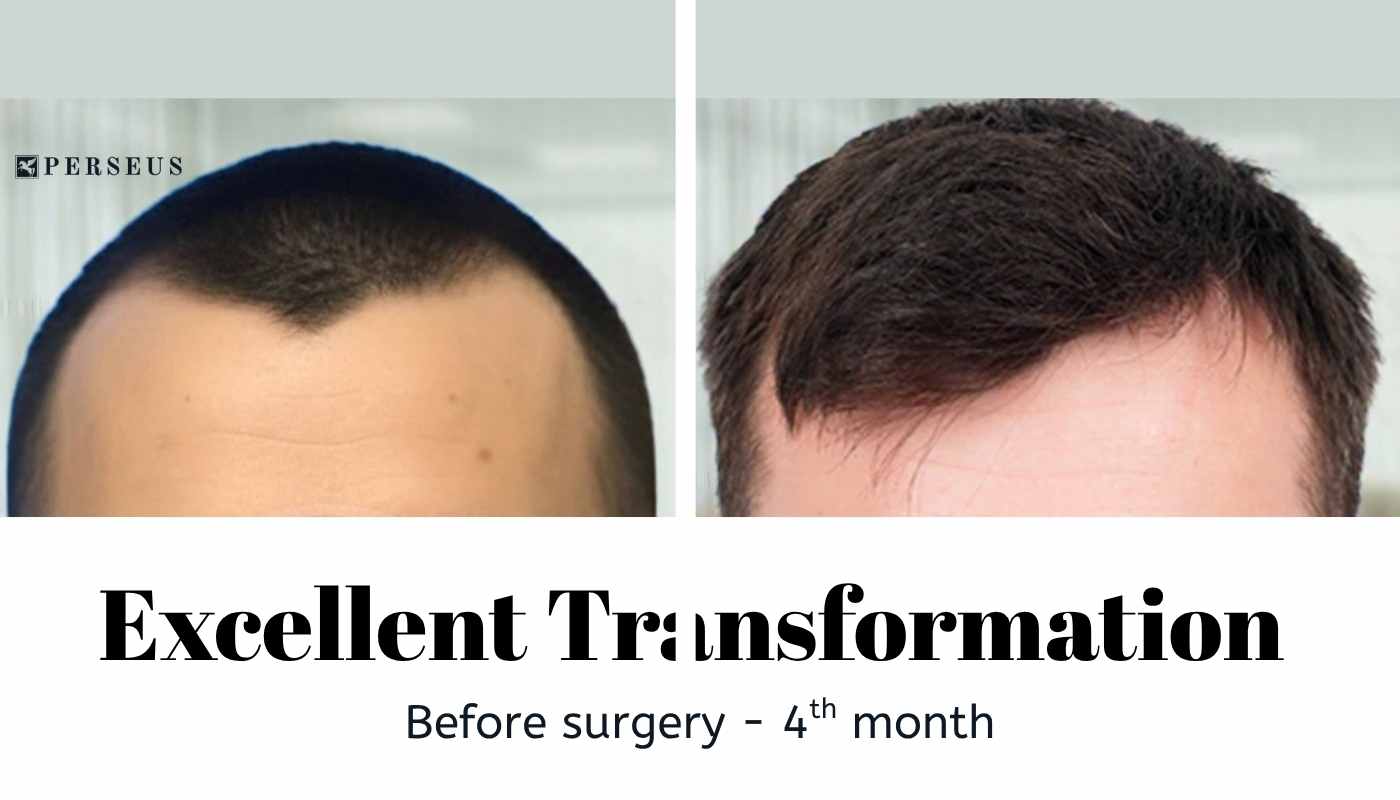
Four months after a hair transplant, this is the point where uncertainty gives way to real progress. Remember that every new strand of hair during this process is a sign that the follicles are taking root healthily and that the true transformation has begun. By continuing to support your current progress with the right care routine, you can step by step reach fuller hair in the coming months.
What to Expect Next: Months 5 and 6
For more information about what to expect during months 5 and 6, take a look at these articles:
FAQs
Is it normal to see very little growth at 4 months?
Yes. Growth timelines vary significantly between patients. Some people see noticeable new hairs as early as month three; others do not see visible growth until month five or even six. The four-month mark is too early to draw any conclusions about your final results.
Can I scratch my head 4 months after a hair transplant?
Scratching during the first 14 days is risky. However, by the fourth month, you no longer need to be as cautious as you were during the first three. Still, avoid scratching as hard as you did before your hair loss surgery. Lightly scratching with the tip of your fingernail won’t cause the grafts to break or move.
Why is my hair transplant patchy at 4 months?
New hair will begin to grow in 3 – 4 months. At first, the new hair may be fine and curly, like body hair; your scalp may itch, and you may not like the way your hair looks. As the hair grows longer, it becomes thicker and more straight. At first, because the hair grows at different rates, the transplant area may appear uneven again during this stage. However, this does not mean you will end up with a uneven result. This patchy-looking hair will decrease significantly by the 6th month.
Can I dye my hair at month 4?
No. Chemical dyes penetrate the hair shaft and can irritate the scalp surface around the emerging follicles. Most specialists recommend waiting until at least month six to eight for any chemical treatment. If coverage is a concern, temporary root sprays designed for sensitive scalps are a safer option.
References
- Bernstein RM, Rassman WR. The aesthetics of follicular transplantation. Dermatol Surg. 1997;23(9):785-799. doi:10.1111/j.1524-4725.1997.tb00419.x
- Parsley WM, Perez-Meza D. Review of factors affecting the growth and survival of follicular grafts. J Cutan Aesthet Surg. 2010;3(2):69-75. doi:10.4103/0974-2077.69014
- Dental Hair Clinic Turkey. Hair Transplant Recovery Timeline: Month-by-Month Guide – A comprehensive clinical roadmap detailing the physiological evolution of grafts, with a specific focus on the aesthetic shifts occurring between the fourth and sixth months.
Recommended Reading
✦ Milestone Recovery: 1 Month After Hair Transplantation: Real Photos — A close look at the critical first 30 days of healing, navigating the shedding phase, and distinguishing normal scalp changes from issues.
✦ Growth Transition: Recovery Progress with Photos – Month 2 — Navigate the 60-day mark safely, track early vellus hair regrowth, and understand the transition phase of your new grafts.
✦ Density Morphing: The 90-Day Reset: Boosting New Hair Density — Three months in is when the real change begins. Find out how to trigger maximum growth during this critical morphing phase.


Receive offers, product alerts, styling inspiration and more. By signing up, you agree to our Privacy Policy.
- info@perseusstyle.com