2 months after hair transplant
Written by Perseus Editorial Team
Last Update: August, 2026
The 2nd month of the hair transplant recovery process is a special month because shock loss typically begins to slow down and the first signs of regrowth start to appear!
2 months after hair transplant surgery is a period of major changes in the scalp and hair growth cycle. These changes will lead to new hair growth and follicle development. By this time, your scalp has left behind the early signs of surgical shock. Nevertheless, it may still be too early to expect robust hair growth, though the redness around the follicles typically begins to fade around month two.
Is Your Hair Growing Back in Month 2?
Two months after a hair transplant, your hair will begin to grow, but it will not yet look the way you want it to. By the beginning of the second month post-transplant, patients often notice the emergence of very fine, vellus-like (peach fuzz) hairs growing in along the temples. These strands are like the soft new hair that grows after laser hair removal.
For people who have had hair restoration surgery for male pattern baldness, it’s great to see new hair growing in areas where it had been thinning. Each time new hair grows, usually every 4 to 6 weeks, the hairs get thicker and denser.
What are the 2nd month signs?
Transplant procedures for hair, whether using FUE (Follicular Unit Extraction) or U-FUE (Unshaven Graft Extraction), follow a well-known healing process. The International Society of Hair Restoration Surgery (ISHRS) says that surgery marks like red sores, scabbing, and crusting usually get better within the first 2-3 weeks (ISHRS, 2023). By the second month, the outside of the skin has healed, and internal follicular activity begins.
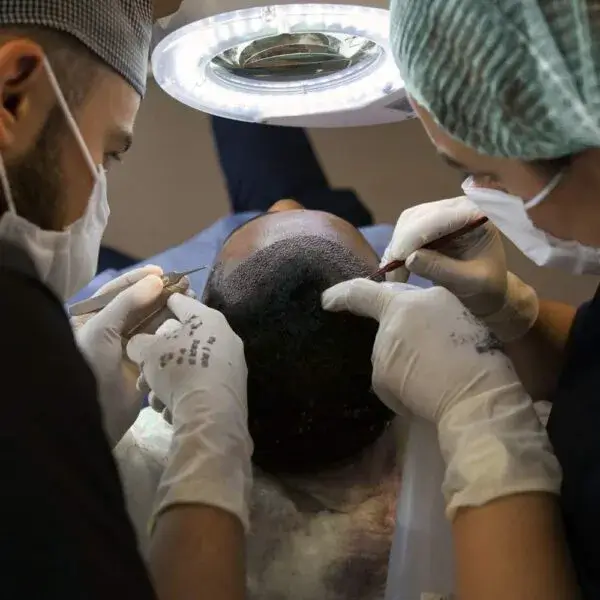
The 60-Day Recovery Timeline: 2 Months After Hair Transplant
| Week | What to expect |
|---|---|
| Week 5 | Mild redness may remain, especially on lighter skin. The donor area is almost healed. Some itching is normal. |
| Week 6 | Shedding may continue. A few fine, pale hairs can appear at the temples or frontal area. |
| Week 7 | The scalp looks calmer, with less redness and flaking. |
| Week 8 | Shedding can peak around now. Any new hairs may start to darken and thicken slightly. |
What are the signs of 2 months after hair transplant?
Whether performed via FUE (Follicular Unit Extraction) or U-FUE (Unshaven Graft Extraction), hair transplant surgery follows a predictable healing timeline. The International Society of Hair Restoration Surgery (ISHRS) notes that surface-level signs like redness, scabs, and crusting generally clear up in the first 2 to 3 weeks. By month two, the surface skin is fully healed, and the real work shifts below the surface as the follicles start getting active.
Common symptoms in month 2: what is normal and what is not?
The surface of your scalp has healed by now, but the follicles underneath are still busy. That activity can cause a few symptoms that look worrying and usually are not.
- Itching and flaking. Mild itching is common while the skin and the small nerves around the grafts recover. Try not to scratch with your nails. Tapping the spot lightly with your fingertips works better, and a saline spray can help if your surgeon recommends one.
- Pimples and folliculitis. Small red bumps can show up in the recipient or donor area, often when a new hair is pushing through the skin. Most clear up on their own within days. If a bump becomes very painful, swollen or keeps growing, call your clinic.
- Numbness or tingling. Some patients feel patches of numbness, tightness or pins and needles. It tends to fade slowly over weeks to months as the nerves settle.
What you can and can’t do in month 2
Daily life is close to normal again, but a few habits still protect the grafts.
What you can usually do
- Exercise lightly. Walking, light cardio and moderate gym sessions are often fine at this stage. Ask your surgeon before going back to heavy training.
- Massage gently. If your surgeon approves, light circular fingertip massage can ease tightness and support blood flow.
- Wash normally. You no longer need the careful tapping method from the first two weeks. A mild, sulfate-free shampoo and a soft touch are enough.
What to avoid for now
- Strong sun. Direct sunlight can leave dark patches on a healing scalp. Wear a loose cap or stay in the shade.
- Saunas, steam rooms, pools and the sea. Heat, chlorine and salt water can irritate the scalp and raise the risk of infection. Wait until your surgeon clears you.
- Electric clippers on the recipient area. Use scissors on the top of your head while the new hairs are still fragile. Clippers are fine for the donor sides if you need them, but check with your surgeon first.

Emotional changes in Month 2
The two-month mark is notoriously testing for your patience. By now, the excitement of the surgery has worn off, the shock loss is fully underway, and the mirror doesn’t show much progress yet.
- Did you know that patients often refer to this period as the ugly duckling stage? If you want to see real-life experiences and how others navigated it, check out the discussions on Reddit ➔
Medical literature backs up just how crucial mental preparation is during this specific window. A review published in PMC (National Library of Medicine) emphasizes that patients who are fully briefed on the psychological and transitional hurdles of early recovery report significantly better long-term coping and satisfaction rates. Knowing the turbulence is temporary makes all the difference.
- Would you like to read the study mentioned above? You can read this open-access academic paper on PMC (PubMed Central) or find the brief summary we prepared for you right here in this Gemini chat.
To keep your mindset steady over the next few weeks, try keeping these anchors in mind:
- Audit, Don’t Obsess: Take weekly photos in the exact same lighting, but resist the urge to scrutinize your reflection multiple times a day.
- Blind Yourself to Others: Online forums are full of outlier cases and hyper-accelerated growth stories. Your scalp is writing its own biological timeline.
- Look at the Horizon: Shift your focus from what’s happening this week to what the area will look like six to twelve months from now.
Ultimately, the psychological arc of a hair transplant mirrors any major body modification: an initial dip in confidence and impatience, which steadily gives way to reassurance and excitement as the new growth breaks through.
When will regrowth start?
Regrowth usually starts around weeks 10 to 12, when thin, fine hairs begin to grow. These hairs will mature over the next several months. Full results can be expected within 11 to 15 months, depending on factors such as genetics, overall health and adherence to post-operative care.

Patients’ concerns in recovery progress – month 2
Within minutes after the hair transplant, red spots, itching and sores appear and it takes more than a week for them to subside. By the 2nd month, however, the scars have almost completely disappeared, unless you have a very light skin color. Although healing continues under the skin, there is no visible wound on the surface.
Although the redness disappears within 1-2 weeks in most patients, some patients may have a persistent redness. Depending on the patient’s healing process and care, the redness will disappear within a few months.
Itching is high in the first weeks. Only after months we expect a 90% reduction. If you have severe itching and it persists, this may be a sign of a fungal infection.
In the 2nd month, your first transplanted hairs will grow and they may be different in texture and size from the others. The angles may look too fake yet, the hair may be too thin and fragile. All of this is very, very normal. As you continue to heal, all the hair will be in harmony with each other.

2-month healing in receding hairline
Men make up 90% of hair transplant patients and 80% of them come for receding hairline problem.
A receding hairline is the most common symptom of Male Pattern Baldness (Androgenic Alopecia) It can be quite uncomfortable and can make men look older than they are. For this reason, most men turn to hair restoration procedures as the most permanent treatment.
The patient in the photo was treated for a regressed hairline. The patient is in the beginning of second month.
As you can see, his first hair has grown, albeit sparse and thin. The dark color of the scalp has not yet completely healed, but there are no visible scars. Although the first hairs are feather-like, the newly growing hair follicles in the center front area appear to be quite thick.
As you continue to heal, the first hair that grows may start to look too aligned and luxuriant. This is quite normal, it will reach a more natural volume over time.
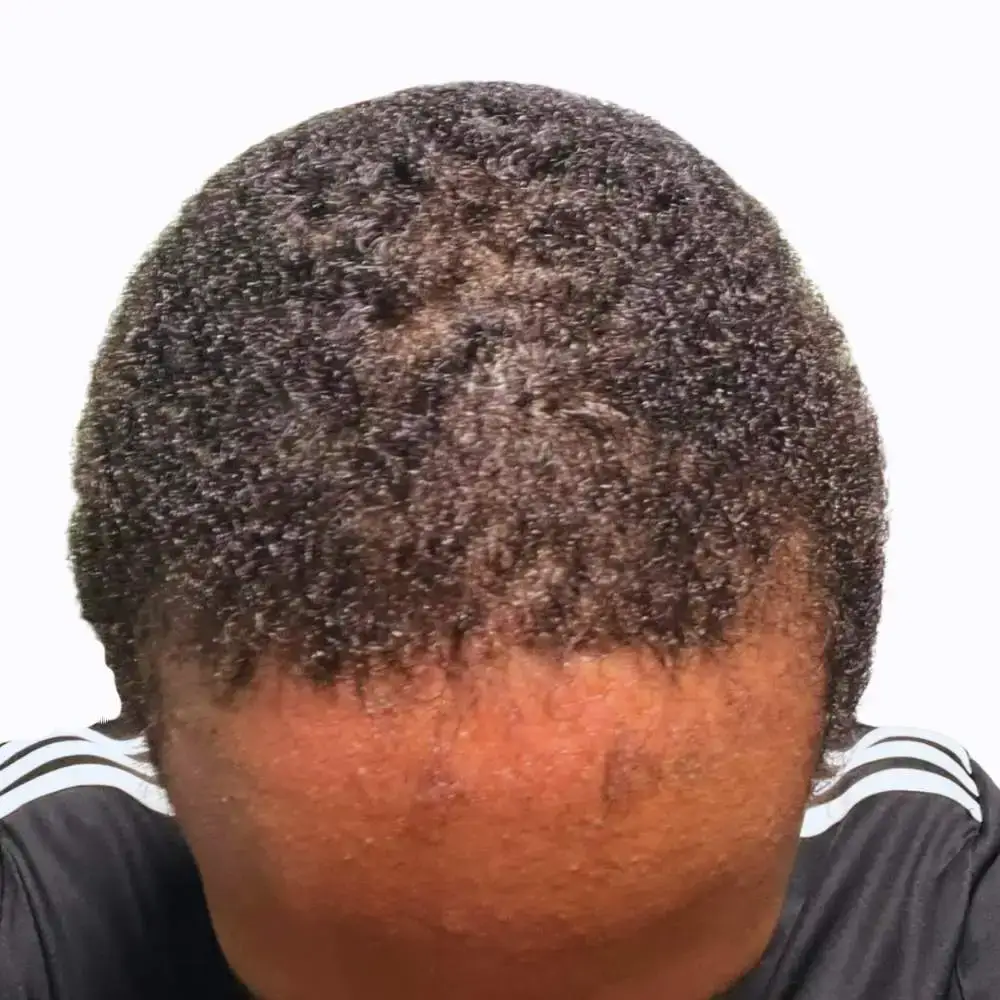
How is the 2nd month progress in Afro-American Hair Transplant?
During the second month after a hair transplant, African-American patients may undergo a somewhat different healing process compared to those with lighter skin due to their skin and hair characteristics.
Donor area scarring: Healing in the donor area may take longer and scars may be more visible due to tighter scalp elasticity.
Higher risk of keloids: Afro-Caribbean skin is more prone to keloid scarring, which is raised scar tissue, especially around the donor or hairline area.
Pigmentation changes: Dark spots (hyperpigmentation) or lighter patches (hypopigmentation) may temporarily emerge as the scalp recovers, which is less prevalent in fair-skinned patients.
Curly Hair Challenges: As new hairs start to grow, they may be coiled, which can cause ingrown hairs.
What should you do 2 months after hair transplantation?
While the most intensive aftercare usually takes place in the first month, the way you look after your implant during the second month can have a long-term impact.
Washing hair in recovery progress month 2
Use Perseus post-transplant shampoo, which is gentle and sulfate-free, to avoid irritation. Avoid rubbing too hard; instead, pat dry with a microfibre towel.
Treatment options: Topical & Oral
So, some clinics are saying you should start taking minoxidil or carry on with finasteride, to help with the hair you’ve already got and to make more grow. But whatever you do, you should always check with your surgeon before you start taking any medication.
Light massages with your fingertips
In the 2nd month, after your first hair grows, you can do light massages on your transplanted areas. Light scalp massage can promote blood circulation after the initial healing.
In addition, keep your hair away from excessive chemicals and heat. For the first 3 months of recovery, you can get our Perseus 3-month hair care set. This kit contains unique restorative products such as shampoo, mousse, serum, hair vitamin and hair oil that you will need throughout the hair transplant process. We wish you the healthiest healing process…
When Should You Contact Your Doctor 2 Months After Hair Transplant?
Get in touch with your surgeon if you notice:
- Yellow or green discharge, or a bad smell from the scalp
- Pain that is getting worse instead of better
- Redness that spreads, especially with fever
- Large, persistent bumps or crusting
- Strong itching that doesn’t ease, with flaking or discharge
FAQs about 2 Months after Hair Transplant
I went swimming in the sea 2 months after my hair transplant. Should I be concerned?
Unfortunately, it is still too early to swim. If your scalp has completely healed, there is no scabbing or open wounds, and you do not feel any burning or irritation, the risk is generally low.
However, sea water can dry out the scalp and disrupt its natural balance. If you experience redness, itching, discharge, or increased sensitivity afterwards, you should consult a professional.
Is it possible to identify failed grafts a couple months after hair transplantation?
No, it is not reliable to assess graft failure within just a couple of months.
At this stage, most of the transplanted hairs have entered the resting phase and have shed. The follicles remain alive under the skin and prepare for new growth. What appears to be graft loss is usually a normal part of the healing cycle.
True graft survival can only be assessed 6 to 9 months after the procedure.
I notice a bad smell or yellow discharge from my scalp 2 months after surgery. What does this mean?
This is not normal and should be taken seriously. Possible causes include bacterial infection, folliculitis, retained crusts, or early tissue necrosis. These symptoms require immediate medical evaluation.
Do not attempt self-treatment or cover the area. Contact your clinic ASAP.
How does shock loss progress in the second month?
Throughout the second month, shock loss gradually decreases (it may not be finished yet; it could continue into the third month as well) and new hair growth will be observed. The rate of hair growth may be irregular and uneven. Hair that has not fallen during the shock loss period usually seems weaker.
How much of the healing process will have been completed by the second month?
The second month is still considered the early stages of the recovery process. The 60th day represents only 10-15% of the recovery. You have a long road ahead of you, and typically you will experience the most rapid progress between the 5th and 9th months.
Can I cut my hair or wear a cap at 2 months?
Often yes, if the scalp is healed, but check with your surgeon. Choose a loose, clean cap and avoid anything tight.
Is early growth possible at 2 months?
Yes for some, especially those on medication or PRP, but most people see growth at months 3 to 4.
Is it normal for my hair transplant to look worse at 2 months?
It’s normal. Shed hairs leave the area looking thinner than before surgery, and the new hairs have not come through yet. It is a normal part of the growth cycle and usually does not mean anything is wrong. If you also have pain, discharge or spreading redness, contact your clinic.
Citations
Kerure AS, Patwardhan N. Complications in Hair Transplantation. Journal of Cutaneous and Aesthetic Surgery. 2018;11(4):182-189. doi:10.4103/JCAS.JCAS_125_18
Gaster J. Exploring the Potential Links between Telogen Effluvium, Alopecia Areata, and General Anesthesia: A Narrative Review. Cureus. 2026;18(1):e12936300. doi:10.7759/cureus.12936300
Bose S, Saini S. Longevity of Hair Follicles after Follicular Unit Transplant Surgery: A 4-Year Follow-up Study. International Journal of Trichology. 2021;13(1):1-5. doi:10.4103/ijt.ijt_101_20
Aksoz S, et al. Complications in follicular unit excision hair transplantation: current evidence and practical approaches. PMC PubMed Central. 2026;12909172. Accessed April 6, 2026. https://pmc.ncbi.nlm.nih.gov/articles/PMC12909172/
Recommended Reading
✦ Follicle Fusion: The 12-Month Growth Map: Tracking Follicle Fusion — A step-by-step look at how your new hair attaches and grows. Learn what to expect from day 1 to a full year of recovery.
✦ Graft Safety: Graft Safety: Avoiding Silent Scalp Stressors — Stop hidden environmental damage before it starts. We reveal the subtle habits that could be hurting your transplant results.
✦ Density Boost: The 90-Day Reset: Boosting New Hair Density — Three months in is when the real change begins. Find out how to trigger maximum growth during this critical morphing phase.
✦ The 90-Day Milestone: 3 Months After Hair Transplant: What’s Next? — Transitioning out of the early healing phase. Discover how dormant follicles start sprouting and what steps to take as active regrowth officially begins.
✦ The Texture Shift: Month 4 After Hair Transplant — Watching the early sprouts thicken. Learn how hair texture changes during this phase and how to properly care for emerging, delicate shafts.
✦ The Coverage Wave: 5 Months After Hair Transplant — Nearing the half-year mark with noticeable visual density. Explore what to expect as overall scalp coverage expands and your new hairline takes shape.


Receive offers, product alerts, styling inspiration and more. By signing up, you agree to our Privacy Policy.
- info@perseusstyle.com