Scalp Microbiome After Hair Transplant: What Really Changes
Written by Perseus Editorial Team
Last Edited: August, 2026
- What Is the Scalp Microbiome?
- How Hair Transplant Surgery Disrupts the Microbiome
- The Role of Antibiotics in Post-Transplant Scalp Imbalance
- Signs Your Scalp Microbiome Is Out of Balance After Surgery
- Microbiome Recovery Timeline: What Happens Month by Month
- How to Restore Scalp Balance During Recovery
- Which Products Support a Healthy Scalp Ecosystem After Transplant
- Frequently Asked Questions
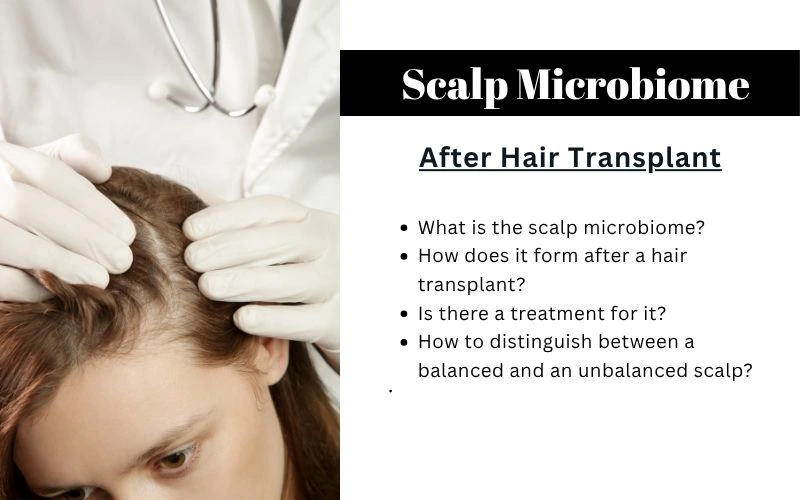
What Is the Scalp Microbiome and Why Does It Matter?
The scalp microbiome is the community of bacteria, fungi, and microorganisms that live on and inside your scalp's skin. Most people are aware that the gut has its own microbiome, what fewer people know is that the scalp has one too, and that it plays a direct role in follicle health, wound healing, and inflammation control.
A healthy scalp microbiome is dominated by 2 bacterial species: Cutibacterium acnes and Staphylococcus epidermidis. These are not harmful but they are protective. By occupying the available space on the skin surface and inside follicular canals, they physically prevent more dangerous bacteria from establishing themselves. The fungal species Malassezia is also always present in small quantities, kept in check by the immune activity of healthy skin.
This balance is fragile. It depends on a specific scalp pH (ideally around 5.5), consistent sebum production, and an intact skin barrier. Disrupt any one of these — through surgery, harsh products, or antibiotics — and the entire ecosystem shifts. For hair transplant patients, that shift happens on the day of the procedure and continues for weeks afterward. According to the International Society of Hair Restoration Surgery (ISHRS), proper scalp environment management is one of the key factors in post-operative graft survival.
Why Microbiome Is Different From Skin Elsewhere on the Body
Microbiome on your scalp isn't the same as the microbiome found on your face, arms, or back. It is shaped by 3 factors that are unique to the scalp: high follicle density, heavy sebaceous gland activity, and the warm, slightly humid environment created by hair. These conditions make the scalp one of the most microbially active surfaces on body.
This also means that when the scalp microbiome is disrupted, the consequences are more pronounced than they would be on other skin areas. The follicles are the primary habitat for the dominant microbial species and those same follicles are exactly what a hair transplant is trying to preserve and grow. When the ecosystem around a newly transplanted ones is unhealthy, the follicle's ability to establish blood supply and survive is directly compromised.
How Hair Transplant Surgery Disrupts the Scalp Microbiome
A standard FUE hair transplant creates between 2,000 and 5,000 micro-incisions across the donor and recipient areas. Each incision breaks the skin barrier (the physical boundary that keeps the scalp microbiome in place) and external pathogens out. The disruption to the scalp microbiome begins within hours of the procedure and develops across 4 distinct mechanisms.
The Four Mechanisms of Microbiome Disruption
- Skin barrier breach: Thousands of simultaneous punch incisions and recipient channels remove the physical separation between the scalp's resident microbial communities and the external environment. Fast-replicating opportunistic bacteria exploit this opening immediately.
- Blood and serum exposure: The nutrient-rich fluid seeping from micro-wounds creates ideal growth conditions for bacteria that are not normally prevalent on the scalp. This is why the first 72 hours are considered the period of highest-risk for pathogenic colony formation.
- pH and temperature shift: Local inflammation raises skin surface temperature and shifts pH toward alkaline. Both changes favor opportunistic species over the beneficial bacteria that prefer the scalp's naturally acidic environment.
- Sebum flow disruption: Sebum produced by sebaceous glands contains fatty acids with natural antimicrobial properties. Around incision sites, sebum flow is temporarily interrupted, removing one of the scalp's primary innate defenses against microbial imbalance.
Antibiotics After Hair Transplant
Most clinics prescribe a 5 to 7 day course of oral antibiotics immediately after any hair restoration surgery. This is medically appropriate and reduces the risk of post-op infections. However, broad-spectrum antibiotics cannot distinguish between harmful bacteria and the beneficial resident species that protect the scalp. In eliminating both, they create a temporary state of microbial vacancy whihc is a window of several weeks when the scalp's normal protective communities are absent or significantly weakened.
This vacancy window falls between days 7 and 21 post-surgery. The same period when scabs are falling off and the recipient area is most exposed to environmental bacteria. Understanding this explains why patients who switch back to regular commercial shampoos during week two often experience more folliculitis, slower healing, and in some cases, reduced graft density compared to those who continue using post-transplant shampoos throughout this period.
Signs Your Scalp Microbiome Is Out of Balance After Surgery
Microbiome imbalance (known clinically as dysbiosis) does not always announce itself dramatically. In patients, the signs are frequently mistaken for normal healing and go unaddressed for longer than they should. The distinction matters because unresolved dysbiosis in the weeks after surgery directly affects the scalp microbiome's ability to support new graft integration.
| Symptom | Normal healing | Possible dysbiosis |
|---|---|---|
| Redness | Fades within 1-2 weeks | Persists or spreads after week 2 |
| Itching | Mild, decreases by week 2 | Intense, localized around follicles |
| Scalp odor | Absent or very mild | Noticeable, persistent |
| Small pimples | Occasional, resolve quickly | Clusters, recurring, painful |
| Flaking | Minor scabbing in first 10 days | Ongoing dandruff-like flaking after week 3 |
| Graft shedding | Expected at weeks 2–6 | Excessive or unusually late shedding |
The most clinically significant sign of a disrupted scalp microbiome after transplant is folliculitis inflammation of the hair follicle appearing as small red or white pustules around individual grafts. Minor folliculitis is common and often resolves on its own. However, persistent folliculitis can endanger graft survival and requires dermatological evaluation.
How to Restore Your Scalp Microbiome During Recovery
Restoring your scalp microbiome after a hair transplant isn’t a time-consuming or difficult task. The only thing required during this process is to eliminate the factors that prevent beneficial bacteria from naturally repopulating, namely, avoiding harmful hair care products and habits. The scalp microbiome tends to correct itself when the right conditions are provided. Your role during the recovery period is to create those conditions. That’s all there is to it.
- Maintain scalp pH close to 5.5. The skin's slightly acidic pH is one of the most important regulators of microbial balance. Alkaline shampoos which include most standard supermarket products at pH 7 or above, shift the environment away from the conditions that favor protective bacteria. Use only pH-balanced post-transplant formulas throughout the recovery period.
- Avoid sulfates and parabens. Sodium lauryl sulfate (SLS) and similar surfactants strip the scalp of sebum, removing one of its primary natural antimicrobial defenses. During the microbiome recovery window, this extends the period of vulnerability significantly.
- Do not over-wash. Washing more than once per day removes the sebum layer before it can fulfill its protective role. Follow your clinic's schedule, in general once daily for the first two weeks, then every other day from week three onward.
- Avoid alcohol-based products entirely. Toners, finishing sprays, and styling products containing alcohol kill surface bacteria indiscriminately and impair skin barrier repair. They should not be used on the recipient or donor area for at least 8 weeks post-surgery.
- Choose barrier-supporting active ingredients. Panthenol improves skin hydration and structural integrity without disrupting microbial balance. Aloe vera provides anti-inflammatory support while creating an environment that does not favor pathogenic overgrowth. Both are well-tolerated by post-transplant scalp tissue.
Products That Support the Scalp Microbiome
Product selection has a direct effect on how quickly the scalp microbiome recovers after a hair transplant. The right formulas clean without stripping, maintain an appropriate pH, and contain active ingredients that support barrier repair. Here is what to use, and what to avoid across the recovery timeline.
| Recovery Stage | Use | Avoid |
|---|---|---|
| Days 1–10 | Saline spray, panthenol foam, pH-balanced post-op shampoo | Any standard shampoo, conditioner, dry shampoo |
| Weeks 2–4 | Gentle sulfate-free shampoo, aloe vera gel, light serum | Sulfate shampoos, alcohol toners, heavy oils on recipient area |
| Months 1–3 | Post-transplant shampoo continued, biotin vitamins, ozonized oil on donor area | Chemical treatments, anti-dandruff shampoos without medical clearance |
| Months 3–6 | Continue post-transplant routine, introduce mesotherapy serums if surgeon-approved | Regular commercial shampoos — wait until month 6 |
The panthenol foam format deserves specific mention in the context of scalp microbiome recovery. Unlike liquid shampoos, foam application requires no rubbing or friction, this reduces mechanical disruption to healing follicular canals during the period when the resident microbial communities are most vulnerable to physical disturbance.
Ozonized oils applied to the donor area from week 3 onward offer a complementary benefit: ozone has documented antimicrobial properties against pathogenic bacteria and fungi while being significantly less disruptive to the skin barrier than alcohol or chemical antiseptics. This makes them well-suited to supporting scalp microbiome recovery without introducing the risks associated with broader antimicrobial products.
View All Post-Transplant Products

Balanced Scalp Microbiome for Grafts
A balanced scalp microbiome gives newly transplanted follicles a stable, low-pathogen environment to establish blood supply. An unbalanced one works against this process at every stage: clogged pores block anchoring, an impaired skin barrier invites opportunistic bacteria, and persistent inflammation shifts tissue from repair mode into chronic immune activation.
Research confirms that Cutibacterium, the dominant protective bacterium in healthy scalp tissue, is depleted after any cutaneous surgical procedure. Its absence is directly associated with slower wound closure. Restoring it requires a slightly acidic pH, an intact lipid barrier, and minimal chemical disruption.
Frequently Asked Questions About the Scalp Microbiome After Hair Transplant
Recommended Reading
✦ Clinic Selection: Best Hair Transplants Clinics in Turkey — An objective evaluation criteria guide to help you find reputable medical teams, transparent pricing, and world-class surgical standards in Turkey.
✦ Major Restoration: 4000 Grafts Hair Transplant in Turkey — What to expect when undergoing a major 4000-graft restoration procedure, including donor area requirements and coverage expectations.
✦ Growth Journey: Hair Transplant Timeline: Real Before & After Photos — A comprehensive month-by-month visual guide showing how your hair transitions from surgery to full density over a complete 12-month recovery cycle.

Receive offers, product alerts, styling inspiration and more. By signing up, you agree to our Privacy Policy.
- info@perseusstyle.com