1 Month After Hair Transplant: Amazing Real Photos
Written by Perseus Editorial Team
Last Update: August, 2026
Featured Headlines
- The 30-day process following hair transplantation,
- Recovery steps in 1-month phase,
- Diagnosis of shock hair loss and care in 1 month after hair transplant,
- 1st month after hair transplantation photo gallery of real patients who have had surgeries such as FUE, DHI, or UFUE.
The difference between the first day and1 month after hair transplantation is quite surprising. And how does this 30-day process work? In this article, we will show the first 1 month after your hair transplant procedure and then what the patients experience until the 2nd month, analyzing one by one through real patient photos!
1 Month After Hair Transplant Recovery Timeline
| Day Range | What’s Happening | What You’ll Notice |
|---|---|---|
| Day 0 | Operation is completed | Minor bleeding at graft sites |
| Days 1–3 | Acute healing | Swelling; mild redness |
| Days 4–7 | Micro-scab formation | Tiny crusts begin to harden |
| Days 8–10 | Scabs fall off | Most scabs fall off naturally |
| Days 11–14 | Tone evening out | Redness fades in most types |
| Days 15–21 | Engraftment phase | Some hairs may shed |
| Days 22–30 | Early recovery end | Redness mostly gone |
How long it takes for microcrusts to disappear?
Immediately after hair transplantation, hundreds of erythematous papules, also known as postoperative inflammatory lesions, will form on your head. Although this appearance disturbs you in the first stage, this situation decreases by 80% within the first 1 month.
Follicular erythema crusts over and disappears within 14 days. Before the end of the 1st month, your skin color returns to its normal tone and symptoms such as pus, discharge and redness end. The healing process of 1 month after hair transplant is easier to manage in social life.
Can necrosis occur 1 month after a hair transplant?
When people think of the first month after a hair transplant, the first thing that comes to mind is shock loss. Although not as common as an intense shock loss, necrosis is also a condition that worries patients after surgery. There are obvious signs of necrosis including pain and tenderness, dark lesions under the scabs and non-healing skin fragments. It is very rare to occur 1 month after a hair transplant, but it can occur in the first 30 days following your hair transplantation.
Some patients may not immediately recognize the signs of subcutaneous tissue death and may reach the post-op teams of clinics a few months after hair transplantation with complaints such as;
- Non-healing, dark brown-black areas on the plantation,
- Areas that remain permanently crusted,
- Bad odor, pus or leakage,
- Pain or burning sensation.
If you have the above symptoms, you should contact your hair transplant specialist immediately. If the necrosis area is not very large, you can recover with local dressings.
Are you looking for a comprehensive guide on necrosis formation and treatment? You can review our article: Necrosis Following FUE (Follicular Unit Extraction).
Does redness go away after 30 days?
Redness is a natural reaction to hair restoration procedures, especially around the follicle transplanted area. Most of the time, it gets much better within the first 2–4 weeks, as the skin heals on the surface.
But how long the redness lasts depends on your skin type and how quickly you heal.
- Patients with darker or olive-toned skin often see the redness fade within 2–3 weeks, as their skin is less likely to stay inflamed for longer.
- People with fair & sensitive skin may find that the redness lingers for longer. So, they may not heal until 1 month after hair transplant. In some cases, particularly those where the skin becomes inflamed / wounds heal more slowly, the redness may last for up to 4 months.
Studies on dermatologic surgery have shown that it is not uncommon for there to be a lasting redness after procedures that cause tiny cuts to the skin like FUE-based surgeries. If the area is still red after 4 weeks, it is probably not serious, unless there are other symptoms like pus, crusting, pain or warmth. These could be signs of an infection.
What’s the right way to care for my transplanted hair after the first month?
You’ve made it through the hardest part of your hair transplant journey: the first 30 days. The easier phase is now ahead of you. The scabs and wounds have mostly healed, and the permanent hair loss has stopped — except for having the visible signs of shock loss. You have officially entered the more enjoyable stage of recovery.
In the 30-day to 60-day phase of the recovery process after hair transplantation, most patients experience the following:
- It is still too early to have obvious hair growth.
- Transplanted hairs enter the shedding (telogen) phase.
- Most scabs and redness disappear.
- Scalp sensitivity decreases day by day.
- Risk of necrosis is extremely rare but still possible if trauma occurs.
- If the FUT method is used, the suture line in the donor area will start healing and may feel tight.
- It is common to experience numbness or tingling around the frontal hairline.
Have you completed the first month? If so, take a look at this post-hair transplant guide that explains the one-year recovery process step by step.
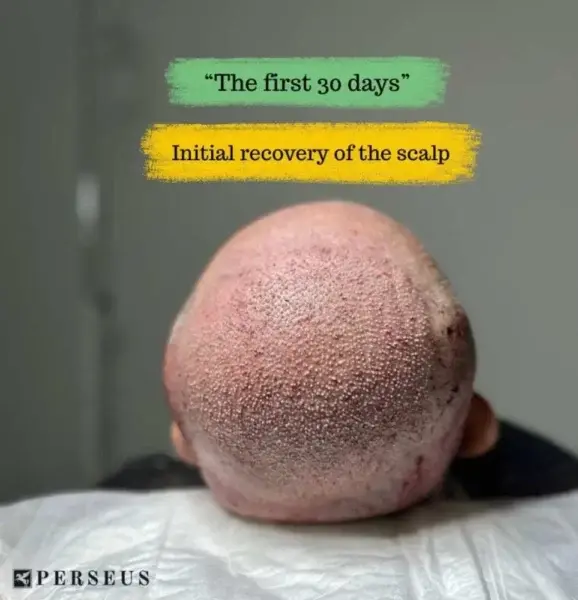
What happens under the scalp in the first 30 days?
While the surface of the scalp may look like it is healing quickly 1 month after hair transplant, the process is actually very complicated and takes place beneath the skin during the first 30 days following your transplantation.
Initial week: This phase is known as hemostasis and inflammatory response. Right after the FUE, tiny wounds form around every graft. Thus, it creates a controlled response to injury. White blood cells migrate to the area, cleaning cellular debris and releasing growth factors to support tissue repair.
Second week: The process of new blood vessels forming (angiogenesis) and the integration of new grafts by your body.
In this phase, the follicular units start to become firmly attached to the tissue around them. This stage is when the new hair starts to grow and takes in nutrients.
3-4 weeks: The implanted hair is in a dormant phase and starts to fall out. By the third or fourth week, the grafts enter a temporary dormant phase. This includes the start of telogen effluvium, where the hair may fall out. This is a natural and expected part of the cycle. But below the surface, the stem cells in the grafts are getting ready to make new hair follicles. One week after hair transplant, the new hair will become much more noticeable and will begin to thicken gradually.
Is it safe to dye, cut or style hair 1 month after hair transplant?
A month after a hair transplant, the surface of your scalp might look healed, but the skin barrier and follicular structures are still stabilising underneath. The International Society of Hair Restoration Surgery says that chemicals from dyes can be bad for grafts that are still changing and getting stronger.
It is usually safe to trim your hair 3 to 4 weeks after the graft, as long as the clippers / scissors do not touch the grafted place directly. However, you should avoid heat styling, colouring or perming your hair for 6 to 8 weeks. A 2019 study published in Dermatologic Surgery confirms that the skin’s outer layer is still weak for up to 6 weeks after procedures like DHI or FUE that make tiny cuts.
In fact, using hair care products such as shampoo, hair spray, hair mousse after hair transplantation also requires attention. Not all types of hair care products are suitable for sensitive skin just 1 month after a hair transplant surgery. Perseus Hair Care Sets are designed for hair care directly after hair transplantation. By reviewing our products, you can benefit from Perseus in a natural and safe healing process.
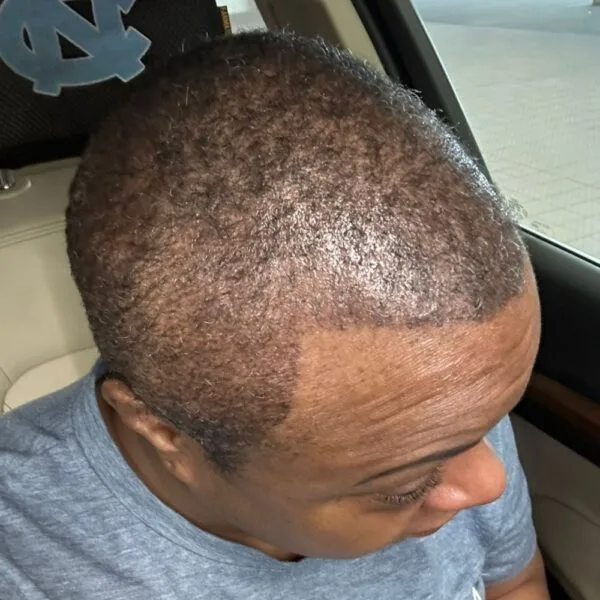
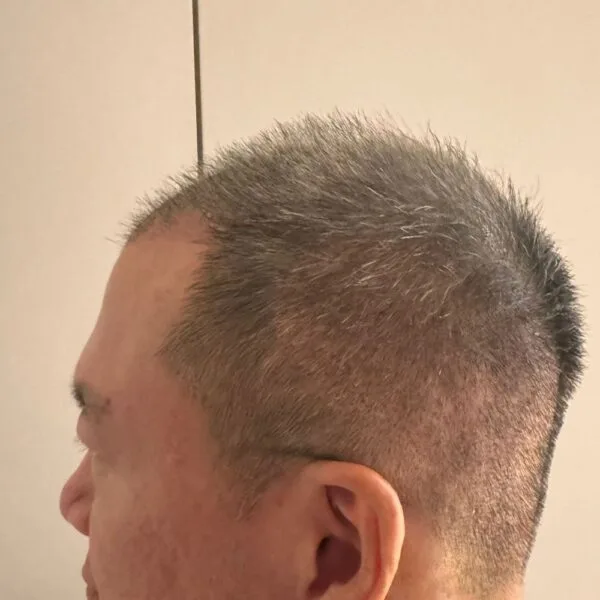
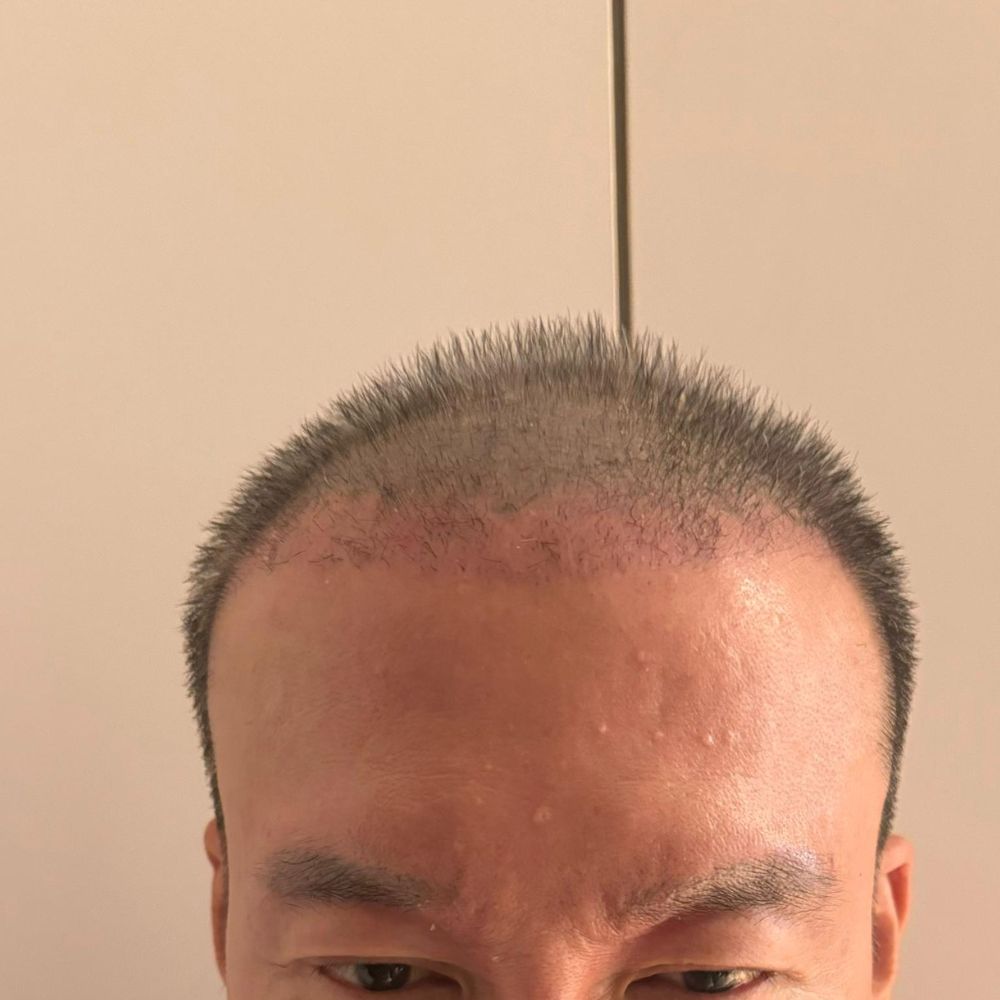
Real patient photos 1 month after hair transplantation
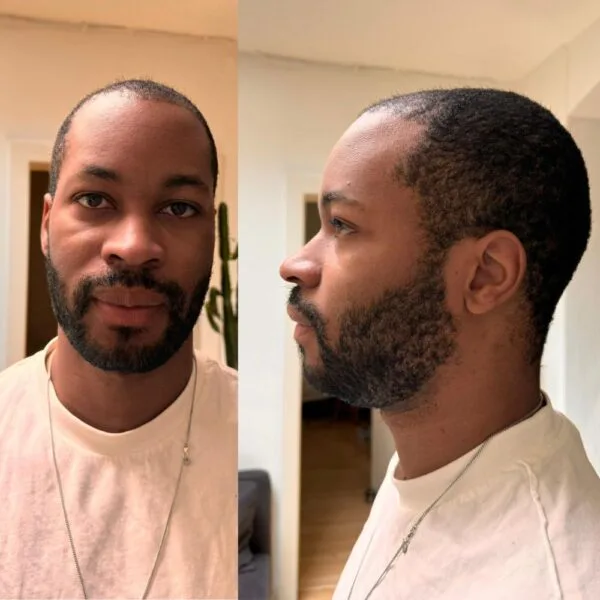
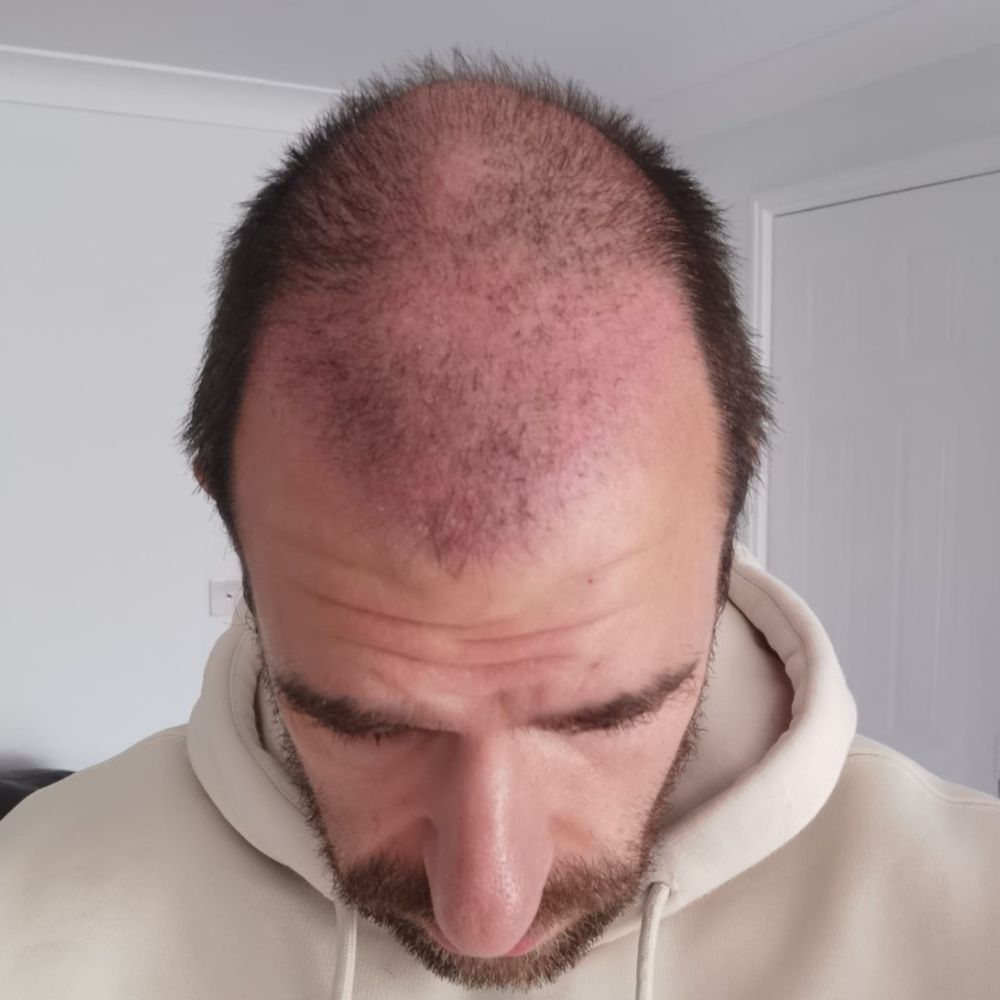
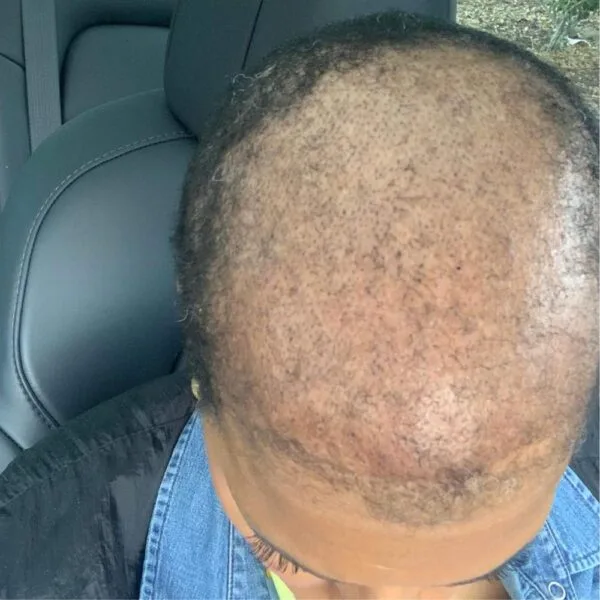
Below you can find images of patients 1 month after hair transplant surgeries. You can see patients with various techniques such as FUE, Afro HT, Female HT, DHI. The source of the images belongs to Heva Clinic, Turkey’s leading hospital in hair transplantation.
FAQs about 1 month after hair transplant
What will the condition of my donor area be like in four weeks?
Biologically, your donor area won’t be fully healed just in one month after hair transplant, but functionally it will be. By the 4th week, the skin is usually closed, scabs are gone, and the risk of infection is minimal. However, it’s still too early for nerve regeneration and tissue remodeling. So, along with patchy numbness, mild tightness and color irregularities can persist for a couple of months, too. Do not worry, your remaining follicles in the donor site will grow back, and the site goes back to its original state.
How can I tell the difference between normal shedding and shock loss 1 month after a hair transplant?
In normal days, shedding follows your natural cycle and affects both integrated follicles and native hairs. As usual, the hairs fall with a small white bulb with no pain or inflammation. On the other hand, shock loss appears suddenly and occurs around the newly implanted follicular units, usually within or one month after a hair transplant. Commonly, it begins between the 3rd week and 6th week and is temporary. Even though patients may feel moody during this month, don’t forget that it is completely normal and natural.
What are the correct scab removal methods in the first month of hair transplantation?
Scabs fall off between days 10 and 14 naturally. Typically, no surgeon suggests removing them manually before this time. Instead, they suggest that patients use lukewarm water, apply only recommended shampoos and lotions, and do not touch the area except for soft tapping with their finger pads. They do not advise picking, scratching, or removing them in a forceful way.
Most first-month graft damage is due to incorrect scab removal motions. Though it might be tempting, you should not remove scabs for 10 days after a hair transplant. After the 10th day, you can get rid of scabs by using a post-hair transplant gentle foam. In other words, you can safely use a foam-based after-hair-transplant product to clean the scabs one month after hair transplant technique.
How does scalp numbness and nerve repair occur in the first 4 weeks?
Yes, in the first one month after hair transplant, the regeneration of small sensory nerves is slow and occurs gradually over time. Patients may experience sensations such as numbness, tingling, mild burning, or feelings similar to electric shocks. Most patients are relieved of these sensations by the fourth month at the latest. However, if these sensations persist for more than 4 months, you should inform your doctor. Most people find relief from these sensations 1 month after hair transplant or one and a half months.
Can I use over-the-counter medications or topical products 1 month after hair transplant?
Some patients can safely use them, but all patients need to ask their surgeons because personalized circumstances may change. If you are worried about the progression of your hair loss in the future, and are unable or unwilling to go through a second hair transplant in the future, taking oral medications like Finasteride can be the best option for you.
Is it possible to use Rogaine 1 month after hair transplantation?
You can start Rogaine within the first 2 weeks after your surgery. If you experience any itching or irritation, it is advisable to stop using Rogaine and start again at a later time. If you notice any irritation, ask your surgeon or general practitioner.
Is it ok to pop pimples 1 month after hair transplant surgery?
It’s not okay to pop them since it can cause inflammation and damage the follicles. You can use hair serum with Salmon DNA or ointments that your surgeon recommends in order to prevent pimples.
References
GQ. (n.d.). Hair Transplant Before and After: What to Expect.
Nackborn, S. (2023). Hair Transplant – My 1-Year FUE Results [Video]. YouTube.
Aytekin, A., & Aytekin, S. (2023). Postoperative Care After Hair Transplantation. BioScience Medical Journal, 7(1).
Zaretskaya, Y. (2024). Modern Approaches to Hair Transplantation and Care. In Wasilczuk, S. N. & Schwarz, R. (Eds.), Aesthetic Medicine: Clinical Updates (pp. 533–544). Springer.
Recommended Reading
✦ Follicle Nutrition: Best Hair Vitamins After Hair Transplant — Discover the essential vitamins and micro-nutrients required to accelerate healing and fuel newly transplanted follicles.
✦ Month-by-Month Progress: Recovery Progress: Month 2 After Hair Transplant — A detailed look at the 60-day mark, managing shedding phases, and navigating early scalp changes.
✦ Milestone Growth: 3 Months After Hair Transplant: What’s Next? — Learn why the third month is the turning point for most patients as new sprout growth officially begins.


Receive offers, product alerts, styling inspiration and more. By signing up, you agree to our Privacy Policy.
- info@perseusstyle.com