Unshaven Hair Transplant (UFUE)
Written by Perseus Editorial Team
Last Update: August, 2026
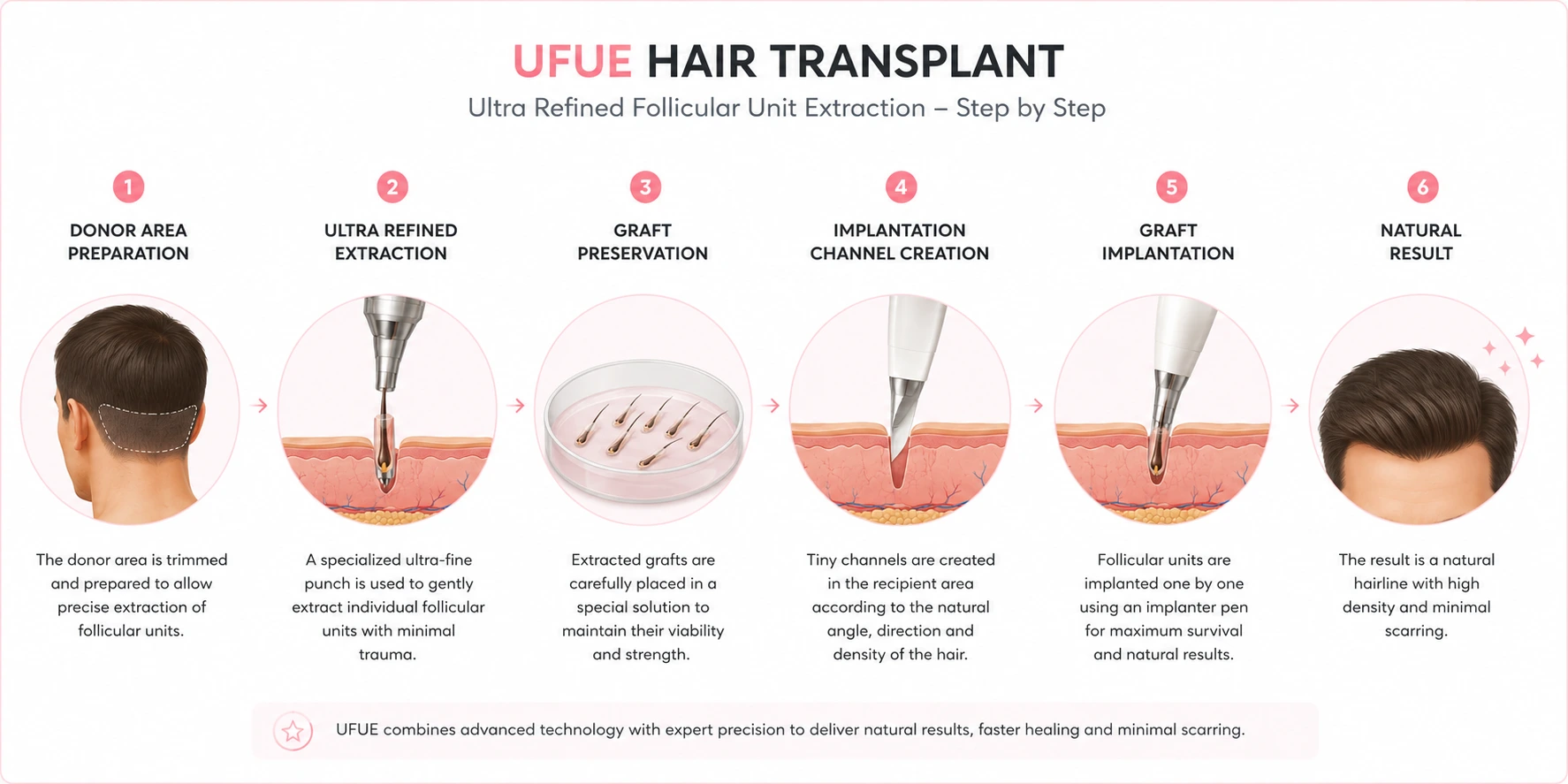
As of 2026, the unshaven follicular unit extraction (FUE) method will probably have major innovations in technology, technique and patient outcomes. While FUE has been a mainstream hair grafting for years, the shave-free version has grown in popularity owing to its discreet nature and shorter recovery time in 2026.
Here’s what’s new with unshaven FUE in 2026, along with the latest statistical data and trends:
Technological advances in UFUE
Just like in 2025, robotic systems such as NeoGraft will continue to evolve and provide greater precision in follicular harvesting and transplantation in 2026, too. They can improve the no shave FUE surgery and offer patients faster healing and less graft damage.
Robotic devices reduce human error and speed up the extraction steps result in minimized trauma. In addition to robotic hair transplants, AI algorithms can provide more assistance in hairline design, identifying the most viable grafts, and AI visuals that predict post-operative appearance can provide more realistic results. Machine learning allows surgeons to more accurately predict outcomes and optimise graft placement, thereby reducing the risk of uneven hair growth.
Better graft viability
Modern medicine combines stem cell activation and platelet-rich plasma therapies with UFUE practices for more holistic alopecia treatments. This approach, which increases follicle regeneration and restores hair growth to a healthier cycle, allows the hair to be better nourished.
Therefore, in the near future, hair extracted from hidden areas may give faster results in the bald zone. Combined regenerative therapies help dormant follicles transition to the early anagen phase with minimized shock loss duration.
More functional surgical tools
Microsurgical instruments and small punches have contributed to advanced scarless techniques in the 2020s. So, scientists have reduced scars to tiny dots. Improved aesthetic results is now helping the unshaven concept masks effectively all post-operative signs. Towards 2026 or 2027, scientists can integrate the unshaved grafting of hair method with more user-friendly instruments and the duration of unshaven surgery.

How U-FUE (Un-shaven) and classical FUE hair transplantation vary?
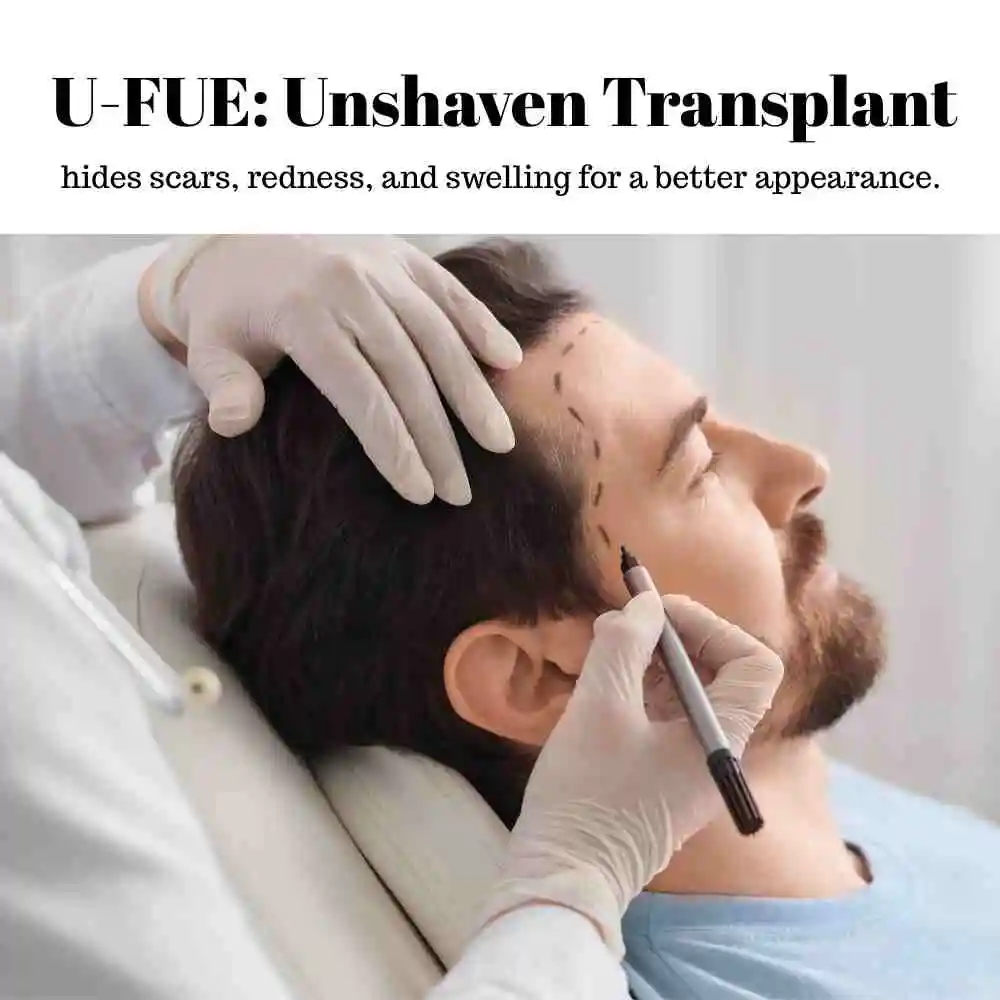
In the U-FUE technique, surgeons regionally shave only the donor hairs taken from the source area (such as the back of the head). In this way, you can easily hide the surgical scars.
Unlike FUE, it takes a little longer because surgeon barely see the bare scalp and remove the grafts from the skin. Specialists working with great care choose to increase the time by 1.5 – 2 times to maintain the success rate of your surgery.
The biggest advantage of shaveless FUE is that your procedure is carried out in 3 basic stages with minimal manipulation. To understand how simple, you can watch a man’s 10-day hair transplant process using the ‘FUE but No-Shave’ method.
What about other FUE methods vs. UFUE?
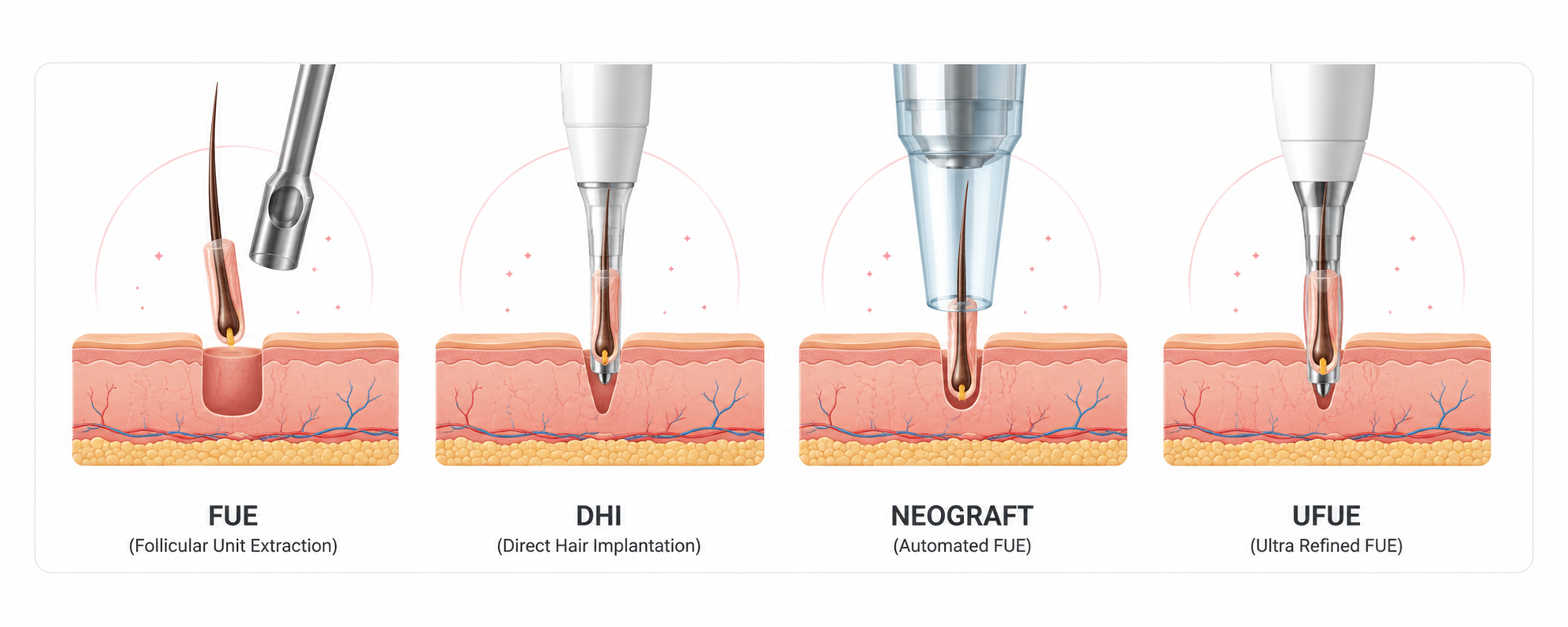
The way the donor is harvested with FUE depends on the harvesting device and the instrument. For example, professionals use Manual FUE with manual instruments, and handheld motorised FUE with electric instruments. FUE performed with special sapphire-tipped instruments is also called Sapphire FUE. These are the most accepted FUE follicle collection methods in 2025:
NeoGraft vs. UFUE
As a type of automated FUE system, NeoGraft uses pnematic pressure to extract donor follicles, but surgeons still use traditional surgical blades for no haircut FUE methods.
Handheld Motorized FUE vs UFUE
There are brands on the market that have developed electronic devices for power-assisted FUE. These devices reduce manual labour and human error in the surgery.
DHI vs. UFUE
Shaved donor and recipient areas are treated with Choi implanter in DHI. However, with unshaved FUE, although manual operation is on the table, limited shaving is the aim.
Robotic FUE vs. UFUE
Robotic system like ARTAS is opted to automate the follicle harvesting with precise mapping and 3D imaging. In FUE, there is no robotic assistance.
4 Haircut Options for Hair Transplants: Which One is Best for Your Hair Loss?
1. Full Shave: Classic FUE Haircut
Recipient and donor areas are completely shaved. This is the most common and economical method. After the operation, the entire head is clearly visible. Hiding the post-op scars are not possible. It is suitable for patients with high hair density, no worries about privacy, or those focused on saving money.
Who is it for? Individuals with no time constraints who can openly discuss it with others.
2. Only the Donor Area is Shaved
The back and sides are shaved. Existing hair in the recipient area is not cut. Long hair on top covers the shaved area. You can go out after the procedure. It is almost unnoticeable.
Who is it for? Individuals with sufficient hair length on top, who wish to conceal the procedure, and whose hair loss is still in the early stages. These individuals are generally in stages 1, 2, or 3 of the Norwood Hair Loss Scale.
3. Partial Shaving (Hybrid Hair Transplant or U-FUE)
Only the small areas where the transplant will be performed in the recipient area are trimmed, while in the donor area, the hair is not completely shaved but shortened in small strips. These strips remain under the surrounding hair. It takes longer and requires higher technical skill.
Who is it for? Individuals whose hair has not yet thinned too much, who want additional fullness, and who want to conceal it from their surroundings.
In addition, this method is the most suitable hair transplant for women. The decision to undergo hair transplantation for female patients can be quite challenging due to aesthetic and social concerns combined with the necessity of shaving. The UFUE (Unshaven Follicular Unit Extraction) and Patch Shave methods offer breakthrough solutions that address these worries.
4. Full No-Shave FUE
Neither the recipient nor the donor area is shaved. There may be a little more shaving in the donor area. The follicles are extracted one by one from among the long hair and implanted. It is the most technically demanding, most expensive, and longest method. You can go to work the next day, and it is not noticeable. It does not interfere with social life. However, it carries a higher risk of infection than the fully shaved method.
Who is it for? Individuals with long hair that has not yet thinned much, who want to keep the procedure completely confidential, and who have no budget constraints.
| Method | Privacy | Cost | Best Candidates |
|---|---|---|---|
| Fully Shaved | ❌ | 💲 | Extensive loss, budget-conscious |
| Donor-Only Shaved | ✅ | 💲💲 | Early-stage loss, long top hair |
| Partially Shaved | ✅✅ | 💲💲💲 | Mild thinning, discretion matters |
| Fully Unshaven | ✅✅✅ | 💲💲💲💲 | Long hair, complete privacy needed |
Who is suited for UFUE?
- Candidates eligible for the UFUE hair removal method should require less than 1000 grafts or around 1000 grafts for hair transplantation.
- These individuals should experience mild hair loss. Individuals with advanced baldness may be unsuccessful with UFUE transplantation.
- Swelling, scab formation, and temporary shock loss are also present in shave-free FUE. These symptoms may be visible from the outside. Those considering U-FUE should be aware of this.
- UFUE transplantation is more challenging and costly compared to other procedures. Those considering this option should adjust their budget accordingly. They should be aware that they will undergo a more meticulous post-operative process and should undergo surgery with realistic expectations.
Why do people still prefer shaved FUE?
Non-shaved hair transplants have some risks, including obstructing the surgeon’s view. Such surgical challenges make the extract-implant cycle more complex than standardised procedures. The operation time is longer and the risk of post-operative fungal infection is higher.
- 👎Since the scalp will be exposed to a more humid environment, the healing process will be longer for the skin.
- 👍However, because the size of the operated skin is smaller, post-op care may be more manageable.
As the whole head will be shaved in FUE, the surgeon can make small incisions much more easily. It’s also more hygienic during the healing process as other hair doesn’t come into contact with the wounds. The only downside is that it looks a bit odd. Loose hats can hide the scalp, that will look disturbing for a maximum of 1 month. Discover all stages of recovery.
Post-UFUE Return-to-work Schedule by Profession
The return-to-work schedule during the UFUE recovery process varies by job type. For jobs requiring the use of equipment that puts pressure on your head, such as hats, caps, etc., a break of several days to a week may be necessary.
| Profession Group | Return to Work | Key Considerations |
|---|---|---|
| Desk Jobs (Office, IT) | 2–3 Days | Minimum swelling. UFUE allows immediate social return. |
| Light Physical (Teaching, Sales) | 5–7 Days | Avoid long hours standing; hats can be worn after day 7. |
| Heavy Manual Labor | 2–3 Weeks | Risk of graft dislodgement due to high blood pressure/sweat. |
| Helmet-Required Jobs | 3 Weeks | Direct pressure from helmets must be avoided at all costs. |

FAQs
Why should I shave my head for a hair transplant?
During the operation, it is troublesome for the surgeon to see your scalp between your hair strands and remove the follicles one by one. Shaving is required to make the operation easier.
Can someone with curly or afro hair undergo UFUE?
Because the follicular canal is angled in Afro hair structure, the risk of transection dramatically increases in shave-free extraction. For this reason, we recommend FUE hair transplantation for people with Afro hair structure.
Can UFUE be done on hair shorter than 2 cm?
No, UFUE cannot be performed on hair shorter than 5 cm. During UFUE, the surgeon clips the long hair around the follicles to the side, and after the procedure, this hair covers the localized shaving marks. This covering function does not work on hair that is 2 cm or shorter; the procedure loses its purpose in terms of both extraction and concealment.
How to hide hair transplant scars?
In Unshaved FUE, the surgeon does the preoperative planning in such a way that you can easily hide the scars with your hairstyle. However, shaved grafting may require accessories such as a hat.
Up to what stage of Norwood can I have UFUE?
For UFUE, at least 50% to 60% of your scalp must be covered with hair to hide the surgical scars. Otherwise, options such as direct FUE, DHI instead of UFUE make sense.
Up to which stage of the Ludwig hair loss scale can I have unshaven FUE?
For the Ludwig scale it is possible to utilise U-FUE in type I or II.
Which medication should I take after UFUE?
You should take the medication recommended by your surgeon. As a supplement, it is possible to turn to safe hair vitamins with the approval of the surgeon.
Which shampoo should I use after Unshaven FUE?
Shampoo preference is critical in the post-grafting process. While some doctors recommend baby shampoos, some professional clinics recommend using only a ‘post-op hair transplant shampoo’.
Can UFUE be done on hair that has been dyed or treated with keratin?
Having had hair dye or keratin treatment does not disqualify you from UFUE. However, the surgeon must evaluate both the graft selection process and the health of the scalp. In standard FUE, the donor area is shaved and follicles are extracted from bare skin; therefore, dye residue causes few problems. However, in UFUE, the surgeon must select follicles from among unshaven hair.
Dyed hair:
- Makes follicle detection difficult: Coloring masks the visual difference between healthy and weak follicles. The surgeon may face the risk of selecting the wrong follicles.
- Leaves chemical residue on the skin: Dye chemicals can leave residue on the scalp, potentially hindering post-transplant healing and increasing the risk of infection or irritation.
- Increases skin sensitivity: Temporary or permanent skin sensitivity caused by dyeing can negatively affect post-operative discomfort and healing.
References
- Dental Hair Clinic Turkey. “U-FUE Unshaven Hair Transplant Cost in Turkey.” Dental Hair Clinic Turkey, 2025.
Park, J. H., et al. (2014). Direct Nonshaven Follicular Unit Extraction Hair Transplantation: A Practical Guide and Clinical Outcomes. Dermatologic Surgery.
Perez-Meza, D., et al. (2009). Review of Factors Affecting the Growth and Survival of Follicular Grafts in Hair Restoration. Journal of Cutaneous and Aesthetic Surgery.
Zito, P. M., & Raggio, B. S. (2024). Hair Transplantation: Surgical Techniques and Post-Operative Management. StatPearls (NCBI Bookshelf).
Bernstein, R. M., & Rassman, W. R. (2006). Graft Anchoring in Hair Transplantation. Dermatologic Surgery.
Recommended Reading
✦ Visual Timeline: Hair Transplant Timeline: Real Before & After Photos — Month-by-month recovery milestones and realistic graft growth stages.
✦ Loss Prevention: 8 Current Treatments to Stop Balding — Clinically backed medical and non-surgical solutions to prevent progressive hair loss.
✦ Follicle Nourishment: Why to Use Hair Growth Serum After Hair Transplant? — The biological role of peptides and growth serums in graft survival.
✦ Cost Analysis: How Much Does DHI Surgery Cost? — Complete price comparisons and technique differences with Choi implanter pens.
✦ Natural Soothing: Aloe Vera Gel After Hair Transplant — Benefits, limits, and safe timing for post-operative scalp hydration.


Receive offers, product alerts, styling inspiration and more. By signing up, you agree to our Privacy Policy.
- info@perseusstyle.com