Take the Hair Loss Risk Test for Low Iron Levels
Written by Perseus Editorial Team
Last Update: September, 2026
Quick Answer: Low iron levels or low ferritin often causes hair shedding, mainly in diffuse thinning and telogen effluvium. Even androgenetic alopecia, known as patterned baldness, can result from marked iron deficiency anemia.
The evidence remains mixed, and studies report different ferritin cutoffs. Don’t assume iron drives the shedding, always get a blood test before taking supplements.
Why does ferritin matter for hair?
Iron Storage Protein (Ferritin) is a common blood marker used to estimate body iron reserves. Hair follicle cells need iron for normal cell division and hair shaft formation; very low iron stores can impair follicle function and so lead to increased balding. Physicians often measure serum ferritin when investigating unexplained thinning hair across the entire scalp.
Please note: If you are experiencing severe hair loss despite dietary changes, it is time to see a doctor for a medical diagnosis. Low iron levels may be the root cause of your hair-loss. With the right medical treatment, you can reverse both chronic iron deficiency and hair loss.
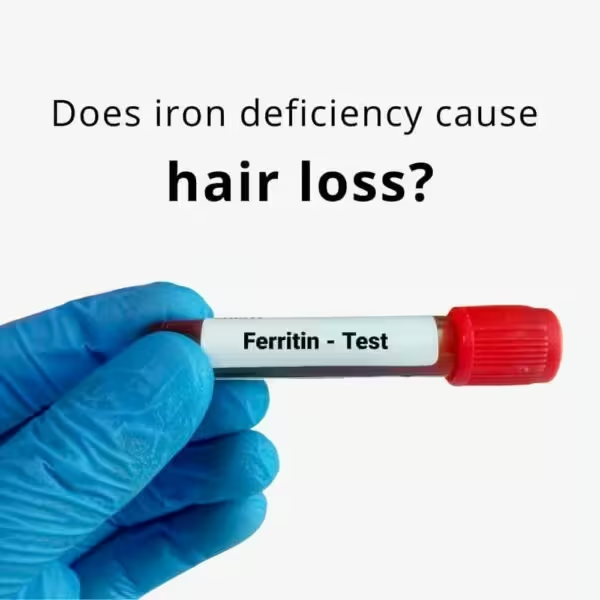
What are the types of anemia, and how can we distinguish iron deficiency from them?
Types of Anemia:
- Iron-deficiency anemia: The most common type of anemia.
- Vitamin B12-deficiency anemia
- Hemolytic anemia
Distinguishing Iron-Deficiency Anemia from Other Types:
Iron-deficiency anaemia occurs when the body does not receive enough iron through diet or is unable to store it properly. Physicians diagnose anaemia by evaluating a patient’s medical history and performing laboratory tests. They use blood parameters such as ferritin, haemoglobin and haematocrit levels in order to identify. Other types of anaemia have different causes. For instance, vitamin B12 deficiency leads to vitamin B12 deficiency anaemia, which physicians diagnose by measuring serum B12 levels. On the other hand, in hemolytic anaemia, red blood cells break down too soon, and clinicians confirm this using specific haematological tests and clinical signs.
What do studies say about low iron levels?
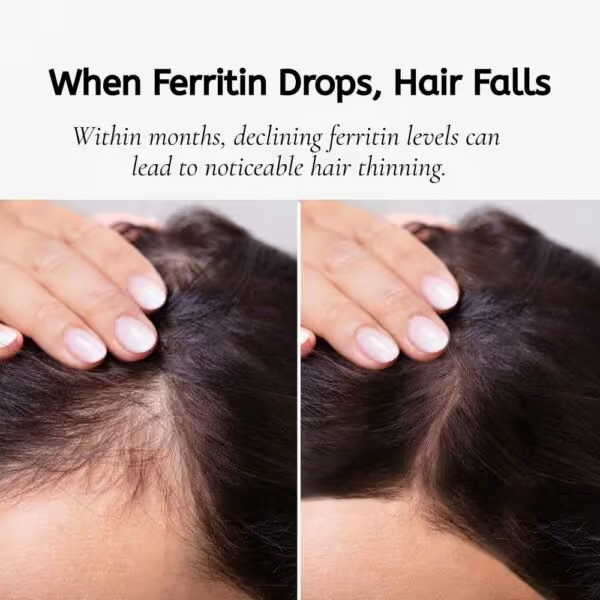
Research shows that people with diffuse shedding generally have lower iron stores in their bodies, and some studies find this connection noteworthy. Low iron can also occur in other types of hair loss (androgenetic alopecia, alopecia areata), but the evidence is less consistent. Doctors usually consider iron stores low when ferritin levels are around 20 to 30 nanograms per milliliter, and some use up to 40, but different clinics may use different numbers, which is why studies sometimes show mixed results.
Low Iron Levels / Ferritin Levels Reference Table for Hair Loss
| Ferritin Level | Interpretation | Notes |
|---|---|---|
| <20 ng/mL | Low | Often associated with hair shedding; consider supplementation |
| 20–30 ng/mL | Borderline | Monitor diet and labs; may contribute to mild hair loss |
| 30–40 ng/mL | Low-normal | Some clinicians treat if patient has diffuse shedding |
| >40 ng/mL | Normal | Unlikely due to iron deficiency; investigate other causes |
What is the Effect of Vitamin C on Iron Absorption?
When we obtain iron from spinach or lentils, our intestines cannot digest it directly. Vitamin C plays an important role here by softening the iron and making it passable through our intestines. This is because vitamin C (ascorbic acid) is the most powerful nutrient that increases non-haem iron absorption. Latest clinical studies have observed that 75 mg of vitamin C taken with a meal can increase the absorption of plant-based iron by approximately 3-4 times. Similarly, Hallberg et al. clinically demonstrated that Vitamin C builds a strong resistance against phytates, which inhibit iron absorption in plants.
Low Iron Levels Test Results
This test can estimate whether your likelihood of iron-related hair loss is low or high. Of course, you cannot expect results as accurate as a clinical test, and you should always consult your doctor. However, this test can give you a rough idea and help you learn what to do if you have a lack of iron.
Low Risk: Ferritin Levels Likely Within Normal Range
Congratulations! Based on your responses, it is likely that your ferritin and iron stores are sufficient and that low ferritin is not a major factor of your hair thinning. To maintain healthy hair growth, continue to eat a nutrient-rich diet including iron-rich foods such as lean meats, spinach and lentils, and make sure you have regular blood tests, health check-ups and don’t forget to use our hair repair shampoo! Optimal hair density requires adequate levels of ferritin, haemoglobin and overall iron. Nevertheless, if you have hair loss, it may be caused by different conditions such as genetic pattern baldness, gynecological hair loss, or balding due to rapid weight loss.
Moderate Risk: Possible Early Signs of Low Ferritin
Your answers suggest that you may have early signs of low ferritin levels, which could be causing your hair to thin. In this case, consult a healthcare professional to have your serum ferritin, haemoglobin and transferrin saturation levels evaluated. Addressing low ferritin levels early on can support the anagen phase of hair growth and prevent further diffuse shedding. A specific diet or iron supplements under medical guidance could help to restore your hair’s vitality and you can also support healthy hair regrowth with Perseus hair vitamin!
High Risk: Potential Low Ferritin Contributing to Hair Loss
Your responses suggest that you may have multiple signs of ferritin deficiency, which could be contributing to your loss of hair. We strongly recommend consulting a doctor and requesting a full blood test, including a ferritin test, a complete blood count (CBC) and tests for haemoglobin and iron. Low ferritin levels can negatively affect the cycling of follicles, resulting in diffuse telogen hair loss and thinner hair. Early detection and treatment, through medical guidance, iron supplementation and dietary alterations, can improve hair growth and scalp health again. After consulting your doctor, consider our mesotherapy hair loss serum set!
Impact of Ferritin Levels on the Hair Growth Cycle
Ferritin acts as metabolic fuel for the anagen (growth) phase, during which hair follicles require peak cellular energy to produce new hair strands. When ferritin levels are optimal, the anagen phase is sustained, enabling hair to reach its full growth potential.
However, a decline in ferritin levels can prematurely trigger the follicle to enter the catagen (transition) and telogen (resting) phases. Disruption to this process often shortens the growth window and accelerates the exogen (shedding) phase, resulting in thinning / diffuse hair loss. Therefore, you should maintain stable iron level in order to prevent the cycle from stalling.
Doctor Consultation Checklist
If you plan to see a doctor due to suspected low iron ferritin levels, consider the following checklist items.
- Bring recent lab results (CBC, ferritin, transferrin saturation, CRP).
- Note your hair shedding pattern and duration.
- List diet history and supplement usage.
- Record any fatigue, pale skin, brittle nails, or dizziness.
- Ask your doctor: “Do I need oral or IV iron?”
- Discuss follow-up labs and timeline for hair regrowth.
Take control of your hair’s health today!
Hair loss is far more than just a cosmetic concern; it can be an important indicator of imbalances in your body. In women in particular, anemia due to iron deficiencies and low ferritin levels are common causes.
Stick to these simple steps to maintain healthy iron levels and support your hair:
- Eat a balanced diet including iron-rich foods and vitamin C, and avoid excess calcium. You can learn about foods that support hair growth by reading Diet for Hair Growth.
- Have regular check-ups including ferritin and blood tests.
- Maintain a healthy lifestyle (exercise, stress management, no smoking/alcohol).
- Consider medical solutions (hair transplants, specialised shampoos and vitamins).
Ferritin is a protein that reflects your body’s iron stores. Low ferritin levels can impair follicles function by reducing the delivery of nutrients and oxygen, which can lead to excessive loss.
However, remember that iron deficiency is not the only cause. Genetic factors, hormonal changes and stress can also play key roles. If you are experiencing this, you need a comprehensive evaluation.
FAQs about Low Iron Levels
How long until hair regrows after iron treatment?
It may take 3–6 months for hair to regrow once ferritin levels have been normalised. The time it takes to make a full recovery depends on the cause of the hair loss and how well the patient adheres to the treatment.
Can ferritin be normal but still deficient?
Yes. Elevated ferritin levels can mask iron deficiency during inflammation or infection. Doctors often assess ferritin alongside transferrin saturation, haemoglobin and clinical symptoms.
Can dietary iron alone restore hair?
Mild deficiencies can be alleviated by consuming iron-rich foods alongside vitamin C to improve absorption. However, severe deficiencies may require supplements, which should only be taken under medical supervision.
Is hair loss from low iron permanent?
No, it is usually temporary. When iron stores (ferritin) reach ideal levels, the hair cycle returns to normal, but it can take between 3 to 6 months for new hair to become visible. Iron stores typically fluctuate in women due to the menstrual cycle. This process can also trigger hair loss, but temporary shedding can be reduced with supplements and proper treatments.
Can high iron (Hemochromatosis) also cause hair loss?
Yes. Not only deficiency, but excessive iron accumulation in the body can also cause oxidative stress and damage hair follicles. Therefore, supplements should not be taken without testing.
Sources
- Cheng T, et al. The Diagnostic Value of Serum Ferritin for Telogen Effluvium. 2021.
- National Heart, Lung, and Blood Institute (NHLBI) – Iron-Deficiency Anemia.
- Philip Kingsley – Anaemia (Iron Deficiency) & Hair Loss/Thinning.
- Lin CS, et al. Focusing on the iron deficiency-related alopecia. 2023
- Treister-Goltzman Y, et al. Iron Deficiency and Nonscarring Alopecia in Women: Systematic Review. 2021
- Kantor J, et al. Decreased Serum Ferritin is Associated With Alopecia (J Invest Dermatol 2003)
- MDEdge / clinical guides commentary on serum ferritin as a clinical tool in diffuse hair loss (2023)
Recommended Reading
✦ Post-Transplant Nutrition: Best Hair Transplant Vitamins— Discover the essential micronutrients, such as biotin, zinc, and vitamin C, required to accelerate follicle healing and safeguard newly grafted hair.
✦ Sunshine & Restoration: Vitamin D and Hair Growth — Learn how maintaining optimal Vitamin D3 levels helps combat hair loss.
✦ Cellular Energy & Shielding: B-Complex Vitamins for Hair Growth — Explore how the B-complex family provide vital nutritional support for active hair regeneration.
✦ Specialized FUE Techniques: Afro Hair Transplant in Turkey — Mastering the specialized FUE techniques required to safely extract and graft curled hair roots while maximizing post-op survival rates.
✦ Celebrity Insights: Celebrities with Hair Loss — Take an inside look at famous figures who have dealt with hair thinning and the exact treatments they used to restore their hairline.
✦ Customized Care Routines: Natural Care by Hair Type — Whether your hair is curly, straight, or wavy, discover the best natural ways to keep your specific hair type healthy.

Receive offers, product alerts, styling inspiration and more. By signing up, you agree to our Privacy Policy.
- info@perseusstyle.com