Vitamin D and Hair Growth Following Hair Restoration
Written by Perseus Editorial Team
Last Update: August, 2026
Medically reviewed by Senior Hair Transplant Specialists at Perseus Clinical Partner Network
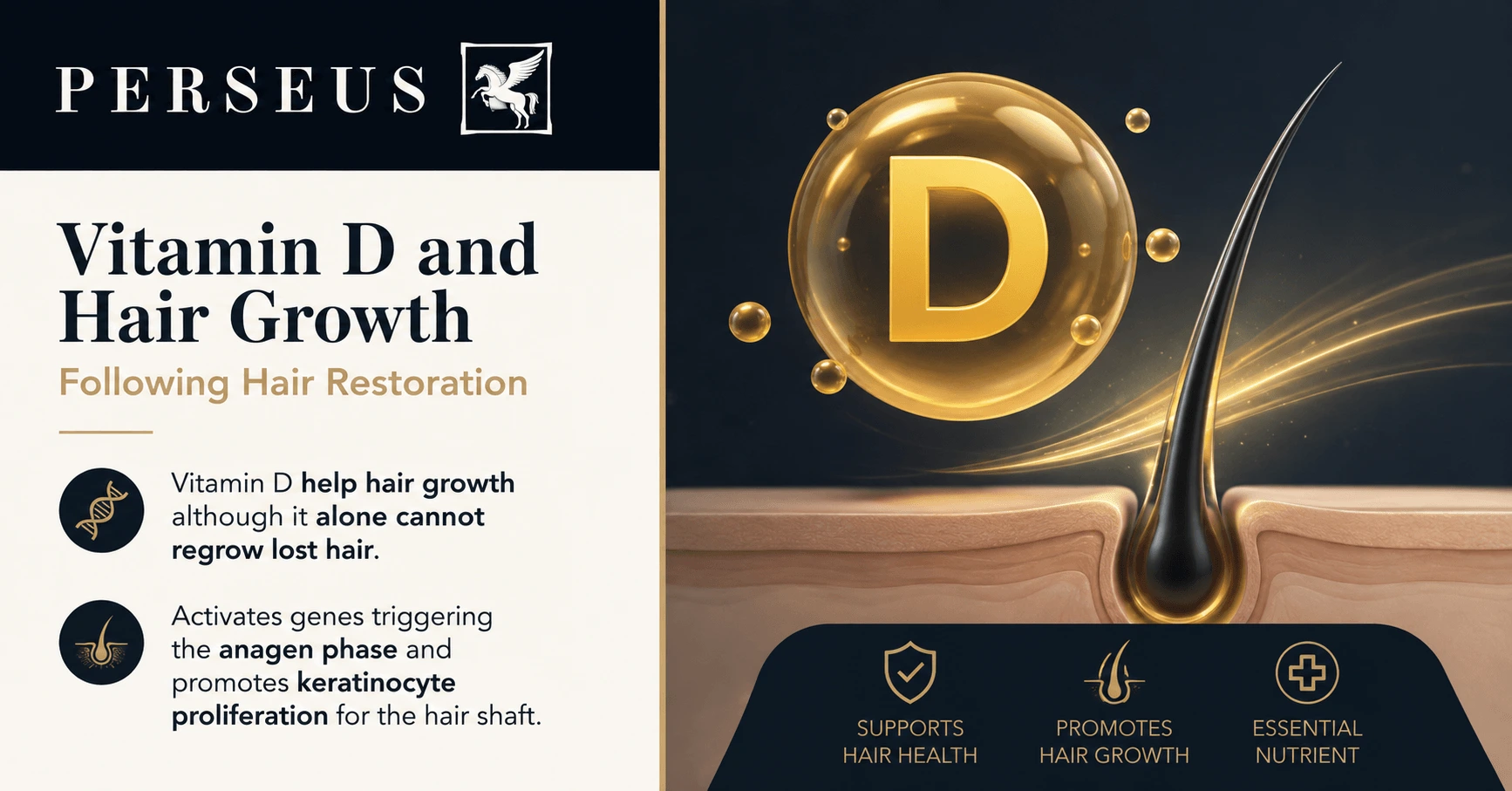
Getting enough vitamin D and hair growth go hand in hand when it comes to keeping your scalp and hair cycle healthy. When levels drop too low, follicles tend to stop growing early and move straight into the shedding phase, which often shows up as hair thinning or telogen effluvium. Keeping your vitamin D in a normal range gives your hair roots the green light to wake up dormant follicles, transition back into active anagen growth, and produce stronger, fuller hair.
Can vitamin D supplements help with hair growth?
Vitamin D can make a real difference in preventing hair loss, but mainly if you are actually dealing with a deficiency. If your levels are already normal, extra vitamin D will not speed up hair growth. However, this changes after a hair transplant, getting enough vitamin D becomes far more critical to help the scalp heal and wake up resting follicles so new hair can grow.
What Is Known About the Relationship Between Vitamin D and Hair Regrowth
To put it simply, correcting a vitamin D deficiency indirectly contributes to hair growth, but it is not enough on its own to solve the problem of hair loss or accelerate hair growth.
Now let’s take a look at the answer below, which is supported by academic sources:
Vitamin D plays an essential role in regulating the natural hair cycle. Research published in Dermatology and Therapy highlights how vitamin D levels and follicle biology interact:
- Preventing premature shedding: Low vitamin D levels can trigger hair follicles to shift too quickly from the active growth stage into the resting (telogen) phase. This imbalance often leads to widespread shedding conditions like telogen effluvium and alopecia areata.
- Reactivating hair growth: Molecular studies in The Journal of Steroid Biochemistry and Molecular Biology demonstrate that Vitamin D Receptors (VDR) in hair root cells are vital. Without active receptors, resting follicles cannot transition back into the active growth (anagen) phase.
- Balanced dosing vs. high doses: More is not better. Taking mega-doses will not speed up growth and can cause vitamin D toxicity (hypervitaminosis D). The true goal is solely bringing deficient levels back to normal.
- Post-hair transplant recovery: Because active Vitamin D Receptors are necessary for dormant grafts to “wake up” and enter the growth phase, maintaining proper vitamin D levels is crucial after surgery. This is why post-transplant supplement protocols routinely include vitamin D.
What are the signs of low vitamin D?
Deficiency is often silent, which is part of why testing matters more than symptom-spotting. When symptoms do show up, they tend to include:
- Persistent fatigue
- Bone or muscle aches, cramps, or weakness
- Mood changes, including low mood
- Getting sick more often than usual
- Slower healing after injury or surgery
- Hair thinning or shedding, particularly in women
Many people with low levels have none of these and only find out through a blood test.
Does vitamin D affect hair growth after a hair transplant?
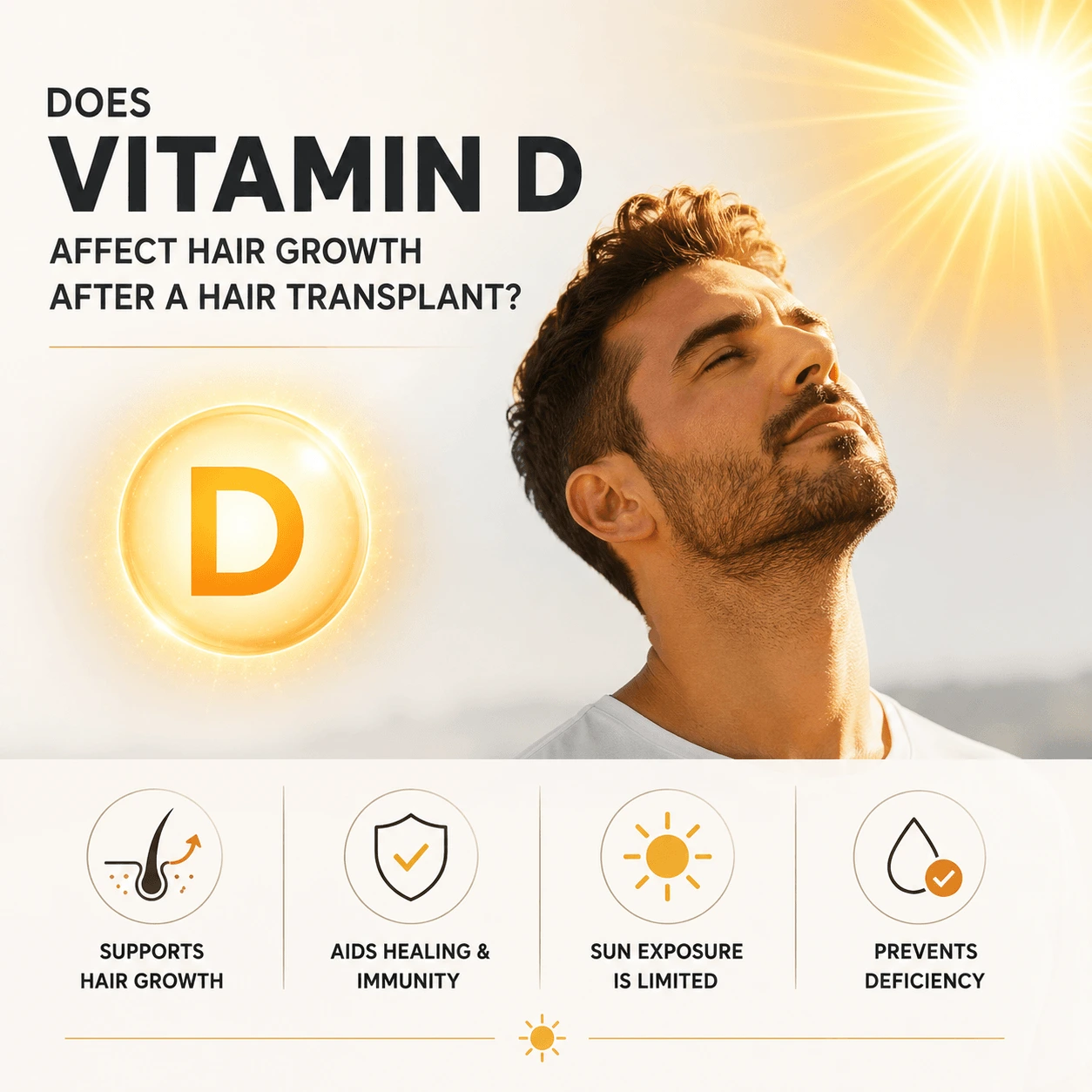
If you have had a hair transplant, your need for vitamin D will increase. The relationship between vitamin D and hair growth is even more critical for hair transplant patients because transplanted follicles enter the resting (telogen) phase following shock loss. During this period, Vitamin D Receptors (VDR) help these dormant grafts transition back into the active growth (anagen) phase.
In addition, vitamin D supports tissue healing. It regulates local immunity across the scalp where thousands of micro-incisions were made, accelerating graft anchoring and survival.
After a hair transplant, newly implanted grafts must not be exposed to direct sunlight. Because getting vitamin D naturally through sun exposure is restricted during this recovery period, hair restoration specialists often prescribe hair transplant supplements containing vitamin D—such as Perseus hair vitamins. Since a vitamin D deficiency delays graft reactivation and lowers overall graft survival rates, having regular blood tests post-surgery and addressing any nutritional deficiencies is essential for optimal results.
How does vitamin D affect the scalp and hair follicles?
Vitamin D regulates the activity of keratinocytes. Keratinocytes are cells involved in the process of skin regeneration—including the scalp—and hair follicles are also affected by this process. According to a study conducted on types of alopecia such as telogen effluvium, alopecia areata, and female-pattern hair loss, individuals with these hair loss conditions are more likely to have vitamin D deficiency than others. In particular, a case-control study on male androgenetic alopecia found that patients with low vitamin D levels experienced more severe hair loss. Based on this data, many dermatologists today check patients’ vitamin D levels in cases of unexplained hair loss.
Why sun avoidance after a hair transplant creates a gap
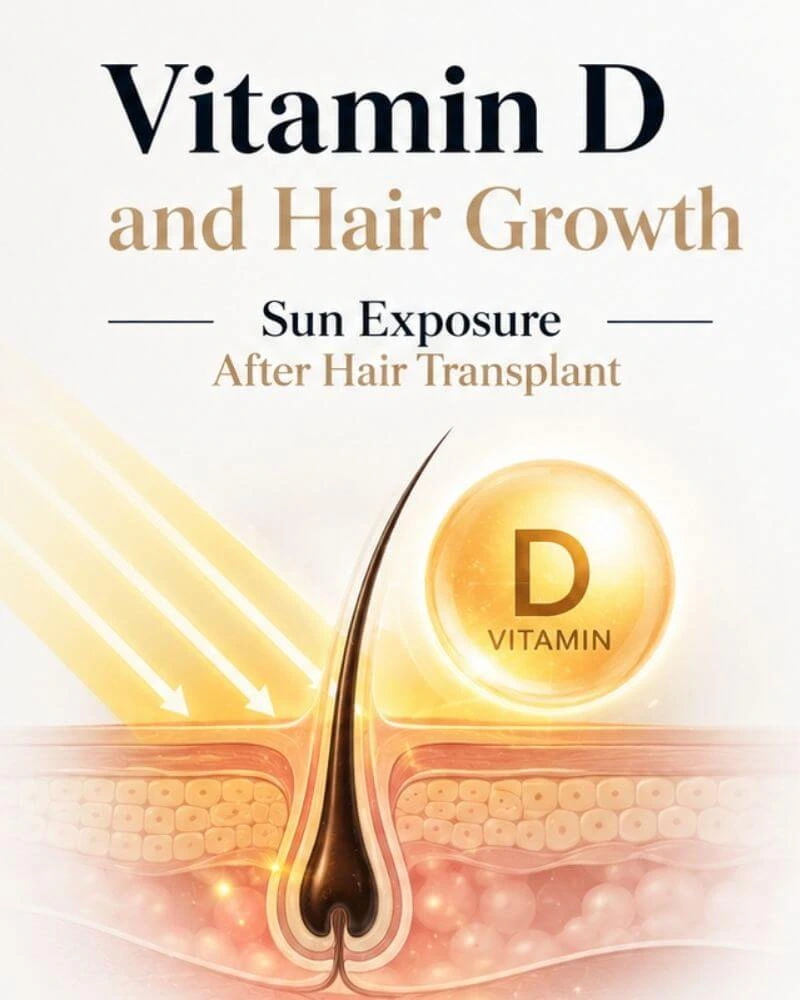
Most people get the majority of their vitamin D from skin exposed to sunlight, not from food. Post-op protocols typically ask patients to avoid direct sun on the scalp and limit general outdoor exposure for two to four weeks, sometimes longer.
If you walk into surgery already low, and then spend your most active recovery window avoiding the one thing that would normally correct it, the deficiency has no reason to improve on its own. It’s a bad time to be running short on a nutrient your follicles are actively using.
NOTE:
Be sure to get your serum vitamin D levels checked before your hair transplant procedure.
Steps for Treating Vitamin D Deficiency
- Get tested. Ask your doctor for a 25-hydroxyvitamin D blood test before or shortly after surgery. This is the only way to know if you’re actually deficient rather than guessing.
- Choose D3. Cholecalciferol (vitamin D3) raises blood levels more effectively than D2, and it’s what most clinical guidelines default to.
- Watch the dose. Standard daily doses run from 1,000 to 2,000 IU for general maintenance. Your doctor will adjust this based on your lab results, and higher therapeutic doses are sometimes used short-term for confirmed deficiency under supervision.
- Be patient. Hair grows slowly. Even with levels corrected, it typically takes three to six months of steady, adequate vitamin D before you’d expect to see any difference tied to it, and that’s on top of the transplant’s own growth timeline.
Perseus Recommends
To support newly transplanted follicles and encourage faster, stronger regrowth alongside optimal Vitamin D levels, incorporate Perseus Vitamins into your post-op routine. Formulated with biotin, zinc, ginseng, and essential micronutrients, it nourishes grafts directly at the cellular level.
Explore Perseus Vitamins →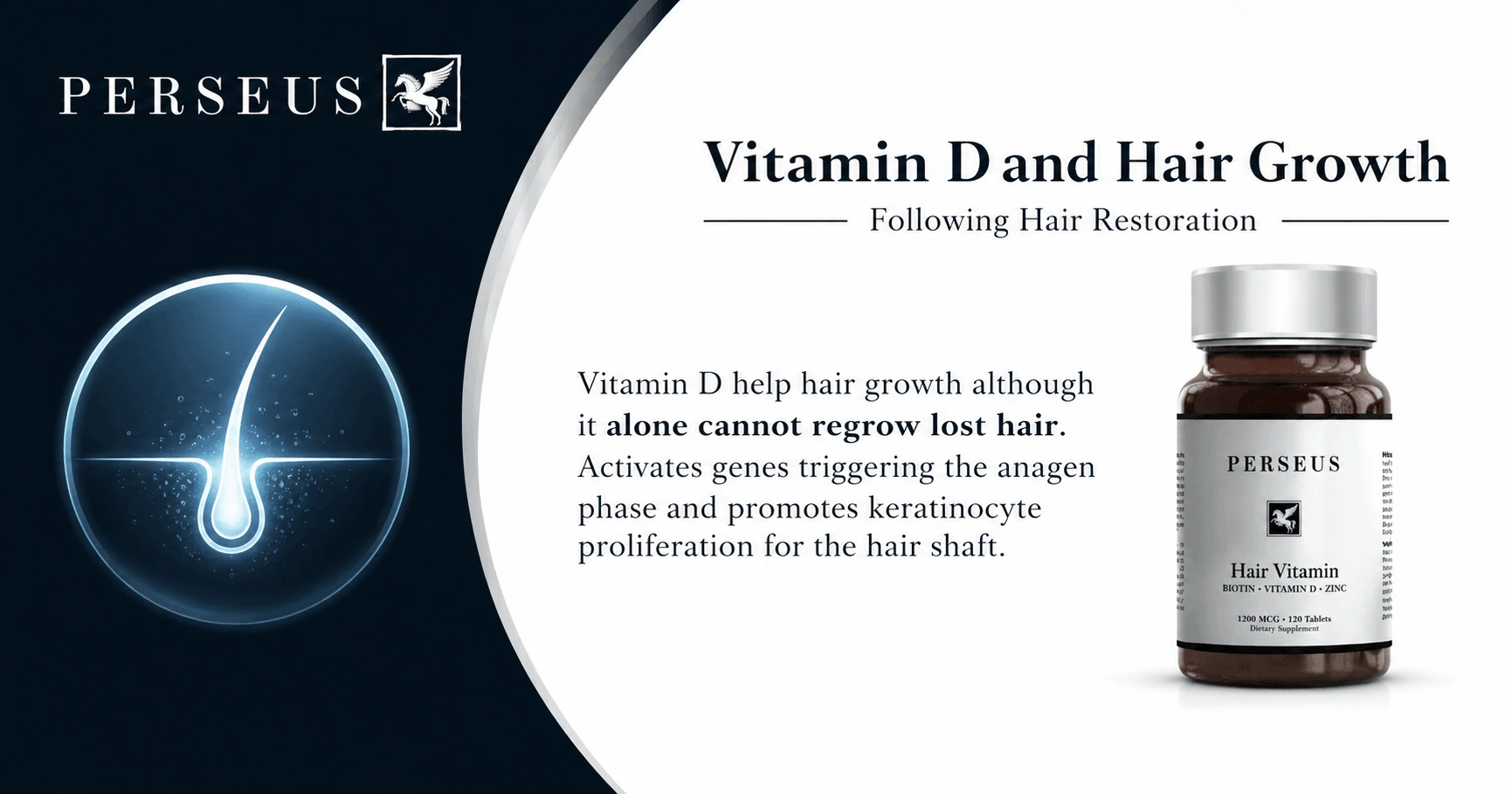
How much vitamin D should I take for hair regrowth?
There’s no special “hair regrowth dose.” Follow standard supplementation guidance: 1,000 to 2,000 IU per day for general maintenance in adults, with higher doses reserved for confirmed deficiency and used under a doctor’s guidance. A blood test tells you where you actually stand, which is more useful than picking a number off a supplement label.
What You Need to Know About the Treatment of Vitamin D Deficiency
How long does vitamin D take to regrow hair?
It doesn’t regrow hair on its own, so there’s no fixed timeline for that. What you can expect is that correcting a deficiency takes a few months to show up in blood work, and any downstream effect on hair follicle health follows the hair’s own growth cycle, which runs three to six months per phase. Don’t expect visible change before that.
Can too much vitamin D cause hair thinning?
Vitamin D toxicity is rare and almost always comes from very high supplement doses over a long period, not from food or sun. It shows up as nausea, weakness, and elevated blood calcium rather than hair thinning specifically. That said, there’s no benefit to taking more than your body needs. Vitamin D is fat-soluble, so it builds up rather than washing out, which is one more reason to test rather than guess.
What happens if I take vitamin D3 daily?
At a standard maintenance dose, taking D3 daily is how most supplementation protocols work, and it’s generally well tolerated. Your body doesn’t need daily dosing to maintain levels (vitamin D has a long half-life), but a daily habit is easier to stick with than trying to remember a weekly or monthly dose. The main thing to avoid is stacking a daily supplement on top of high-dose prescriptions without checking blood levels first.
Where this fits into your overall recovery
Vitamin D is one piece of a longer list of nutrients that matter during hair transplant recovery, alongside biotin, zinc, iron, and vitamin C. For the full picture, including dosage ranges and timing for the complete set, see our guide to the best hair vitamins after a hair transplant.
Vitamin D won’t speed up hair growth beyond your body’s natural pace. However, avoiding the sun after surgery often causes Vitamin D levels to drop unnoticed. If you are deficient, it can quietly hinder your recovery. Don’t wait for symptoms to appear—get a blood test first and ask your surgeon before taking any supplements.
References
- Saini, K., & Mysore, V. (2021). Role of vitamin D in hair loss: A short review. Journal of Cosmetic Dermatology, 20(11), 3407–3414.
- Vitamin D deficiency in non-scarring and scarring alopecias: a systematic review and meta-analysis. PMC / Frontiers in Nutrition.
- Study of serum vitamin D levels in men with premature androgenetic alopecia. PubMed.
- Vitamin D Deficiency. MedlinePlus, U.S. National Library of Medicine.
- Almohanna, H. M., Ahmed, A. A., Tsatalis, J. P., & Tosti, A. (2019). The Role of Vitamins and Minerals in Hair Loss: A Review. Dermatology and Therapy, 9(1), 51–70.
- Demay, M. B. (2012). Role of the Vitamin D Receptor in Hair Follicle Biology. The Journal of Steroid Biochemistry and Molecular Biology, 136, 271–273.
Recommended Reading
✦ Post-Op Nutrition: The Best Hair Vitamins After Hair Transplant — Essential micronutrients, follicle-strengthening supplements, and when to start your post-transplant routine.
✦ Recovery Diet: Hair Growth Meal Plan After Hair Transplant — Nutrient-dense foods, protein targets, and daily meal ideas to fuel graft healing and healthy regrowth.
✦ Gentle Aftercare: Why Use a Paraben-Free Shampoo After Hair Transplant — Protecting delicate grafts, avoiding scalp irritation, and choosing safe cleansing formulas for recovery.
✦ Zinc & Hair Loss: Zinc and Hair Loss: Does Zinc Really Help? — What research says about zinc deficiency, hair shedding, supplementation, and why more zinc does not necessarily mean more hair growth.


Receive offers, product alerts, styling inspiration and more. By signing up, you agree to our Privacy Policy.
- info@perseusstyle.com