Menopause Hair Loss: Causes, Treatments and What Actually Works (2026)
Written by Perseus Editorial Team
Last Update: August, 2026
Summary
- Does menopause cause hair loss? Yes. As estrogen and progesterone decline during menopause, the hair’s growth phase (anagen) shortens and the shedding phase (telogen) extends, causing diffuse thinning, increased daily shedding, and a wider hair part. Around 52% of women over 50 are affected.
- Can it be treated? Yes. FDA-approved minoxidil, hormone replacement therapy (HRT), PRP, low-level laser therapy, and botanical alternatives such as saw palmetto have all demonstrated measurable results in clinical studies.
Studies have found that approximately 52% of women aged 50 and older experience female pattern hair loss after menopause, and that 60% of these women have low self-esteem. Various academic studies on menopause hair loss link have been published in the National Library of Medicine and Science Direct. Articles discussing the relationship between hair loss and the decrease in female hormones and increase in male hormones also mention metabolic differences and the effect of blood flow.
So, is it possible to stop menopausal hair loss? The answer is yes. Let’s see what our hair professionals recommend!
What is the link between menopause and hair loss?
During menopause, levels of estrogen and progesterone decrease. This shortens the anagen phase, which is the hair’s growth stage, and prolongs the telogen phase, the shedding stage. As a result, women in menopause experience both thinning and increased hair loss. When estrogen levels drop, male hormones such as testosterone and DHT may rise. DHT, in particular, contributes to male-pattern thinning in areas like the hairline, temples, and crown. Hormonal changes can also disrupt blood flow to the follicles, leading to finer, weaker hair.
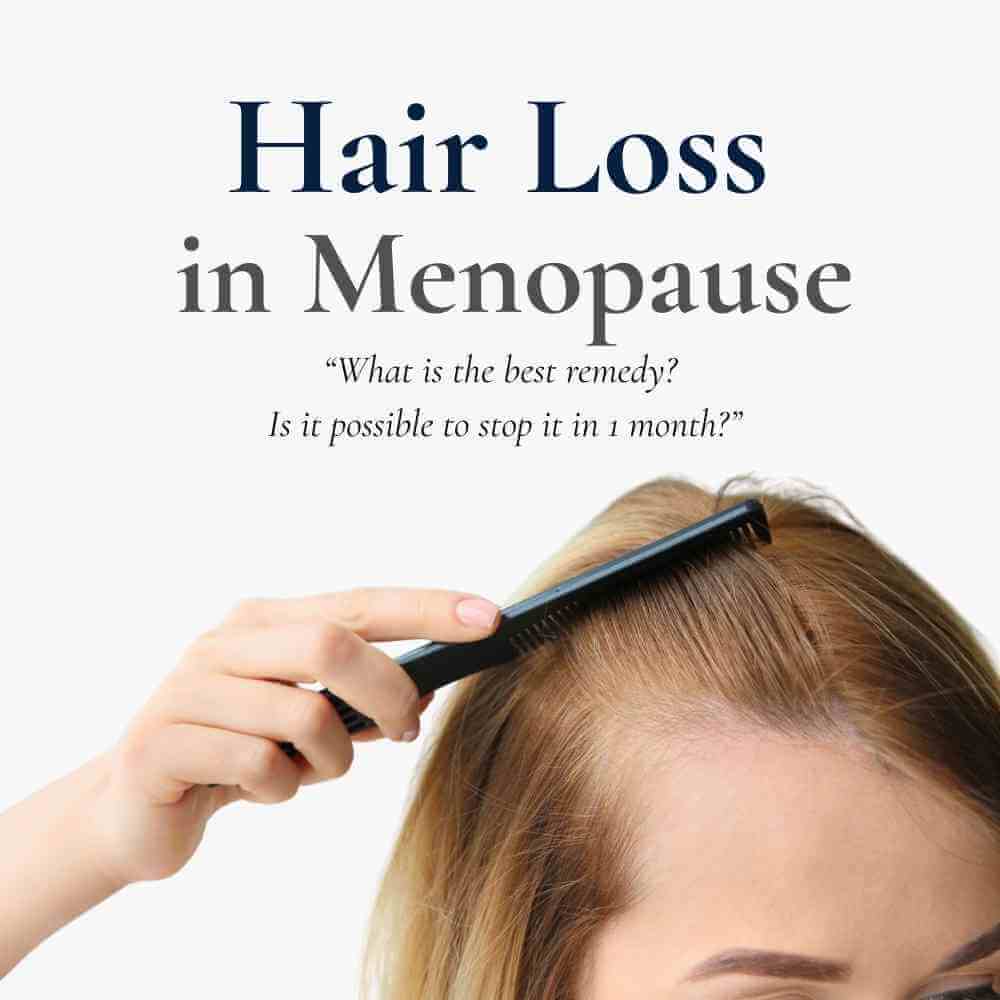
Early Signs of Menopausal Hair Thinning
Being aware of the relationship between hair loss and menopause is important for early diagnosis. Changes to your menstrual cycle, such as irregular bleeding or a complete cessation of periods, are among the earliest signs of menopause. Other common symptoms include;
- hot flushes,
- night sweats, sudden feelings of heat or cold,
- vaginal dryness,
- itching.
These are linked to a sudden drop in oestrogen and progesterone levels, which affect not only the reproductive system, but also the hair’s strength, texture, and density.
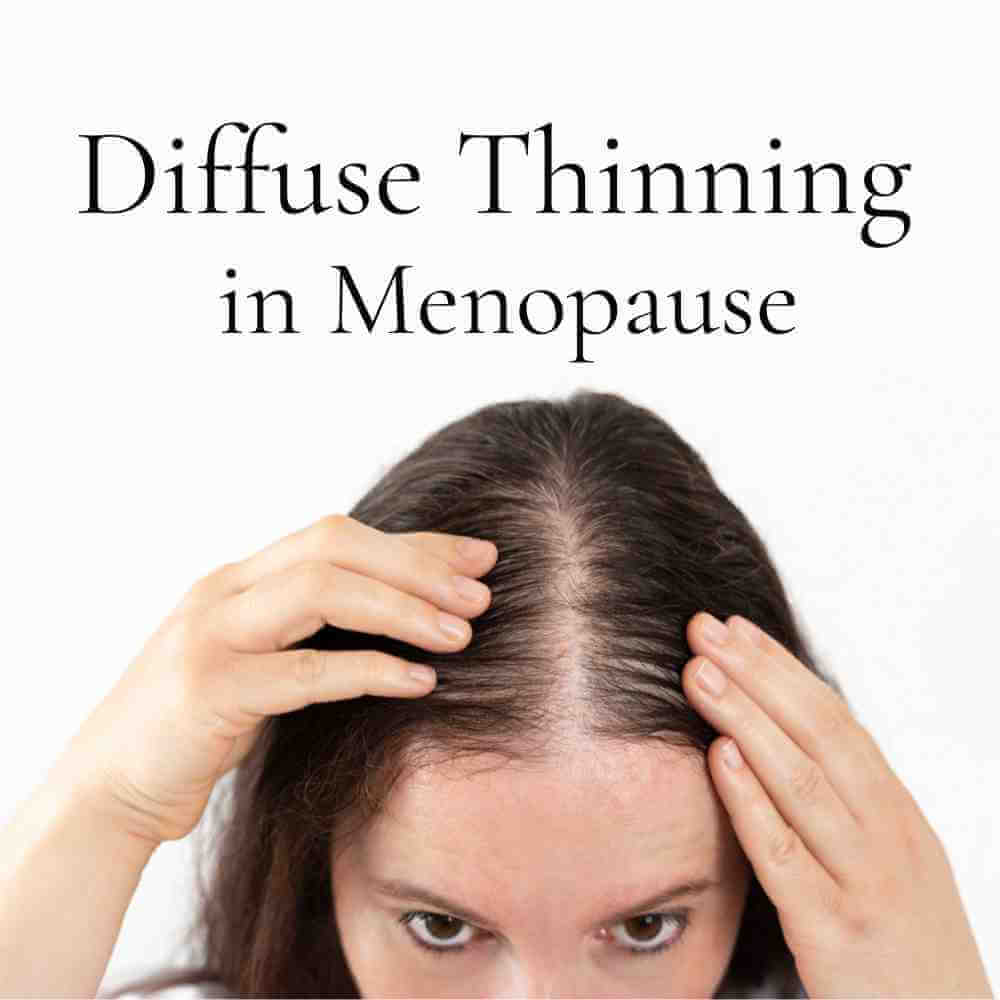
If you suspect that you are approaching the menopause, it is always wise to seek medical advice. An evaluation can help to rule out other causes and provide guidance on tailored treatments. Studies show that approximately 50–75% of women experience hot flushes, and up to one-third report hair thinning or/and shedding during this transition. The underlying mechanism is largely hormonal: oestrogen levels decrease, shortening the hair’s anagen (growth) phase, while androgens such as testosterone and dihydrotestosterone (DHT) may become more active. Together, these can lead to follicle miniaturisation and female hair loss patterns.
The changes caused by menopause in hair are as follows:
Gradual Widening of the Hair Part
Reduced oestrogen and the relative increase in androgens cause follicle miniaturisation, resulting in the central hair part becoming visibly wider.
Increased Hair Shedding
A shorter anagen (growth) phase and a longer telogen (resting) phase result in more hair being shed daily.
Changes in Hair Texture and Volume
A decline in hormones affects the diameter and strength of hair shafts, resulting in finer, weaker and less voluminous hair.
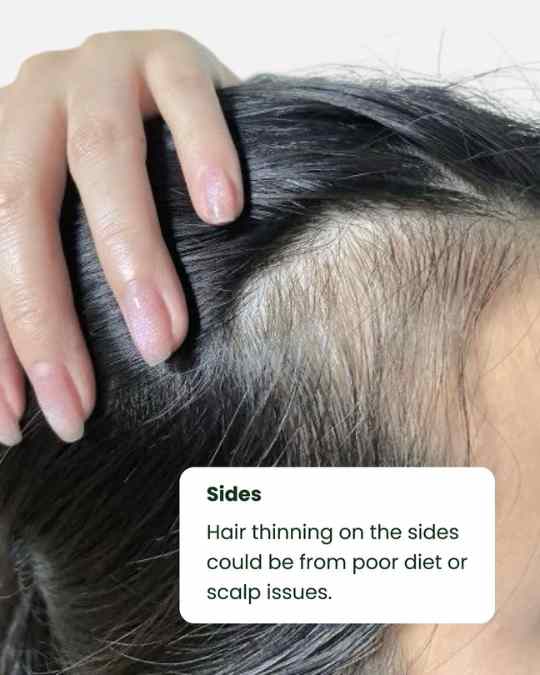
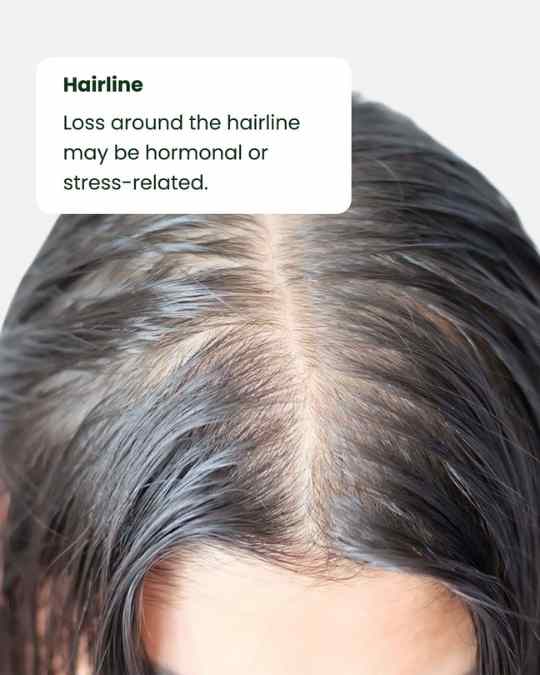
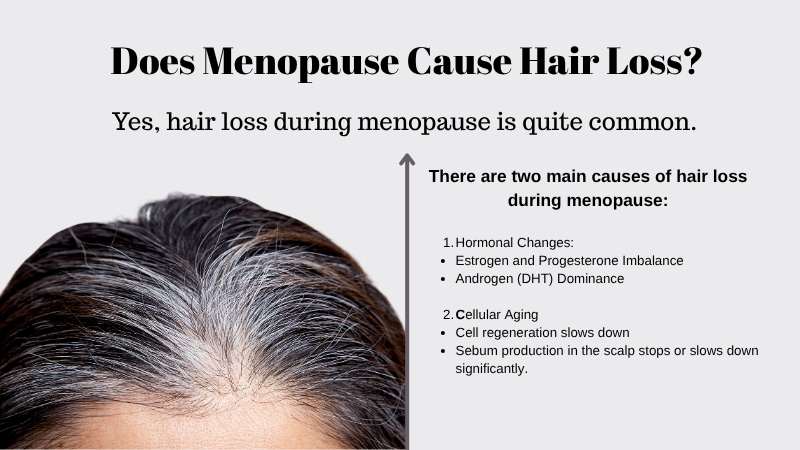
Does Menopause Cause Hair Loss?
Yes, during menopause, a decrease in estrogen and progesterone levels can lead to hair loss. This hormonal decline can disrupt the hair growth and shedding cycle and, combined with an increased effect of the androgen (DHT) hormone, can accelerate hair loss.
The signs of hair loss during menopause include thinning, brittleness, thinning out, and a noticeable slowdown in hair growth.
Does beta HCG rise during menopause?
Yes, slight increases in the beta HCG hormone may be observed during menopause. Known as the pregnancy hormone, Beta HCG can be produced in different forms by the pituitary gland as your reproductive years end and you enter menopause. During menopause and the postmenopausal period, since estrogen and progesterone levels have depleted, the pituitary gland raises FSH and LH hormone levels to very high levels in an attempt to stimulate the ovaries. However, this does not indicate pregnancy. The increase in hormone levels is generally related to advancing age or changes in the pituitary gland. If you suspect you might be pregnant, it is advisable to get a blood test done without delay.
Elevated Beta-hCG levels during menopause are not the cause of hair loss; they do not lead to hair loss. If you are going through menopause and your Beta-hCG levels in blood tests are significantly higher than expected, this may indicate other systemic health issues rather than hair loss.
What vitamins should women entering menopause take?
To determine whether you need vitamin supplements, please do not rely solely on blog posts. Be sure to consult your doctor and use the products they recommend; the ones you truly need.
Generally, women often experience deficiencies in the following vitamins during menopause:
- Vitamin D, Vitamin K, Calcium, Magnesium, B vitamins (especially B6 and B12), and Omega-3.
The drop in estrogen levels during menopause increases the risk of bone loss and heart disease. To protect bone health, boost energy levels, and alleviate symptoms during this period, the vitamins mentioned above can be used under a doctor’s supervision.
Which Type of Hair Loss Do You Have? FPHL vs. Telogen Effluvium
Two distinct conditions frequently affect women during and after the menopause transition and they look similar on the surface, but have different causes, different prognoses, and critically, different treatments. Knowing which one you are dealing with is the first step toward getting the right help.
Female Pattern Hair Loss (FPHL)
The most common type of hair loss during perimenopause and menopause is androgenic alopecia, also known as female pattern hair loss (FPHL). Hormonal changes lead to a decrease in estrogen and progesterone and an increase in androgen levels. This hormonal imbalance causes hair follicles to shrink, miniaturise, and produce finer, shorter hairs: typically manifesting as a general thinning across the top and front of the scalp, with the hairline remaining intact.
FPHL is a chronic, progressive condition. It does not resolve on its own. It typically begins in a woman’s twenties or thirties, often going unnoticed until significant miniaturisation has occurred, with onset frequently correlating with hormonal changes during menopause. The central parting becomes visibly wider over time.
What to look for:
- Gradual widening of the hair part over months or years
- Diffuse thinning concentrated at the crown and top of the scalp
- Hairline largely preserved
- No sudden onset, changes are slow and progressive
- No scalp discomfort, FPHL generally does not cause tenderness, itching, or burning
Telogen Effluvium (TE)
It is a temporary condition where a large number of hair follicles enter the resting (telogen) phase simultaneously, leading to increased shedding. The pattern of hair loss is typically diffuse and affects the entire scalp, with no specific pattern of recession or thinning.
It presents with sudden, dramatic hair loss that becomes apparent within 2 to 4 months following a triggering event. Common triggers include major surgery, severe illness, childbirth, extreme stress, rapid weight loss, or medication changes. Menopause itself can act as a trigger.
What to look for:
- Sudden onset, large amounts of hair shedding over a short period
- Affects the entire scalp evenly, not just the crown
- May be accompanied by scalp tenderness, sensitivity, itching, or a burning sensation, symptoms that reflect active shedding
- Usually temporary; acute TE typically resolves within six months, though full recovery can take nine to eighteen months
- A clear trigger event can usually be identified
Medical and Professional Menopause Hair Loss Treatments
The good news is that there are several strategies that can help to slow down menopausal hair loss. Examples include:
- Medical treatments
- Hormone replacement therapy (HRT).
- Topical minoxidil
- Low-level laser therapy (LLLT).
- Lifestyle interventions: Improving nutrition (protein, iron, vitamin D and omega-3s).
- Managing stress effectively. Optimising scalp care with gentle products and massages.
These approaches, when combined, can support healthier hair growth and reduce the menopause-related balding. Let’s examine the process and effects of these treatments through Mina’s experience. Mina is 52 years old, has recently entered menopause, and has noticed widening in the parting of her hair. She is trying a combined plan with her dermatologist and gynecologist:
Hormone Replacement Therapy (HRT)
After screening, she starts taking a low dose of oestrogen and progestogen. Within weeks, her hot flushes ease. Over the next two to three months, the oestrogen treatment extends the anagen phase of more hairs and reduces the androgen dominance that causes miniaturisation. Although she doesn’t regrow hair overnight, her hair shedding stabilises and its texture feels less brittle.
Topical Minoxidil for Women (5% once daily)
Every night, she massages foam into the thinning areas. In the first six to eight weeks, she experiences telogen hairs being pushed out. By months three to six, more short, pigmented ‘baby hairs’ appear and the density improves because the follicles spend longer in the growth phase.
Low-Level Laser Therapy (LLLT)
She adds 3 sessions per week with a medical-grade cap. Photobiomodulation boosts mitochondrial ATP and microcirculation. Over 3 to 4 months, the shafts thicken gently, which complements the effect of minoxidil.
Platelet-Rich Plasma (PRP) Injections
Over 3 monthly sessions, platelet concentrate is injected into the scalp. Growth factors (e.g. PDGF and VEGF) stimulate the follicles to promote growth and improve shaft calibre. Any mild soreness lasts for a day, and after three months, she reports less breakage and a fuller appearance.
At the end of six months…
There is no single ‘cure’, but a combination of HRT, minoxidil, LLLT and PRP can slow hair loss, stabilize shedding and increase density and thickness to a modest extent. Regular follow-ups, ferritin/vitamin D optimisation and gentle scalp care maintain these results.
Hair Care Practices to Reduce Breakage
Hair that is weakened by hormonal changes or aging is more likely to break. These trio can help to preserve the integrity of hair fibres;
- Gentle washing,
- Careful brushing,
- Using a wide-tooth comb.
Regularly hydrating the scalp also helps to create a healthier environment for the follicles.
Choosing the Right Shampoo and Conditioner
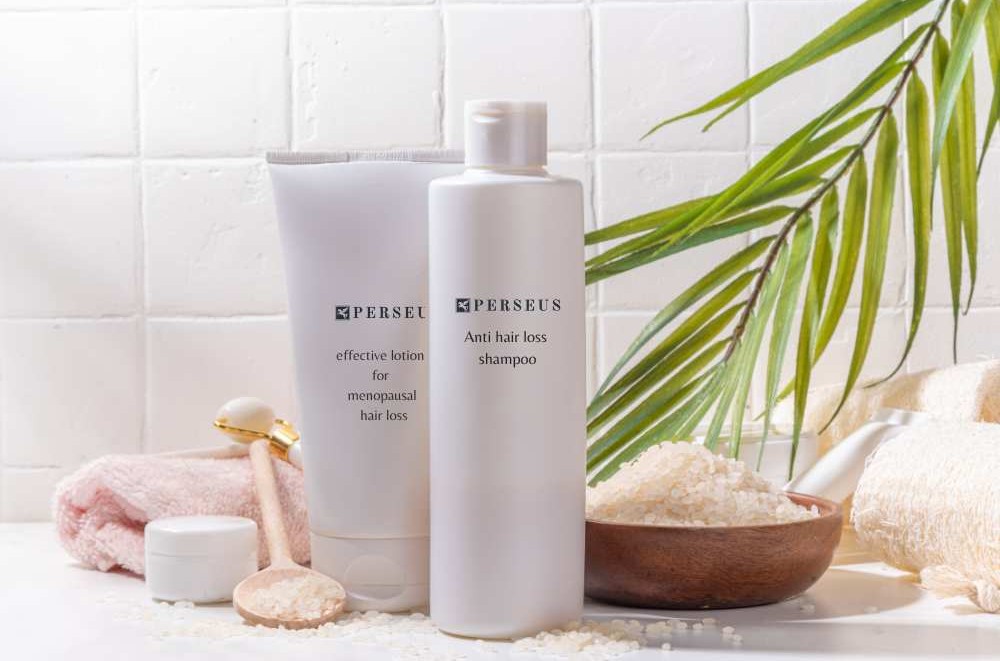
Using a mild, sulfate-free shampoo and a lightweight conditioner afterwards can reduce scalp irritation and improve moisture balance. Products containing nourishing ingredients such as biotin, panthenol or natural plant extracts can help to strengthen hair in the long term. (Explore gentle, post-hair transplant shampoos designed for sensitive scalps)
Avoiding Heat and Chemical Damage
It is not correct to always attribute hair loss during menopause to the menopause-hair loss relationship. Some mistakes made in daily life also have an effect on hair loss. For example, excessive use of hair styling products, exposing hair to high heat, and exposing hair to excessive chemicals with the wrong hair care products.
Protective Hairstyles for Fragile Hair
Just as men need sensitive care when they have hair transplants, women also need sensitive hair care products during menopause. Gently cleansing the hair with chemical-free shampoos and strengthening it with nourishing serums and oils are just two of the steps that can be taken. Hair loss solutions for women also involve using a gentle hair care set. Nourishing the hair, adopting a gentle care routine, and continuing this for at least six months will be effective in stopping hair loss during menopause.
Should I use an oestrogen shampoo during menopause?
You may have come across the term ‘oestrogen shampoo’ and wondered whether it could help with hair thinning linked to the menopause. Such shampoos were popular in the past because they contained oestrogen derivatives, either synthetic or natural, and were mainly tested for treating female androgenetic alopecia.
Today, however, things have changed. Oestrogen shampoos are no longer recommended because their hormonal ingredients can be absorbed through the skin, raising safety concerns. In fact, both the FDA and European health authorities have mostly removed them from the market for these reasons.
Combining oestrogen compounds like estradiol or ethinylestradiol with standard shampoo bases such as surfactants and cleansers is a traditional practice in the formulation of these shampoos. Although they seemed promising at first, the potential risks eventually outweighed the benefits.
Does Perseus shampoo contain hormones?
No, it does not contain oestrogen. Perseus shampoos are specially formulated to reduce hair loss and reactivate hair follicles. They contain gentle surfactants, vitamins, plant extracts and scalp-repairing compounds. The formulas are completely hormone-free and dermatologically safe. During menopause, after three months of use, it is very likely that you will not only stop hair loss but also see new hair growth.
Botanical Alternatives: Plant-Based Support for Menopausal Hair Loss
Alongside medical treatments, several plant-based compounds have demonstrated meaningful effects on menopausal hair loss in peer-reviewed clinical trials. These are not replacements for dermatologist-supervised care, but they are evidence-backed options worth knowing about.
FAQs about Menopause Hair Loss
Will hair transplants work for women after menopause?
For women with stable FPHL and adequate donor hair, a hair-restoration specialist can use state-of-the-art transplant techniques to improve density.
Does menopause cause facial hair growth while scalp hair thins?
It can. Post-menopausal changes in androgen levels may result in increased facial hair growth while scalp hair thins. Options for dealing with this include cosmetic removal and, if appropriate, medical anti-androgen therapy.
Could thyroid problems or other conditions be the real cause?
Yes, thyroid disease, major illness or surgery, rapid weight loss, certain medications and low iron levels can all trigger shedding and coexist with FPHL. That’s why a medical work-up matters.
Is menopausal hair loss permanent—or can it grow back?
Not exactly. Female pattern hair loss (FPHL) is a chronic condition, but you can manage it. Treatments slow hair loss and help thicken hair while you use them. Telogen effluvium, triggered by stress, illness, or weight changes, usually resolves once you address what cause.
Can perimenopause cause hair loss?
Yes, swings in oestrogen and progesterone, can mess with your hair growth cycle, causing it to thin out and fall out more during perimenopause as well.
References
Ramos PM, Miot HA. Female pattern hair loss: a clinical and pathophysiological review. An Bras Dermatol. 2015;90(4):529-543. doi:10.1590/abd1806-4841.20153370
Grymowicz M, Rudnicka E, Podkowa A, et al. Hormonal effects on hair follicles of humans. Int J Mol Sci. 2020;21(15):5342. doi:10.3390/ijms21155342
Cole HA, Shardell MD, Shafi T, et al. Elevated hCG in postmenopausal women: A case series and literature review. Clin Biochem. 2023;115:94-98. doi:10.1016/j.clinbiochem.2023.02.002
Malkud S. Telogen effluvium: a review. J Clin Diagn Res. 2015;9(9):WE01-WE03. doi:10.7860/JCDR/2015/13919.6437
Suchonwanit P, Thammarucha S, Leerunyakul K. Minoxidil and its use in hair disorders: a review. Drug Des Devel Ther. 2019;13:2777-2786. doi:10.2147/DDDT.S214907
Evron E, Juhasz M, Babadjouni A, Mesinkovska NA. Natural hair supplementations for the treatment of alopecia: a review. JAMA Dermatol. 2020;156(8):923-924. doi:10.1001/jamadermatol.2020.150
Recommended Reading
✦ Star-Owned Products: Celebrity Haircare Brands — An honest review of star-owned hair products, their actual performance, and how they stack up against professional care solutions.
✦ Safe Formulas: Thorough Exploration of Paraben-Free Options — Discover why dermatologists recommend paraben-free and sulfate-free formulas to protect sensitive scalps and optimize hair health.
✦ Nutritional Support: Hair Growth Meal Plan After Transplant — Fuel your newly transplanted follicles with the ultimate nutrition guide and meal plans designed for faster recovery and density.

Receive offers, product alerts, styling inspiration and more. By signing up, you agree to our Privacy Policy.
- info@perseusstyle.com