6 Months After Hair Transplant: The Month Everything Changes
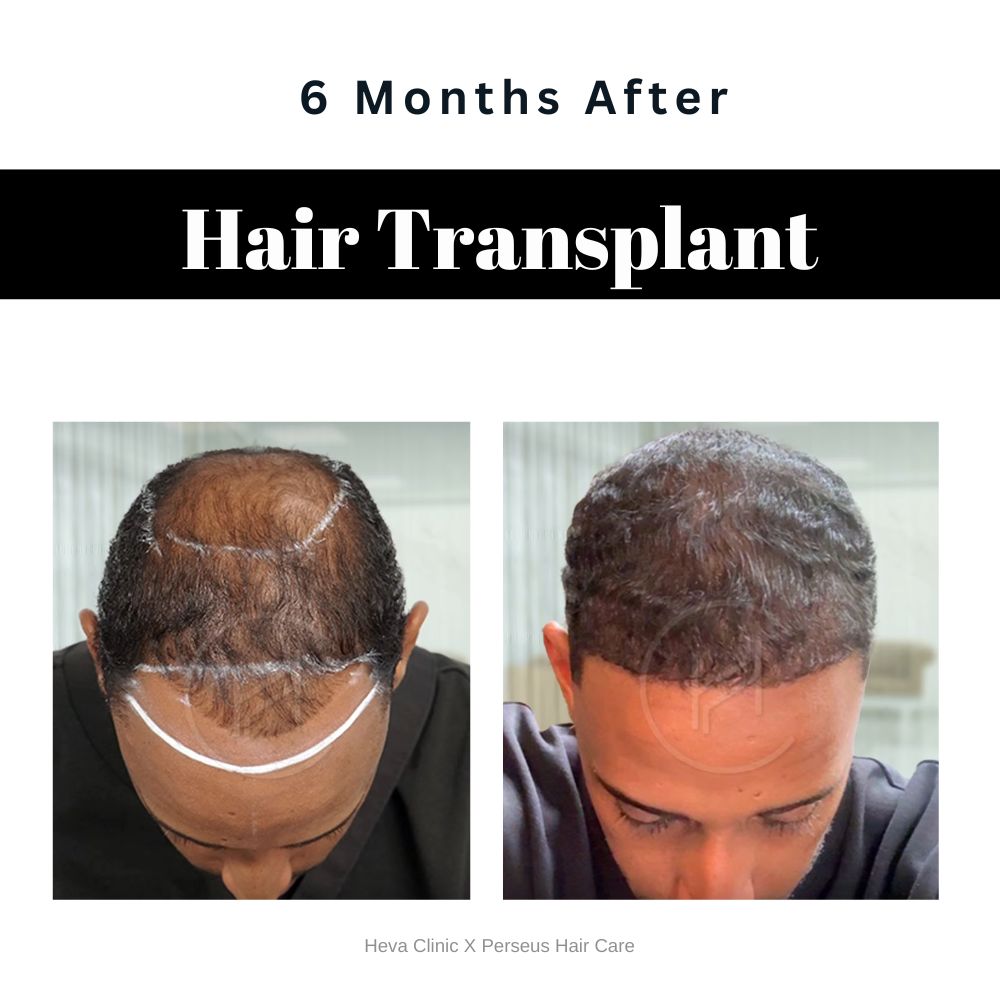
The sixth month after hair transplant is the first time you will look in the mirror and actually feel it. Not just see a change, feel it. The anxiety over ugly scars, the habit of obsessively checking the scalp every day, photos taken under four different lighting conditions in the hope of spotting even the slightest new hair growth, a head you’re afraid to touch… All of this fades away sometime between the fifth and sixth months, giving way to a calmer and more meaningful recovery. A much more comfortable healing process, more noticeable follicles, a step-by-step approach toward ideal hair density…
What is the meaning of the 6th month in the recovery process?
The sixth month isn’t always a bed of roses; on the contrary, it’s a month when many people stumble. Yes, you’ve reached the halfway point, but your recovery isn’t complete yet. Viewing this distinction not as a disappointment but as a framework is what sets apart patients who enjoy this stage from those who spend it worrying about outcomes that haven’t yet materialized.
When referring to the hair transplant recovery process, clinics generally mean a one-year period. The recovery period for FUE, UFUE, NeoGraft, DHI, and all other hair transplant procedures—whether performed on shaved or unshaved scalps—is approximately one year. The sixth month marks the halfway point of recovery for all hair transplant techniques.
Biological changes occurring 6 months after a hair transplant
What has been left behind in the six-month period? By this point, the most challenging stages of your biological healing process are behind you:
- The initial shock of the loss ended months ago.
- Your surgical wounds have fully healed.
- The inflammation that caused your recipient area to look worse than before surgery for a time has completely subsided.
You have now transitioned into a slower maturation process.
-
The 60-70% Rule
Transplanted hair begins to grow around the 3rd month, reaches 60% to 70% density by the sixth month, and achieves full maturity between the tenth and twelfth months. This figure (60 to 70 percent) is often misunderstood. This does not mean that 30%-40% of your grafts have failed. It means that the hair that has emerged is still in its earliest, least mature stage. This hair is fine. Also, it may have a slightly different color than your natural hair and its texture may be coarse. None of this is permanent. The remaining 30–40% are either still dormant or just beginning to break through the skin’s surface.
2. The Immature Texture
If you run your fingers through the new hair, you might notice it feels a bit wire-like, frizzy, curly, or coarser than your native hair. This is completely normal. The newly formed hair follicles are still adapting to their new blood supply, and the hair shaft will soften, straighten, and match your natural texture over the coming months.
3. Vascular Consolidation
At this stage, the vascular biology driving rapid growth is quite simple: The follicles have completed their initial revascularization process and, as blood flow stabilizes, have begun to produce hair more vigorously. The network of capillaries that has reformed around the transplanted follicular units is now fully mature. So, it regularly supplies each follicle with oxygen and nutrients. In short, this mechanism ensures that you will see permanent hair on your scalp for decades to come.
4. Graft Survival Confirmation
According to an article by Dr. Robert M. Bernstein of Bernstein Medical, studies show survival rates of 92.0% on average at six months and 90.4% at twelve months, and confirm that the number of grafts stabilizes by the end of the first year. Six months is the earliest meaningful timeframe for evaluating graft survival, and the results are positive for the vast majority of patients who properly follow postoperative care instructions.
You might find this interesting
To view the entire hair transplant process in a single chart and examine patient photos showing the results of the hair transplant and the recovery process month by month, please read our article titled Hair Transplant Chronology.
Hair Transplant Chronology →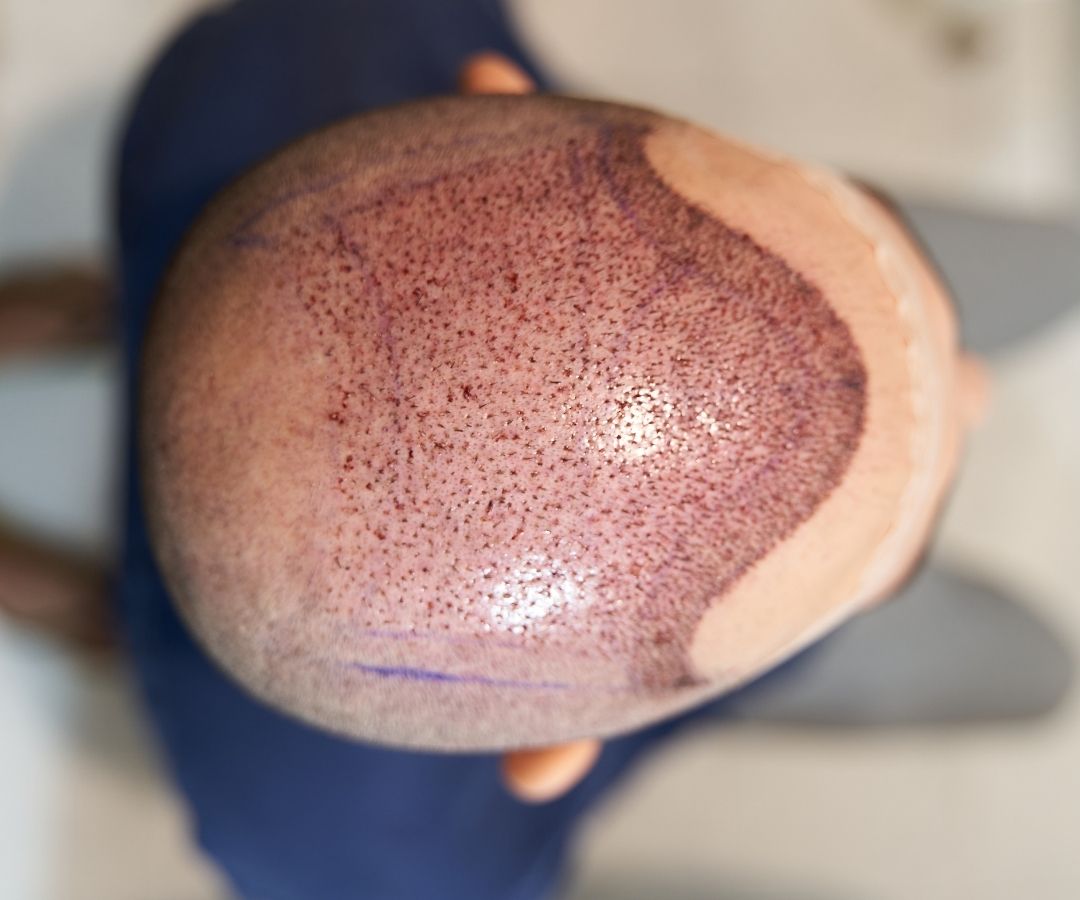
Zone by Zone: What Month 6 Actually Looks Like
Healing does not progress at the same rate across the entire scalp. The healing process of hair follicles varies across different areas of the scalp. When you click on each area in the scalp visualization, you can view information about the healing process in that area at the 6-month mark. For more detailed information, let’s take a closer look at the healing process in each scalp zone 6 months after hair transplantation:
The Hairline and Temples
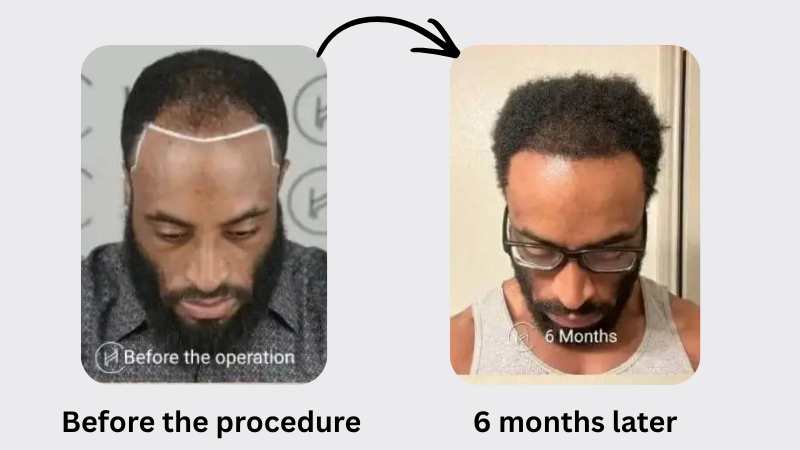
The hairline and temple areas show the most notable improvement within 6 months, as the vellus hairs in these areas transform into terminal hairs more quickly due to increased blood flow. Results in the hairline of the forehead area usually reach full maturity within 12 to 15 months.
The Crown Requires Patience
The crown area, though, is a different story. It is influenced by a variety of biological factors. Vascular density is lower in the crown area. This slows down the regrowth of hair follicles and significantly delays the appearance of visible results. Full maturation in the crown area can take 18 to 20 months. This means that patients may see almost no noticeable improvement in this area during the six-month period.
When it comes to the crown, very few patients see noticeable improvement at six months, as this area often takes longer, sometimes up to eighteen months, to show full results. If your crown looks largely unchanged, this is not a signal that something went wrong. It is a signal that your crown is operating on its own, slower schedule, exactly as expected.
The Overall Picture
In six months, you can expect approximately 50 to 60 percent of your final hair to have grown in. Your hair may feel coarse, curly, or unmanageable; however, as mentioned above, this is temporary. You can now care for your hair as usual: you can get it trimmed, styled, and use products specifically designed for post-hair transplant care. Result: It looks great right now, but it will look even more amazing in another six months.
Your Month 6 Care Routine: What to Do and When
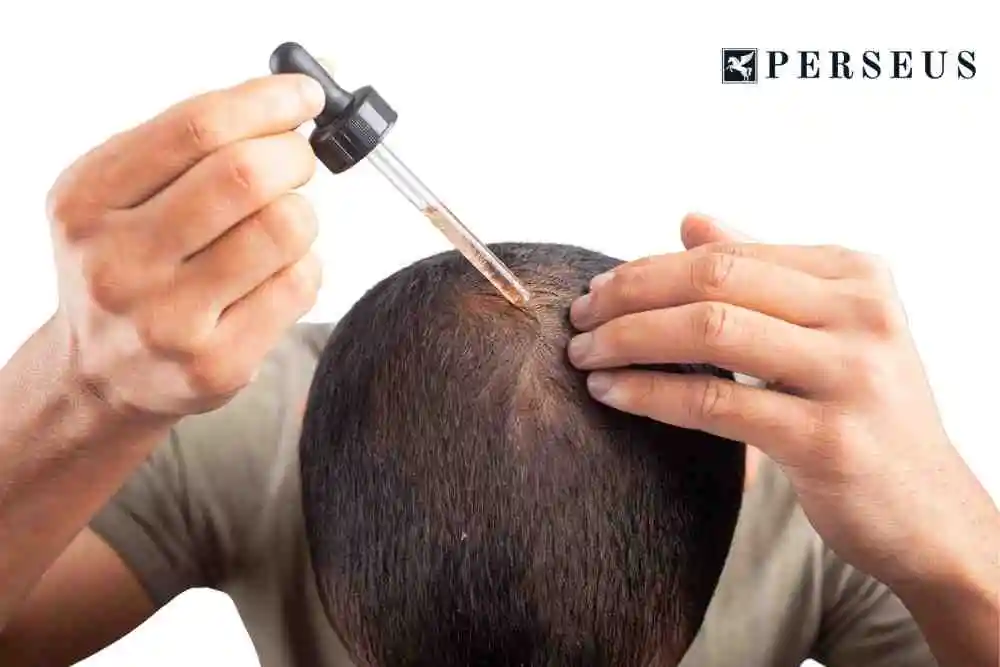
Daily: Wash with Perseus Hair Loss Shampoo using gentle fingertip pressure; not nails, not a brush. Apply the Ozonized Hair Oil Complex to the donor area (2 to 3 drops) and the Oil Serum Complex to the recipient area (9 to 10 drops). Leave for thirty to forty minutes. Air dry or use a diffuser on the lowest setting. Take one Perseus Hair Vitamin in the morning with food.
Every evening: Take your second Perseus Hair Vitamin with your dinner.
Be sure to consult your doctor before taking hair vitamins. Your need for hair vitamins may vary depending on your specific condition.
Every two weeks: Application of a dermaroller-assisted mesotherapy serum. This is the optimal frequency for a six-month treatment plan. It is frequent enough to ensure regular stimulation of the follicles, yet spaced far enough apart to allow the microchannels created after each session to heal completely before the next application.
Monthly: Take photos of your progress. Keep the lighting and angles consistent, and take photos at the same time each day. Taking photos every month over a 12-month period is the most reliable way to track changes that occur too slowly to be noticed in daily life; it’s also the most effective remedy for the impatience that can sometimes set in by the sixth month.
Perseus Recommends
The first 6 months after your hair transplant are behind you, but there are still another 6 months until full recovery. Did you know you can get the 2nd Perseus Perseus 6-Month Care Set? at a 20% discount? Email info@perseusstyle.com right away to get the discount code and claim your 20% off!
Explore Post Hair Transplant Package →What You Can and Cannot Do at Month 6
- Haircuts: Safe. Your grafts are permanently anchored. Visit your barber or stylist without concern.
- Hair colouring: Generally safe from month six, though many specialists prefer month eight for chemical processes. If you colour at month six, use a gentle, ammonia-free formula and perform a patch test. Avoid bleach on the recipient area until month nine.
- Exercise: All restrictions lifted. Exercise normally.
- Heat styling: Use with care. Immature terminal hairs are more susceptible to heat damage than fully mature hair. Air dry where possible; use low heat settings when necessary.
- Tight hairstyles: Avoid. Ponytails, braids, and cornrows under tension place mechanical stress on still-maturing follicles. Loose styles only.
- Swimming: Pools are safe. Prolonged sea water exposure should still be followed by a gentle shampoo wash.
Signs Your Month 6 Recovery Is On Track
Positive indicators:
- Visible new hair in the hairline and frontal zone
- Progressive improvement compared to month five
- Intermittent scalp itching; a sign of active follicle growth
- Donor area fully recovered, invisible in normal lighting
- No persistent redness or tenderness in the recipient area
- Hairs beginning to thicken and darken compared to their appearance at month four
Contact your clinic if you notice:
- No visible growth anywhere in the recipient area by week twenty-four
- Persistent redness, heat, or small pustules that do not resolve within a week
- Disproportionate shedding from native, non-transplanted hair
- Any area with an unusual texture, persistent darkness, or induration
Hair Growth by the Numbers at Month 6
| Metric | Month 3 | Month 6 | Month 9 | Month 12 |
|---|---|---|---|---|
| Hairs surfaced | ~30% | ~60–70% | ~90–100% | 100% |
| Maturation level | Very low | Low–moderate | Moderate–high | High–full |
| Hairline completion | ~15% | ~50–60% | ~80–90% | Near-final |
| Crown completion | Minimal | Minimal–early | 60–70% | 70–80% |
| Overall cosmetic benefit | Minimal | Early–meaningful | Significant | Near-final |
Is patchy growth normal at month 6?
Yes. Uneven growth is possible because different areas of your hair can grow at different rates. So, at around the six-month mark, you may notice it is thicker or thinner in certain parts. This resolves progressively as all follicles complete their vellus-to-terminal transition. It is not a sign of graft failure.
What Patients Ask
1.My crown looks almost unchanged at month 6. Should I be worried?
No. Full maturation in the crown can take eighteen to twenty months, meaning patients at six months may see little to no noticeable improvement in this zone. Crown concerns are best assessed at the twelve-month mark. If your hairline is showing growth, your crown follicles are active.
2. Can I judge my final result at month 6?
Surveys suggest that around fifty to sixty percent of the final visible growth from a hair transplant is present at the six-month mark. You are seeing approximately half of your final result. The most significant improvements occur between months six and twelve.
3. My new hair still feels wiry. Is this permanent?
No. Wiry or kinky texture is a temporary characteristic of immature hair shafts that lack the full protein cross-linking of mature hair. It normalises progressively between months six and twelve as keratinisation completes.
4. Can I fly with the 6-month set?
On full-service airlines with generous carry-on allowances, usually yes. On budget or basic fare carriers, the set’s volume can occasionally cause issues.
5. Is there a discount available?
Yes. Readers who purchase the Perseus 6-Month Care Set through this article can apply the code $20discount at checkout for a twenty dollar saving. This is a limited offer and applies exclusively to the 6-month set.
6. Should I consider a second transplant at month 6?
No. Most surgeons recommend waiting until at least twelve months and ideally eighteen months for crown work before determining whether a second session is warranted.
References
- Bernstein Medical. Dislodgement after hair transplant. Bernstein Medical Center Website. Accessed May 20, 2026.
- 6 months after a hair transplant. Reddit, r/HairTransplants. Accessed May 20, 2026.
- Oveisi C. The hair growth cycle, telogen effluvium and psychological impact. Hair Ther Transplant. 2024;14:243.
- Liu D, Xu Q, Meng X, Liu X, Liu J. Status of research on the development and regeneration of hair follicles. Int J Med Sci. 2024;21(1):80–94.
- Avram MR, Rogers NE. Hair transplantation. In: StatPearls. Treasure Island, FL: StatPearls Publishing; Updated August 2, 2025.
- Jimenez F, Alam M, Vogel JE, Avram M. Hair transplantation: Basic overview. J Am Acad Dermatol. 2021;85(4):803–814.
- Vañó-Galván S, Camacho F. New treatments for hair loss. Actas Dermosifiliogr. 2017;108(3):221–228.
Recommended Reading
✦ Month 4 Progress: Month 4 After Hair Transplant — Track the exciting emergence of new hair growth as dormant follicles wake up and density begins to visually transform.
✦ Month 5 Milestone: 5 Months After Hair Transplant — Witness the noticeable thickening phase as fine vellus hairs mature into stronger, darker strands across the recipient area.
✦ Growth Journey: Hair Transplant Timeline: Real Before & After Photos — A comprehensive month-by-month visual guide showing how your hair transitions from surgery to full density over a complete 12-month recovery cycle.


Receive offers, product alerts, styling inspiration and more. By signing up, you agree to our Privacy Policy.
- info@perseusstyle.com