The Best Season for a Hair Transplant: Summer or Winter?
Written by Perseus Editorial Team
Last updated: August 2026
Have you ever wondered what is the best season for hair transplant? While patients typically ask about hair transplant prices, how many grafts they’ll receive, and the differences between techniques, very few consider the optimal temperature for the procedure. In reality, whether the number of grafts is 500 more or less doesn’t significantly alter your overall appearance. However, there is a huge difference between hair transplant healing in very hot weather and healing in cold weather.
Season is not a minor logistical detail. The months in which you recover have a direct bearing on your comfort, your concealment options, your infection risk, and the ease with which you can follow post-operative instructions. In other words, the best season for a hair transplant is not simply when your calendar is free, indeed it is when the conditions around you are most conducive to optimal healing.
This guide walks you through the real clinical and practical differences between a summer and a winter procedure.
Why Timing Affects Your Recovery
Now we all know that a hair transplantation is a minimally invasive surgical intervention against hair loss. Still, it is a surgical procedure. Tens of thousands of follicular units are extracted from a donor zone and carefully implanted into the recipient area through microscopic incisions. In the days and weeks that follow, those grafts depend on a stable, hygienic, and non-traumatic environment in order to anchor successfully and enter the active hair regrowth phase.
Environmental variables including temperature, humidity, UV intensity, and wind, all interact with these hair transplant healing steps. So does your lifestyle:
- how much you sweat,
- how much time you spend outdoors,
- whether you can rest adequately,
- and how naturally you can conceal the early signs of recovery.
Every one of these variables is influenced by the season you choose.
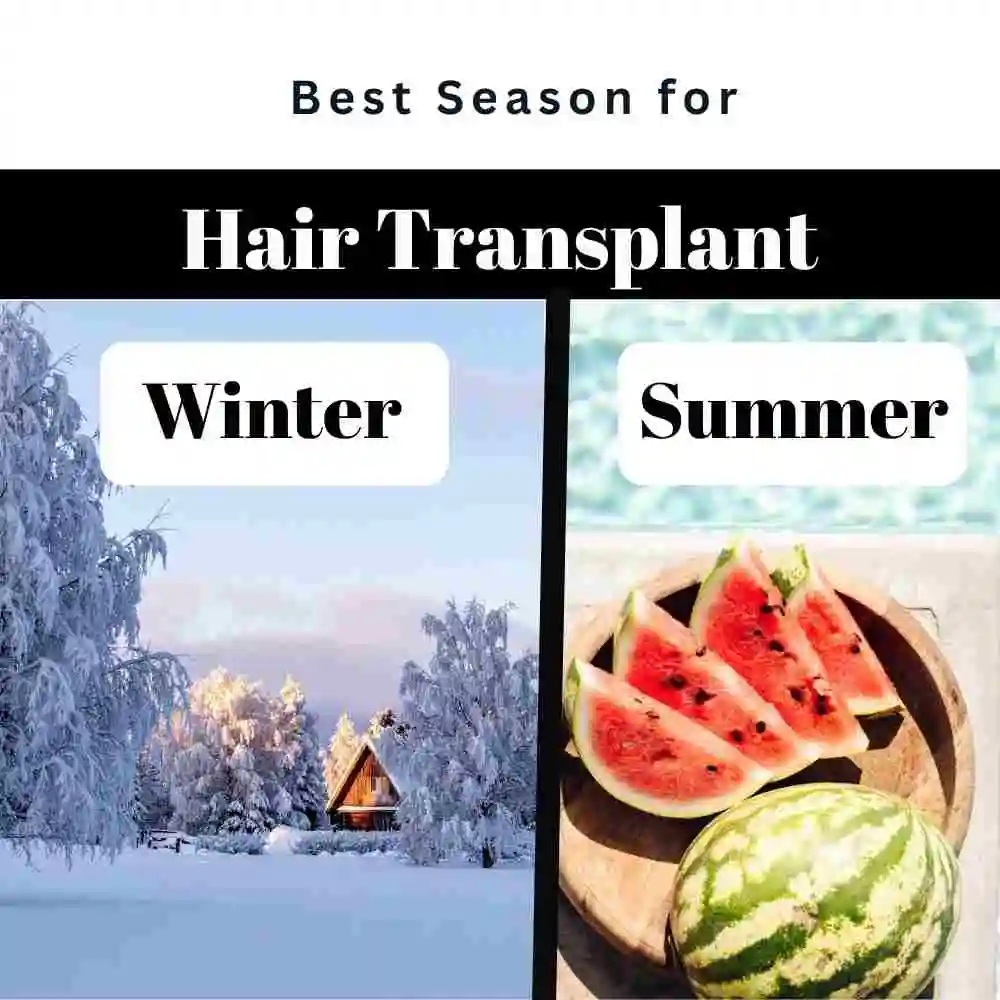

Why Top Hair Clinics Prefer Winter?
Ask a seasoned hair restoration specialist when they would recommend their own patients to undergo the procedure, and the majority will indicate the cooler months, roughly October through March in the Northern Hemisphere. Here are the main reasons to undergo hair transplant surgery in winter.
Lower UV Exposure
In the immediate post-operative period (typically the first four to six weeks) the scalp is in an acutely vulnerable state. The epidermal barrier has been disrupted by thousands of micro-incisions, and the skin’s natural defence against ultraviolet radiation is temporarily compromised. Direct sun exposure during this phase can cause hyperpigmentation, increased inflammation, and in severe cases, damage to newly anchored follicles.
In winter, UV intensity is significantly lower. Cloud cover increases, days are shorter, and patients are naturally less inclined to spend prolonged periods outdoors. This alignment between season and recovery needs is one of the strongest arguments for scheduling your procedure in the cooler months.
Less sweat and a lower risk of infection
Perspiration is one of the more underappreciated risks in post-operative hair transplant care. Sweat creates a warm, moist environment on the scalp, conditions that encourage bacterial proliferation around freshly placed grafts. For the first two weeks especially, before the micro-incisions have fully closed, excessive sweating can introduce bacteria into the implantation sites and delay healing.
Winter’s lower temperatures reduce perspiration to a minimum. Patients who are not sweating are patients who are not inadvertently contaminating their grafts, a significant advantage when evaluating the best season for hair transplant from a pure infection-prevention standpoint.
It’s easier to hide scars
In the first 2 weeks after a hair transplant, the scalp displays redness, scabbing, and an irregular hair distribution that many patients prefer to keep private. In winter, concealment is effortless. Beanies, caps, hoods, and scarves are standard seasonal attire… No one questions their use indoors or outdoors. Surgeons frequently note that winter patients report higher psychological comfort during the early recovery phase, simply because they feel less conspicuous.
Perfect time for getting a new hair for summer vacation
Perhaps the most compelling strategic argument for a winter procedure is its timing relative to results. Hair transplant outcomes follow a predictable trajectory: shock loss in weeks two to four, a dormant phase through months two and three, initial growth from month four onward, and near-full density between months nine and twelve. A patient who undergoes their procedure in November or December will be experiencing their most dramatic and visible transformation precisely as summer approaches; the season of shorter haircuts, beach trips, and social occasions. For a detailed visual breakdown of what to expect month by month, see our hair transplant timeline with real before and after photos.
Lifestyle Alignment
Winter naturally encourages the behaviour that supports post-operative recovery: staying indoors, resting, avoiding physical activity. The cold discourages the gym, the beach, and outdoor sports, all of which are restricted in the early weeks after a hair transplant regardless of season. In winter, compliance with these restrictions feels effortless rather than punishing.
Potential Drawbacks of Winter
Winter is not without its challenges. Indoor central heating dramatically reduces ambient humidity, which can cause the scalp to dry out leading to increased scab formation, flaking, and the itching that tempts patients to scratch. A humidifier in the bedroom, consistent use of prescribed saline spray in the first 48 hours, and a gentle moisturising shampoo from day three onward can effectively counteract this.
Cold and flu season is another consideration. Illness does not directly damage transplanted follicles, but it can disrupt the strict aftercare routine that the first four weeks demand. Tight-fitting winter headwear also poses a risk if worn before grafts are fully anchored only loose, soft-lined hats are appropriate for the first two weeks.
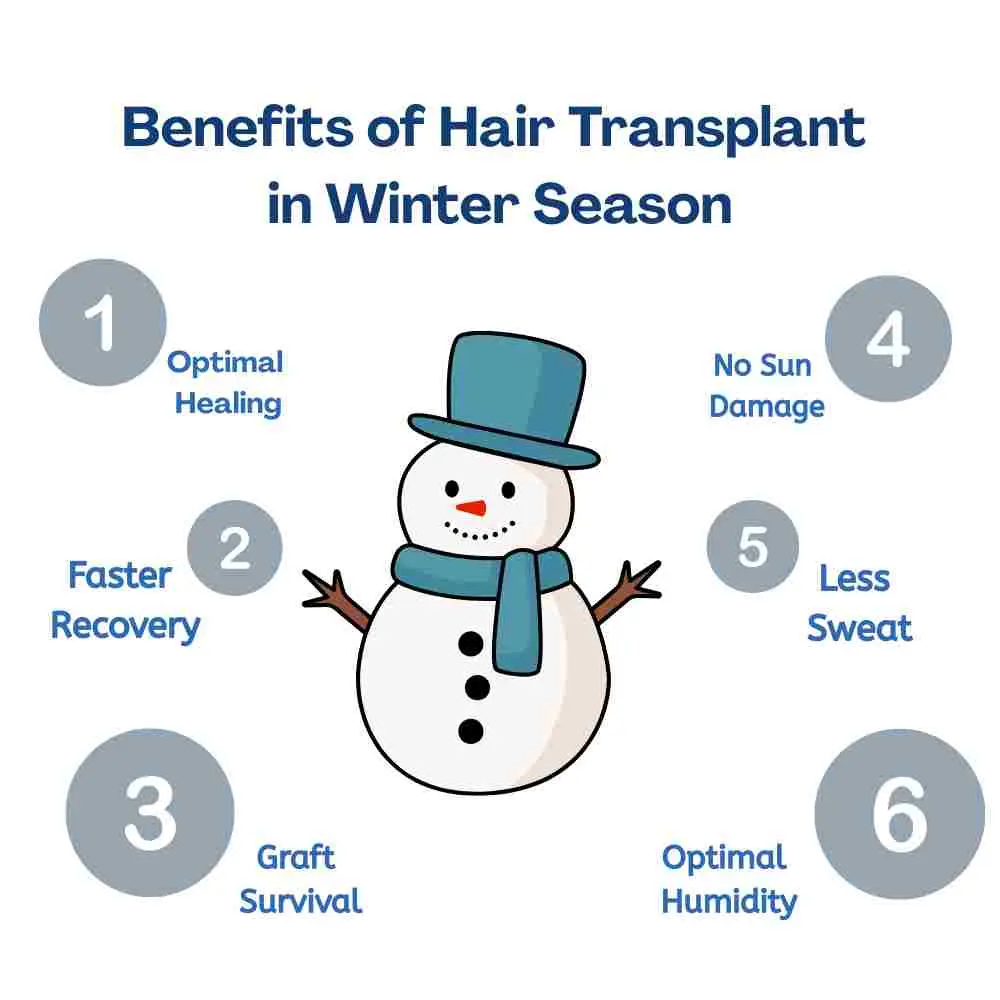
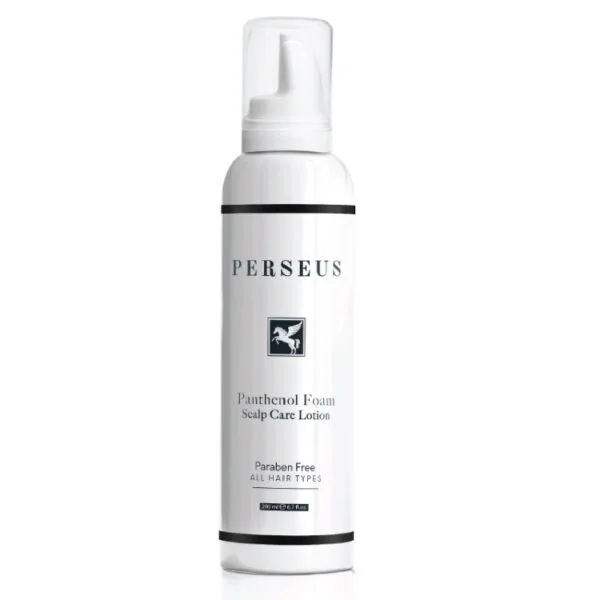
- ✓ Combats Winter Scalp Dryness
- ✓ Soothes Summer Heat Irritation
- ✓ Provitamin B5 Tissue Repair
- ✓ Non-Sticky, Lightweight Foam
- ✓ Essential for Post-Op Stability
Summer Hair Transplants
To be honest, the best time of year for a hair transplant is winter. However, if you take the right steps, you can have make summer is the best season for hair transplant as well and go through a smooth recovery process.
Extended Recovery Time
For many patients (teachers, students, freelancers, and those with generous annual leave) summer offers something winter cannot always provide: uninterrupted, pressure-free time at home. The first ten days of recovery are the most critical and the most restrictive. Being able to rest, sleep regularly, limit social obligations, and focus entirely on aftercare compliance during these days makes a measurable difference to outcomes. If your schedule gives you that window in summer but not winter, summer may genuinely be the best time for a hair transplant in your specific situation.
Enhanced Scalp Circulation
Warmer ambient temperatures promote peripheral blood circulation, including blood flow to the scalp. In the early post-operative phase, improved circulation can support the establishment of new vascular connections between transplanted follicles and the surrounding recipient tissue. This is not a decisive clinical advantage, but it is a physiologically plausible benefit that some practitioners acknowledge.
Natural Concealment Options
While summer makes hat-wearing uncomfortable for extended periods, it does offer one underappreciated concealment advantage: the post-operative pink pigmentation left as micro-scabs resolve can pass unnoticed as a mild suntan or sunburn. In summer contexts, this is far less conspicuous than it would be in winter. Baseball caps and wide-brimmed hats are also standard summer attire, providing UV protection while offering reasonable concealment in outdoor settings.
Hair Restoration in Summer vs. Hair Restoration in Winter
The table below summarises the key variables across both seasons to assist in your decision-making:
| Recovery Factor | Summer | Winter |
|---|---|---|
| UV Radiation Risk | High: requires strict protection | Low: naturally reduced |
| Sweat / Infection Risk | Higher: active perspiration | Lower: minimal sweating |
| Scalp Dryness | Low risk | Higher: indoor heating effect |
| Concealment Comfort | Warm, uncomfortable with hats | Natural and effortless |
| Rest & Compliance Ease | Depends on holiday availability | Naturally lifestyle-aligned |
| Strategic Result Timing | Visible results by winter | Visible results by summer |
| Scalp Blood Circulation | Enhanced by warmth | Slightly reduced in cold |
| Aftercare Difficulty Level | Moderate to High | Low to Moderate |
What Recovery Actually Looks Like Season by Season
Understanding the recovery timeline helps contextualise how seasonal conditions interact with each phase. Here is what to expect across the first twelve months, and how summer and winter conditions affect each stage:
Days 1 – Week 2: The Anchoring Phase
This is the window during which seasonal conditions matter most. Grafts are establishing new blood supply in the recipient site. Micro-scabs are forming. The scalp is at peak sensitivity.
Summer patients;
Summer patients must prioritise indoor recovery, climate control, and UV avoidance.
Winter patients;
Winter patients must counteract scalp dryness with regular saline spray and a humidified sleeping environment.
Both groups must avoid touching the scalp, sleep at a 45-degree angle for the first three to five nights, and follow washing instructions precisely from day three or four.
Weeks 3–4: Shock Loss
Between two and four weeks, most transplanted hairs shed, a normal and expected phase called effluvium telogen. The follicles themselves remain intact and will produce new hair in the coming months. Emotionally, this is a testing period regardless of season.
Summer patients;
Summer patients in this phase can typically begin extending their time outdoors, but UV protection remains essential.
Winter patients;
Winter patients will find this phase logistically comfortable, though the psychological challenge is equal for both groups.
Months 2–3: The Dormant Phase
Little visible change occurs during this period, but biological activity is underway beneath the surface as follicles transition from telogen back to anagen. Maintaining a consistent scalp care routine (gentle cleansing, adequate hydration, and nutritional support, etc.) is critical. A clinically formulated product set designed for this phase can make a measurable difference; our post hair transplant care set (3-month supply) covers every product need from day one through to the end of month three, regardless of the season in which you are recovering.
Months 4–6: First Growth
New hairs begin to emerge initially fine and lightly pigmented. By the end of month six, most patients can observe 40 to 60 percent of their projected final density. Activity restrictions ease substantially: most exercise is permissible from month two, and swimming can typically resume from week six. Season becomes largely irrelevant from this point, as the scalp has fully healed and follicles are in active growth.
Months 9–12: Maturation and Full Results
Hairs thicken, darken, and assume their permanent texture. Between 80 and 95 percent of the final outcome is visible by month twelve. This is where season-specific concerns become entirely moot; the results at this stage are determined by surgical quality and aftercare compliance, not by whether you recovered in July or January.
Spring Hair Transplants (March – May)
Spring hits a sweet spot for hair transplant recovery that summer and winter just can’t match. The weather is mild, UV levels are manageable, and there’s no pressure from summer holidays or outdoor activities.
It works so well because you sweat less, and the sun isn’t nearly as harsh as in peak summer. It’s also much easier to take time off work without navigating complex summer leave schedules. Plus, booking a procedure in March or April means you’ll see visible new growth right as summer kicks off 4–6 months later.
Just keep seasonal allergies in mind: pollen can make your scalp itchy. While allergies won’t harm the grafts directly, scratching during the first two weeks definitely can. If you’re prone to spring allergies, talk to your surgeon about using antihistamines beforehand.
Autumn Hair Transplants (September – Nov)
Autumn is a favorite among specialists. As temperatures cool down after September, UV levels drop, and daily routines naturally shift indoors. This creates ideal conditions for smooth recovery.
Autumn stands out because cooler weather means less sweat, lowering your risk of infection. Plus, unlike spring, low pollen levels keep scalp irritation to a minimum.
Autumn fashion also makes discretion effortless; light beanies, hoodies, and scarves let you cover up without drawing attention. Strategically, a procedure in September or October puts you right in the high-density growth phase (months 6–9) just as the next spring and summer arrive.
However, you need to book early. Because autumn is such an ideal time, clinic slots—especially in top destinations like Istanbul—fill up fast between September and November. If you’re aiming for this window, plan to book 3 to 4 months in advance.
Common Myths About Hair Transplant Seasons
- Myth 1: Summer hair transplants fail more often.
Not true. Graft survival depends on your surgeon’s skill and how well you follow aftercare, not the month on the calendar. Thousands of successful procedures happen every summer. The season changes how much effort recovery takes, not whether it works. - Myth 2: Winter cold damages new grafts.
It does not. Grafts sit beneath the skin surface within hours of surgery. Cold air outside cannot reach them. The only real winter concern is dry indoor heating, which is easily managed with a humidifier and saline spray.
- Myth 3: Spring and autumn are the only safe seasons.
They are often the most comfortable. Every season is safe with the right aftercare. Season affects your experience during recovery, not the success of your transplant. - Myth 4: You cannot travel after a summer procedure.
You can. Wear a loose breathable hat, carry your saline spray, stay out of direct sun, and you are good to go. Plenty of patients fly home days after their procedure without any issue. - Myth 5: Hair grows faster if you transplant in spring.
Hair follicles work on their own internal clock, not the season. The growth timeline is the same whether you have your procedure in January or July.
Practical Tips for Seasonal Aftercare
Regardless of when you choose to have your procedure, the core aftercare principles for hair restorations remain the same. What changes is the specific threats you need to prioritise and the adjustments that mitigate them effectively.
If You Recover in Summer
- Stay indoors and in air-conditioned spaces for the first 10 days wherever possible.
- Use prescribed saline spray every 30–45 minutes for the first 48 hours to prevent graft dehydration in warm environments.
- Begin gentle washing with a sulfate-free foam shampoo from day three or four, as instructed by your surgeon.
- Wear a loose, breathable hat when outdoors after day two: never a tight or synthetic cap.
- Avoid all strenuous physical activity and any activity that causes perspiration for a minimum of three to four weeks.
- Do not swim in pools, the sea, or any open water for at least four weeks post-procedure.
- Apply SPF 50 sunscreen to the scalp from week five onward when outdoors without a hat.
If You Recover in Winter
- Use a bedroom humidifier to counteract the drying effect of central heating: target 50–60% relative humidity.
- Apply saline spray regularly throughout the first 48 hours to prevent scalp dehydration.
- Wear only loose, soft-lined hats outdoors during the first two weeks: tight beanies that press on grafts are not appropriate.
- Report any illness promptly to your surgical team, particularly if you are prescribed new medications.
- Avoid prolonged exposure to freezing wind on the scalp during the first week.
- Maintain stable indoor temperatures; sudden transitions from very cold to very warm environments can increase scalp inflammation.
Which Season Wins?
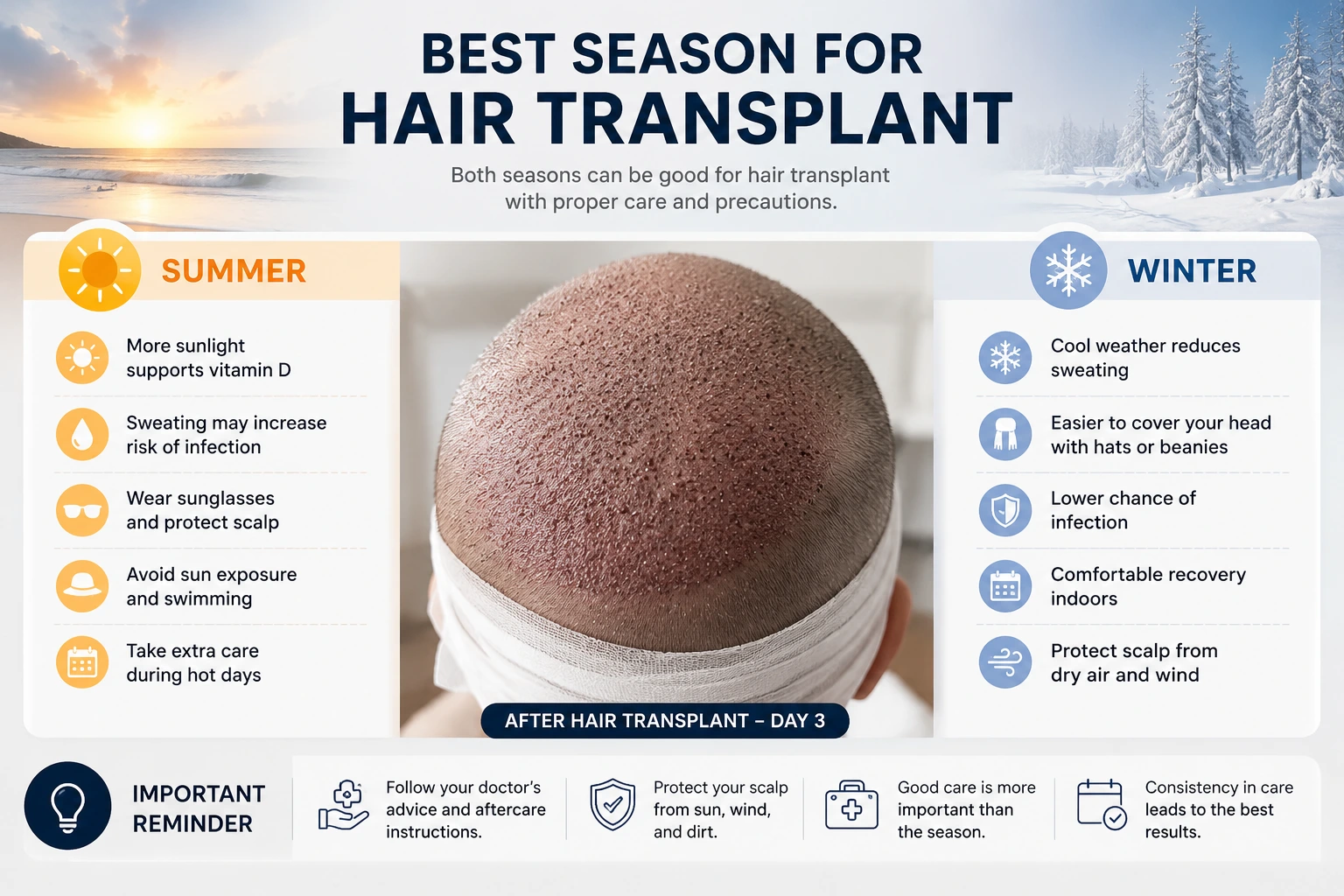
Generally speaking, winter has certain medical advantages. Reduced exposure to UV rays, a lower risk of infections caused by sweating, the ability to dress warmly, and a lifestyle suited to resting indoors... All of these factors make the colder months a more conducive environment for recovery for most patients. For those living in hot or humid climates, the advantages of winter are even more pronounced.
However, while summer may be challenging, it can still be appealing to some individuals for various reasons. Patients who are disciplined, can dedicate themselves to recovery indoors for the first ten days, and have sufficient time to step away from professional and social obligations can achieve results in the summer that are clinically indistinguishable from those obtained in the winter. Therefore, the best time for hair transplantation is not a universal answer; it is the season when you can most realistically adhere to your care protocol.
Seasonal preference for hair transplants alone cannot determine the quality of your final results. This is determined by surgical skill, graft processing, and your commitment to the healing process. Both summer and winter patients who adhere to evidence-based care guidelines achieve the same excellent long-term results.
FAQs about the best season for hair transplant
Is it safe to have a hair transplant in hot weather?
Undergoing a hair transplant in hot weather is safe as long as you manage your environment. The main concern with high temperatures is not the heat itself, but the risk of infection from active perspiration. If you can stay in air-conditioned spaces for the first 14 days and avoid any exercising after hair transplant in summer, your results will be just as successful as a winter procedure.
When can I go on a beach holiday after a summer transplant?
Wait 4 weeks before a beach vacation. The combination of salt water, chlorine, and intense UV reflection is a major risk during early recovery. Even after the first month, you must be cautious with hair transplant in hot weather conditions; using SPF 50 and a loose hat is mandatory to protect the delicate recipient area from hyperpigmentation.
How should I manage sleeping after hair transplant in winter?
When sleeping after hair transplant in winter, the key hurdle is actually the dry air caused by central heating (lead to scalp tightness and itching). We recommend using a bedroom humidifier to keep humidity around 50% and continuing your saline spray routine. Always sleep at a 45-degree angle for the first few nights to minimize swelling, regardless of the outdoor temperature.
What is the best month for hair transplant Turkey procedures?
The best month for hair transplant Turkey visits is generally between October and March. These months provide the mildest climate for international patients, making the recovery journey more comfortable. Strategically, booking in these months also ensures your new hair is at its peak density just in time for the following summer.
References
Garg, S., & Manchanda, M. (2022). In vitro study on hair follicle survival and temperature management – PubMed Central (PMC).
- Journal of Cutaneous and Aesthetic Surgery: Clinical evaluation of environmental factors affecting hair follicle viability
- Parsley, W. M., & Perez-Meza, D. (2015). The Effects of Dehydration, Preservation Temperature, and Time on Hair Grafts – ResearchGate / Medical Principles and Practice.
Beehner, M. (2012). Factors Affecting Hair Graft Survival and Patient Outcomes – ISHRS Hair Transplant Forum International.
Recommended Reading
✦ Deep Conditioning: Hair Botox: Prices & Recovery — A breakdown of pricing variables for deep-conditioning hair botox treatments, expected longevity, and post-treatment maintenance tips.
✦ Ecosystem Balance: Scalp Microbiome After Hair Transplant — Learn how antibiotic use and pH imbalances affect protective scalp bacteria post-surgery and how to restore your natural skin barrier.
✦ Long-Term Healing: Itchy Scalp Months After Hair Transplant — Discover why chronic itching persists weeks or months post-surgery, how nerve regeneration plays a role, and safe ways to find relief.


Receive offers, product alerts, styling inspiration and more. By signing up, you agree to our Privacy Policy.
- info@perseusstyle.com