Best Hair Transplant Clinics in Turkey 2026: Independent Review
Written by Perseus Editorial Team
Last updated: August 2026
Turkey performs more hair transplant procedures than any other country in the world. There are over 500 clinics operating in Istanbul alone, and international demand reached a new peak in 2026. The price difference between Turkish clinics and those in the UK or the US has never been this significant. However, all comparison guides share the same blind spot: they evaluate clinics based on marketing criteria and say nothing about what happens after the patient boards their flight home. That's where the results are determined. In this article, we present the most comprehensive and transparent comparison of hair transplant clinics in Turkey.
Why Turkey Still Dominates and Where the Real Risks Sit
A procedure costing £8,000–£15,000 in the UK, or $12,000–$20,000 in the US, can be performed in Istanbul for €2,500–€5,000 (including hotel, airport transfers, a dedicated coordinator, and 12-month remote follow-up). Turkish surgeons also perform an extraordinary volume of surgeries. Highly trained specialists handle five to seven times as many cases per year as their Western counterparts, which enhances their surgical precision over time. It is quite possible to say that Turkish doctors are the best in terms of surgical experience.
The real danger lies in this uncontrolled growth. The fact that hundreds of clinics compete solely on price has led to the emergence of a model known as the "hair mill." In these centers, where 8 to 12 patients are processed daily in an assembly-line fashion, the doctor merely signs paperwork, technicians manage the surgical parts of the procedure, and post-operative care is reduced to a brochure and a run-of-the-mill shampoo. When you look at marketing materials, it is impossible to distinguish between a reputable clinic under a surgeon's supervision and these factories. Unfortunately, the true picture only becomes clear 6 to 12 months later, once the results are evident.
Although many Turkish clinics are accredited by the Ministry of Health and maintain clean facilities, results remain mediocre because doctors' involvement during surgery is minimal. The chief surgeon may determine the hairline and appear in photographs; however, the procedures for harvesting and transplanting hair follicles are performed by technicians. This is not illegal, but it is not the service that international patients expect to be paying for. Asking certain key questions before your appointment can help protect you from subpar clinics.
What Actually Separates Good Clinics from Hair Mills
Surgeon involvement in critical steps. 3 moments during surgery require physician presence: hairline design, recipient site creation, and extraction oversight. Ask any clinic to confirm in writing which of these steps the named lead surgeon performs personally on every patient.
Daily patient limits. A conscientious surgeon-led clinic caps daily procedures at 2 to 4 patients. Any clinic routinely treating eight or more is delegating surgical tasks significantly.
Graft survival documentation. Top-tier clinics in 2026 track and share graft survival data, with benchmarks between 93% and 98%. Be sceptical of any clinic that cannot produce this on request.
Aftercare specificity. Ask not just "what aftercare do you provide?" but: "What products will I receive, how long will they last, and what should I use once they run out?" The specificity of that answer tells you more about the clinic's genuine investment in your outcome than any before-and-after gallery.
Top Clinics in 2026: Assessments + Package Transparency
The following assessments draw on verified patient review aggregates, Ministry of Health accreditation records, direct consultation submissions, and cross-referenced 2026 independent review publications. For each clinic, we've included a package transparency table, because "all-inclusive from €2,500" means very different things depending on what's actually in the package. We strongly recommend that you conduct your own research. Since this information is subject to change, we suggest verifying it through the clinics' websites and social media accounts or by contacting them directly.
Operating since 2010 from a purpose-built seven-floor facility in Ataşehir, Heva Clinic has one of the largest verified international patient bases of any clinic in Turkey. The medical director is ISHRS-affiliated; all procedures are conducted under in-house anaesthesiologist supervision; the surgical team holds documented expertise across all hair types, including the technically demanding requirements of Afro-textured hair, for which most Istanbul clinics lack genuine specialism.
The defining 2026 differentiator is Heva's proprietary aftercare mobile app (iOS and Android), which delivers a personalised recovery timeline, day-by-day care instructions, and 24/7 access to the medical team after the patient has returned home. This is what most clinics describe in brochure language. Heva has built the infrastructure to actually deliver it. Patients from the US, UK, Australia, and West Africa consistently cite coordinator responsiveness and the app as differentiating factors in independent reviews.
| Package element | Included? | Detail |
|---|---|---|
| VIP airport transfers | ✓ Yes | Both ways, private vehicle |
| Hotel accommodation | ✓ Yes | Partner hotels, typically 3 nights |
| PRP therapy | ✓ Partially, yes | It varies by package, but it is available in most packages. |
| Anaesthesiologist on-site | ✓ Yes | In-house, not shared with other procedures |
| Aftercare kit | ✓ Yes | ~14 days' supply included. Plus, it is possible to purchase the 6-month comprehensive post-hair transplant care set at a high discount rate. |
| Aftercare mobile app | ✓ Yes | Personalised 12-month recovery protocol + 24/7 chat |
| Graft count | Up to 7,000 | Assessed at consultation. |
A perfect 5.0 rating, backed by over 1,750 independent Trustpilot and Google reviews, reflects genuine and consistent quality. Founded in 2016 by hairline design expert Şule Karataş Ölmez and managed by Dr. Selahattin Tulunay, the clinic intentionally limits its daily patient volume. Graft survival rates of 95–98%, reported across more than 10,000 procedures, rank among the highest in the Turkish market.
| Package element | Included? | Detail |
|---|---|---|
| VIP airport transfers | ✓ Yes | Both ways |
| Hotel accommodation | ✓ Yes | Partner hotel, typically 3 nights |
| PRP therapy | ✓ Yes | Included in standard packages |
| Hypothermosol graft preservation | ✓ Yes | The industry's leading standard for graft viability. |
| Aftercare kit | ✓ Yes | Shampoo, foam, lotion included |
| 12-month remote follow-up | ✓ Yes | Scheduled photo check-ins |
Hermest's proposition is built on its proprietary UNIQUE FUE® technique and AI-Assisted Surgical Planning (AISP). A system that digitally maps graft density before any incision is made. Lead surgeon Dr. Ahmet Murat personally oversees planning, channel creation, and final evaluation. A claimed 99% graft retention rate has been independently cited across multiple 2026 review publications. Ministry of Health licensed, Ministry of Tourism certified, European Awards in Medicine 2025 recipient. Flat pricing with no per-graft upselling.
| Package element | Included? | Detail |
|---|---|---|
| VIP airport transfers | ✓ Yes | Private vehicle, both ways |
| Hotel accommodation | ✓ Yes | 4-star partner hotel |
| PRP therapy | ✓ Yes | Included in all packages |
| AI surgical planning (AISP) | ✓ Yes | Pre-operative digital density mapping |
| Aftercare kit | ✓ Yes | Shampoo, lotion, medications |
| Lifetime guarantee | ✓ Yes | Re-procedure eligibility with defined clinical criteria |
| Graft count | Flat fee | No per-graft billing; up to ~5,500 assessed at consultation |
Led by Op. Dr. Hakan Demirel — plastic and reconstructive surgeon, trained at Lütfi Kırdar Kartal Research Hospital — and Op. Dr. Ugur Horoz, Vantage is a 10+ year Istanbul practice that brings genuine reconstructive medicine thinking to hair restoration. The plastic surgery background delivers particular strength in scar correction, hairline lowering, and patients with unusual scalp anatomy or prior failed procedures. The technique range — FUE, DHI, Unshaven FUE, NeoGraft, Afro FUE — is wider than most Istanbul competitors.
Verified patient reviews consistently highlight precise pre-operative communication about realistic expectations, modern facilities in the Ataşehir medical district, and responsive coordinator support. For patients whose case requires reconstructive thinking alongside cosmetic goals, Vantage occupies a genuine niche in 2026.
| Package element | Included? | Detail |
|---|---|---|
| VIP airport transfers | ✓ Yes | Private vehicle service |
| Hotel accommodation | ✓ Yes | Partner hotel — confirm nights at consultation |
| PRP therapy | ✓ Yes | Included in package |
| Plastic surgeon oversight | ✓ Yes | Op. Dr. Demirel — key differentiator for complex cases |
| Aftercare kit | ✓ Yes | 14-day post-op kit included; 3 and 6-month extended care sets available at exclusive patient discounts |
| Remote follow-up | ✓ Yes | Coordinator support post-procedure |
Clinic Comparison at a Glance
| Clinic | Surgeon-Led | Graft Survival | From | PRP | Aftercare | 12-Mo Follow-Up |
|---|---|---|---|---|---|---|
| Heva Clinic | ✓ Yes | 90–96% | ~$2,200 | ✓ Included | ✓ App-based | ✓ App, 12 mo. |
| Sule Hair Transplant | ✓ Yes | 95–98% | €2,990 | ✓ Included | ✓ Kit + Hypothermosol | ✓ 12 months |
| Hermest Clinic | ✓ Yes | ~99% (claimed) | €3,350 | ✓ Included | ✓ Kit included | ✓ Lifetime guarantee |
| Vantage Clinic | ✓ Yes | 95–98% | On request | ✓ Included | ✓ 14-day kit + extended sets | ✓ Dedicated team |
| Generic hair mill | ✗ No | Untracked | €800–1,500 | ✗ Extra cost | ✗ Minimal | ✗ Rarely |
Video: Heva Clinic Patient Journeys
The two videos below are published on Heva Clinic's official YouTube channel — our #1 ranked clinic for 2026. They document the full patient journey from consultation through recovery, and give a realistic picture of what the procedure day and aftercare actually look like.
Heva Clinic (official) · Full patient journey from arrival to post-op — what to expect at every stage
Heva Clinic (official) · Recovery timeline and real patient results — month-by-month documentation
Heva Clinic's YouTube channel features dozens of documented patient journeys, including Afro hair transplants, female FUE procedures, and unshaven DHI cases. Visit youtube.com/@HEVACLINIC to browse the full library before your consultation.
Real Patient Outcomes: What Results Actually Look Like
Before-and-after photography is the most honest accountability tool in hair restoration. A well-documented result — consistent lighting, same angle, genuine timeline — tells you far more about a clinic than its graft count claims. The placeholders below represent the image types we recommend requesting from any clinic during consultation.
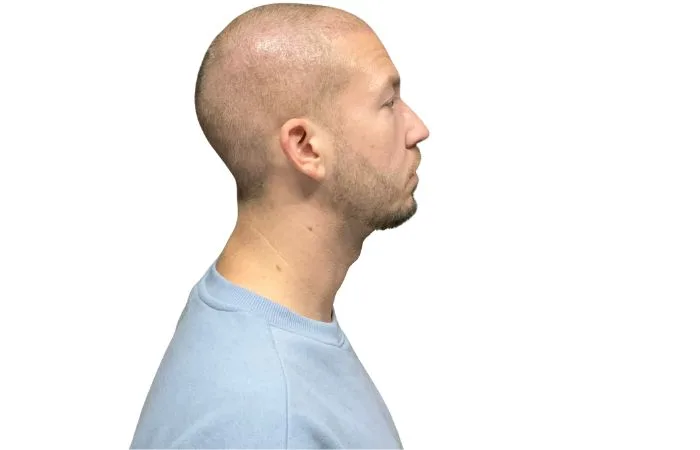
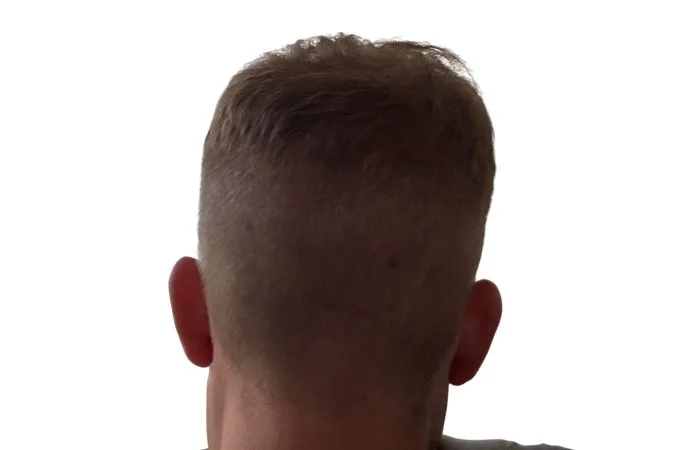
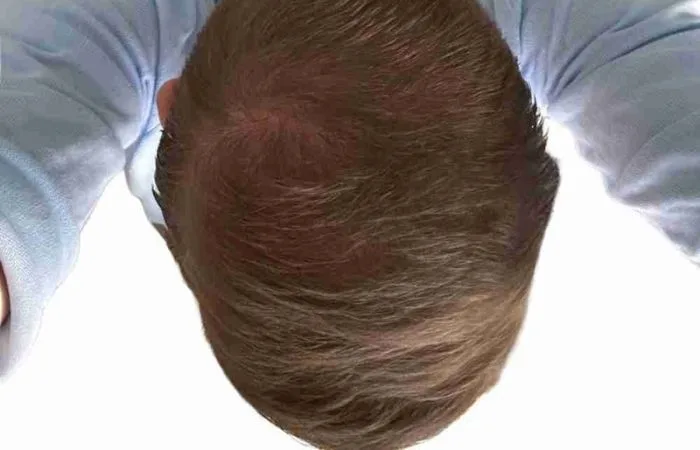
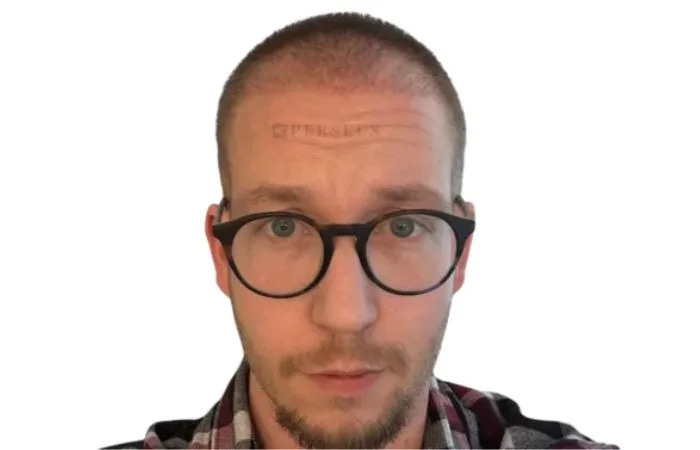
The image showing the patient from the side depicts the patient’s condition prior to the hair transplant surgery. The patient’s hair thinning and diffuse thinning are clearly visible in this photo. The photo of the patient’s nape, on the other hand, is a post-operative photo of the donor area during the healing phase. As seen, the donor area is shaved, with no redness or signs of surgery. This is how the donor area appears in an ideal healing process. If overharvesting had occurred, there would be localized bald patches in the donor area.
The top-down photo of the patient was taken during the period when his hair began to grow back and thicken. His hair strands are much thicker, more vibrant, and healthier than in his older photos. The photo of him wearing glasses was taken during his third month. Look at the difference between the two. It’s truly amazing.
FAQs
How long does recovery from a hair transplant in Turkey take?
Initial healing (scab formation and clearance) takes 1 or 2 weeks. Most patients return to a sedentary job within 5 days and to physical activity after two weeks. Shock loss, the temporary shedding of transplanted hair, typically occurs at week 2 to week 6 and is not graft failure.
Visible new growth begins at approximately month three. By month six, 60% of final density is generally visible. Full results, including texture maturation, reach completion at 12–18 months.
Is it safe to have a hair transplant in one of the best hair transplant clinics in Turkey?
At accredited, surgeon-led clinics: yes, with a safety profile comparable to or exceeding Western providers. Turkey’s Ministry of Health regulates and inspects facilities, and top clinics hold international accreditations including USHAS certification.
Risks are concentrated in the lower tier – unlicensed operators, hair mills with minimal physician involvement, clinics that cannot produce outcome data. Applying the criteria in this guide substantially reduces those risks.
What shampoo should I use after the clinic's products run out?
Most clinics supply enough product for fourteen days. After that, continue with a sulphate-free, paraben-free, pH-balanced shampoo for at least six months. Standard gentle supermarket shampoos frequently contain sulphates or fragrances that are counterproductive for healing scalp tissue.
Read our guide to choosing the right post-op shampoo for a full ingredient-by-ingredient breakdown of what to look for on the label.
Is FUE or DHI better and does it depend on the clinic in the first 4 weeks?
FUE is appropriate for most cases, including larger graft sessions and more extensive hair loss. DHI allows more precise control of implantation angle and direction, and is particularly valued for hairline restoration and cases where shaving is not desired.
Technique selection should follow a clinical assessment of your donor density, hair loss pattern, and aesthetic goals not a clinic’s preferred pricing tier. Use the technique finder above for a preliminary recommendation based on your specific situation.
How do I verify a clinic's Ministry of Health accreditation?
Request the clinic’s Turkish Ministry of Health registration number and USHAS (Health Tourism Authorisation Certificate) documentation. Both can be cross-referenced with Turkish government public databases. Additionally, verify named surgeons’ credentials through the Turkish Medical Association or ISHRS records.
For patient outcome data, Trustpilot, the Hair Restoration Network forum, and r/HairTransplants provide reviews that are considerably harder to manipulate than on-site testimonials. Look for reviews with growth timeline photos and specific graft counts. These are much more informative than generic five-star praise.
When can I use minoxidil after my transplant?
Only with surgeon approval, and not before the scalp has fully healed typically a minimum of 8 weeks post-procedure. Applying minoxidil to healing tissue before this point risks irritating fragile grafts and increasing localised inflammation.
After clearance, minoxidil can be useful for preserving native hair. Our guide covers minoxidil use after hair restoration in full detail, including timing and application method.
References
Rassman WR, Bernstein RM, McClellan R, Jones R, Worton E, Uyttendaele H. Follicular unit extraction: minimally invasive surgery for hair transplantation. Dermatol Surg. 2002;28(8):720-728. doi:10.1046/j.1524-4725.2002.01320.x
- Schweiger D, Schoelermann AM, Filbry A, Hamann T, Moser C, Rippke F. Highly efficient and compatible shampoo for use after hair transplant. Clin Cosmet Investig Dermatol. 2015;8:355-360. doi:10.2147/CCID.S86015. PMID: 26229498. PMC4517519.
- Liu S, Zhang J, Yang X, Wu Y, Li N. Self-management in the post-hair transplantation recovery period among patients with androgenetic alopecia: a qualitative study. Int J Nurs Stud Adv. 2024;7:100234. doi:10.1016/j.ijnsa.2024.100234. PMID: 39282021. PMC11401157.
- Vañó-Galván S, Bisanga CN, Bouhanna P, Farjo B, Gambino V, Meyer-González T, Silyuk T; Hair Transplant Surgery Expert Group. An international expert consensus statement focusing on pre and post hair transplantation care. J Dermatolog Treat. 2023;34(1):2232065. doi:10.1080/09546634.2023.2232065. PMID: 37477225.
Nolen ME, Makkar JS, Kingsley DH. Body hair transplant by follicular unit extraction: experience with 122 patients. Aesthet Surg J. 2016;36(10):1101-1110. doi:10.1093/asj/sjw088
- Li Y, Xiao L, Chen Z, et al. Self-management in the post-hair transplantation recovery period among patients with androgenetic alopecia: a qualitative study. Heliyon. 2024;10(17):e37121. doi:10.1016/j.heliyon.2024.e37121
- Mysore V, Lourith N, Trüeb RM, et al. An international expert consensus statement focusing on pre and post hair transplantation care. J Dermatol Treat. 2023;34(1):2232065. doi:10.1080/09546634.2023.2232065
- International Society of Hair Restoration Surgery. ISHRS Practice Census 2024: A Global Survey of Hair Restoration Procedures. ISHRS; 2024. Accessed March 27, 2026. https://ishrs.org/professionals/practice-census/
This guide has been compiled using publicly available information from clinics' official websites, social media accounts, and independent platforms such as Trustpilot, Google Reviews, and the Hair Restoration Network. It is intended for informational purposes only and does not constitute medical advice, a recommendation of a clinic, or a referral. Be sure to consult a specialist physician when selecting a clinic. If you have any comments or objections regarding our evaluations, please email us at info@perseusstyle.com.
Recommended Reading
✦ Major Restoration: 4000 Grafts Hair Transplant in Turkey — What to expect when undergoing a major 4000-graft restoration procedure, including donor area requirements and coverage expectations.
✦ Post-Viral Shedding: Hair Loss After COVID-19 — Understanding post-viral telogen effluvium: why systematic stress triggers severe shedding months later and how to stabilize it.
✦ Ecosystem Balance: Scalp Microbiome After Hair Transplant — Learn how antibiotic use and pH imbalances affect protective scalp bacteria post-surgery and how to restore your natural skin barrier.

Receive offers, product alerts, styling inspiration and more. By signing up, you agree to our Privacy Policy.
- info@perseusstyle.com