What Is The Best Shampoo After Hair Transplant?
Written by Perseus Editorial Team
Last Update: November, 2026
After a hair transplant, the shampoo you use in the first two weeks can make or break your results. Newly transplanted grafts are fragile, so using the wrong product can cause inflammation, dislodge follicles or slow down the healing process. However, the right shampoo can accelerate scalp recovery and create the conditions for thick, natural hair growth look.
This practical guide is based on the most common aftercare protocols used in FUE and DHI procedures, and covers what to look for in a post-hair transplant shampoo, which ingredients to avoid, and when to transition back to your regular haircare regime.
Hair transplantation is divided into two phases: pre and post operative. The post-operative phase is as far-reaching as the procedure itself. That’s why the aftercare products you use can have an obvious impact on the results you’ll achieve.
As you start a hair transplant process like FUE, it’s a key point to determine the best shampoo. The ideal post hair transplant shampoo can help you to obtain your dream hair that looks natural and thick. While achieving them, hair transplant tailored shampoo can stop hair loss and thinning.

When Should I Wash My Hair With Shampoo After Hair Transplant?
If you are on the day of hair transplant surgery, the first 48 hours are vital. You shouldn’t wash your hair for 2 days after the operation. Your transplanted hair will be very sensitive, so the medical team should do your first wash 24 hours after the operation.
According to clinical graft-anchoring studies (Bernstein & Rassman), newly transplanted follicles remain fragile through day 5 if attached to dry crusts. By day 9, microvascular integration secures grafts permanently. This is why using a pH 5.5, sulfate-free foaming cleanser between Days 3 and 10 is crucial—it softens scabs without dislodging the underlying follicles.
During the first wash, the team will moisten the scabs around the donor area. They will then apply an antibiotic spray to prevent infection. After the first wash, it is time to use the post-hair transplant medical shampoos and foams. You can use them once or twice a day, depending on your needs.
It’s not recommended to use any other no prescription hair care products after hair transplant surgery, especially for 6 months. Your transplanted hair will blend in with your natural hair within a year. However, until then, it is necessary to use transplant-specific products.
How Many Times a Day Should You Shampoo After a Transplant?
In particular, don’t overwork your hair during the first few days. You can wash your hair daily or every other day for the first 2 weeks. Starting from the 3rd week, you can switch to a gentle wash once a week. If you don’t feel a strong need for hygiene, continue washing every other day.

Week-by-Week Washing Guide: Month 1 to Month 6
- Days 1-2: No washing. Clinic performs the first rinse at the 24-hour mark.
- Days 3–14: Once daily with post-transplant medical shampoo. Gentle patting only (no rubbing, no direct water pressure.)
- Weeks 3–4: Continue medical shampoo. Scabbing should resolve; you can introduce light fingertip massage.
- Month 2–3: Shock loss phase. Normal and expected. Maintain medical shampoo, resist switching products.
- Month 4–6: Hair re-enters growth phase. You may gradually introduce a mild, fragrance-free baby shampoo alongside your medical shampoo.
- Month 6+: Full transition to baby shampoo or a sulphate-free daily shampoo is generally safe for most patients.
Learn how to care for your hair with Perseus shampoo after your procedure by watching our video:
Will Shampooing Too Early Cause Graft Loss?
It is possible, but timing is more than just a technical matter. Using the best shampoo after hair transplant can boost hair growth but timing is also matters.
Grafts are least secure during the first 3 days before they attach to the blood vessels under the scalp. For this reason, most hospitals perform the first wash themselves rather than leaving it to the patient. After 72 hours, the risk decreases markedly, but any rubbing, scratching, or water pressure between the 3rd and 14th days can still harm grafts that are in the midst of attaching.
Also keep in mind: most cases of early shampooing are actually due to incorrect technique rather than timing.
Donor Area vs. Recipient Area: Should You Shampoo Them Differently?
Yes, and most patients don’t realise this until something goes wrong. The donor area and the transplanted hair area heal at different rates and need to be handled differently when washing.
- The recipient area needs to be treated with the utmost care.
This is where the grafts are anchored and are at their most vulnerable. For the first 10 days to 2 weeks, never apply shampoo directly. First, dilute it in your palm with water, then gently dab it onto the scalp.
- The donor area is slightly more forgiving, but still sensitive.
As the donor area has sutured, it tolerates slightly more direct contact than the recipient area, which has newly placed grafts. From day 3 onwards, you can start applying shampoo more direct to the back of the scalp. Using light fingertip contact is acceptable, but avoid any abrasive contact.
Most specialists recommend continuing a sulfate-free, paraben-free shampoo for the full first year after transplant. Add 2 bottles to your cart and use code BUY2SAVE20 at checkout for 10% off your order.
→ Shop Post Hair Transplant Repair Shampoo
What Makes a Shampoo Safe for Hair Transplant Recovery?
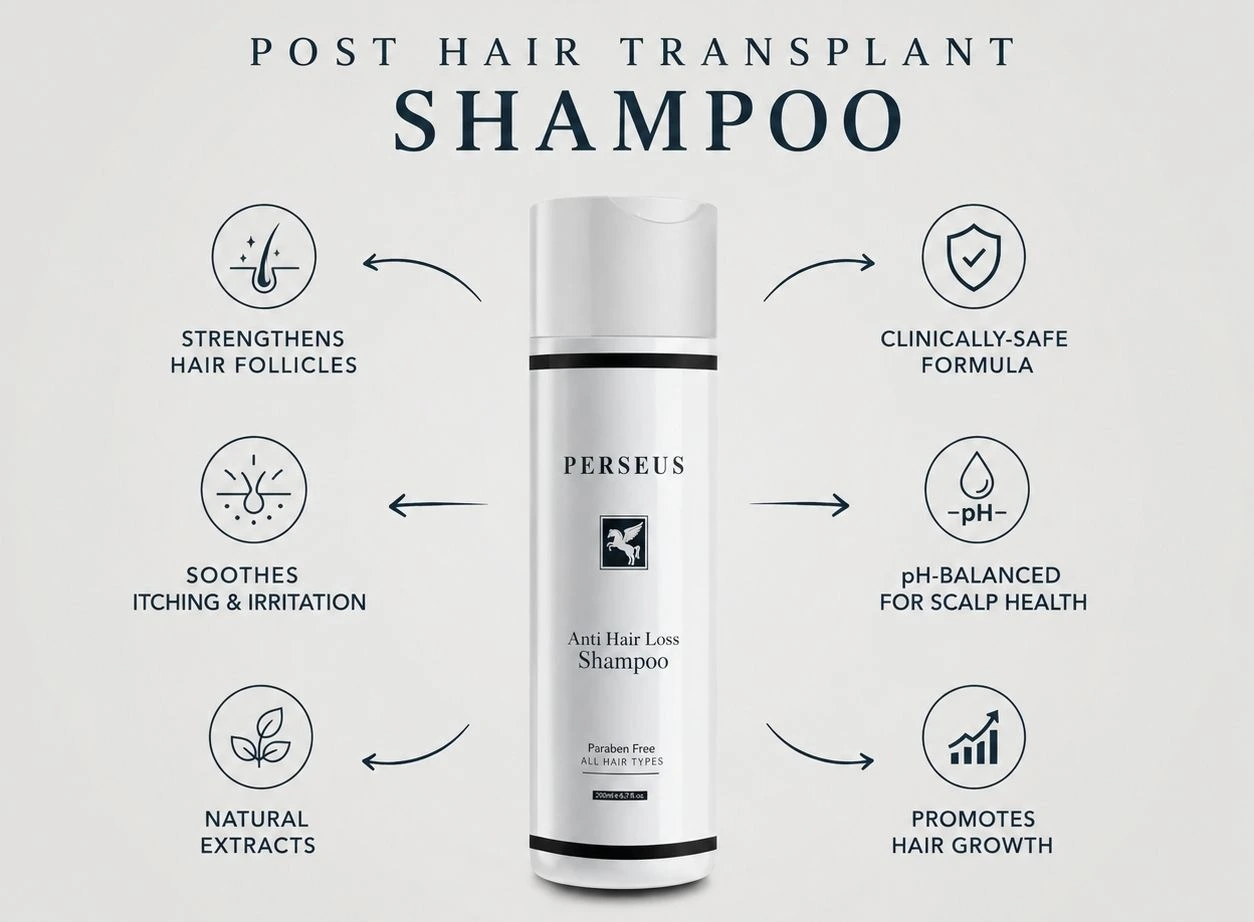
For a safe product, choose a shampoo that is free of DHT blockers, chemicals, parabens and sulfates. Moreover, it must be designed for post-transplant use. It will take about 1 year for your newly transplanted hair to assimilate with your natural hair. During this process, your hair follicles will be very sensitive. That’s why you will need to completely stop using chemicals while the follicles adapt to your skin tissue.
To protect your hair follicles, as well as the epidermis and dermis layers of your skin, consider choosing the right shampoo set after hair transplant. By choosing normal shampoo, you take a number of risks such as graft rejection. This can result in hair transplants going wrong. Regular shampoos for natural hair sometimes contain chemicals. During the first few months after your hair transplant, your tiny scars will be open and there is a risk of infection.
Here are the ingredients that a best shampoo after hair transplant should not contain:
- Sulfate
- Artificial fragrance
- Artificial colorant
- Alcohol
- Paraben
- Silicon
Here are the ingredients that a best shampoo after hair transplant can contain:
- Panthenol (Pro-Vitamin B5)
- Biotin
- Glycerine
- Aloe vera
- Saw Palmetto
- Jojoba Oil
- Argan Oil

What are the benefits of each type of shampoo?
- Post-transplant medical shampoo: The best choice during early recovery. These shampoos use mild cleansing agents that clean the scalp gently without vigorous rubbing during the sensitive healing period.
- Baby shampoo: It can be suitable once the scalp has healed and your surgeon allows you to return to regular cleansing.
- Sulfate-free shampoo: A mild option for regular washing. These shampoos can provide daily cleansing while reducing scalp dryness and irritation. However, to make sure they are suitable for use after hair transplantation, check that they contain mild ingredients, do not contain alcohol or other harsh ingredients, and have a gentle formula.
- Ketoconazole shampoo: It is designed to help manage dandruff and certain scalp conditions, so it may be too strong for use during early post-hair transplant care. It should only be used after a hair transplant when recommended by your doctor.
- Fragrance-Free Shampoo: A good option for sensitive or easily irritated scalps. It can help reduce irritation caused by fragrances.
- Moisturizing Shampoo: A good choice for scalps that are dry and tight. It can be used specifically to support the scalp’s moisture balance after healing.
What’s in the shampoo’s formula rather than what’s on the label is more important when using it after a hair transplant.
What should I look for when choosing one?
- Pro-Vitamin B5: Panthenol penetrates the hair shaft and scalp to lock in moisture, reduce redness, and speed up the skin barrier’s recovery around fresh incision points.
- Biotin: Supports keratin production, the core protein that makes up your hair strand, helping newly emerging grafts grow stronger from the root.
- Glycerine: A humectant that draws water into the scalp, preventing the dryness and flaking that commonly occurs during the day 3 to 14 (scabbing phase).
- Aloe Vera: This product, known for its itch-relieving properties, is also commonly used in home remedies for the hands, feet, and scalp. It calms inflammation and cools an irritated scalp, making it a gentle choice for the sensitive recipient area in the first two weeks.
- Saw Palmetto: A natural DHT-blocking extract that may help protect existing hair from further miniaturization while transplanted grafts settle.
- Jojoba Oil: Closely mimics the scalp’s natural sebum, cleansing without stripping away the protective oils grafts need during healing.
- Argan Oil: Rich in vitamin E and fatty acids, it nourishes both the transplanted area and natural hair without clogging follicles or leaving residue.
When can I switch back to regular shampoo?
It’s recommended that you use special / best hair transplant shampoos and other care products after a hair transplant. You need to avoid shampoos that contain additives like parabens, silicones, salt, and perfume. They can be abrasive to the hair. Medical shampoos with cleaner ingredients are the best for post hair transplant care. Keep in mind, post hair transplant shampoo for existing hair helps your natural hair to reach the same lushness and vitality level as your transplanted hair.
Indeed, a gentle and mild post-operative medical shampoo is required for sensitive skin after the op. Shampoos in care set for transplanted hair generally use one of the gentlest cleansers, such as Sodium Lauroyl Methyl Isethionate, which is derived from coconut. It also contains completely plant-based, mucosa-compatible, and hypoallergenic cleansers such as Decyl Glucoside / Coco-Glucoside and Sodium Cocoyl Glutamate, which is amino acid-based and frequently used in baby shampoos.
There is a question that patients ask surgeons immediately after hair transplantation: after hair transplant which shampoo is best? To find a simple answer to this question, focus on the following in the shampoos you like:
- Does it meet the meaning of paraben free shampoo?
- Does it contain panthenol and biotin?
- Is it designed for post-hair transplant special care?
If your answer is yes to all three, this shampoo is 99% suitable for the hair restoration process.
After six months, you can gradually transition to baby shampoos. Look for a baby shampoo that is odourless and contains no chemicals. However, it’s important to avoid making any sudden changes to your hair care routine. In the selection of post hair transplant shampoo and conditioner, you can choose the right care set by considering your first 6-month needs.
If you have undergone a hair transplant and look for the best post transplant cleanser; don’t hesitate to consult your medical clinic for further information.
What materials should be avoided?
Some shampoos which contain harmful chemicals can damage the transplanted hair follicles. You should choose shampoos that have scalp and hair friendly compounds and a low pH. The ideal pH is around 5.5.
Parabens are preservatives that can irritate a healing scalp, and they may also disrupt your hormonal balance by mimicking estrogen, so skip them for the first few months. We explain which labels to look for in our guide to paraben-free shampoo after a hair transplant.
They are among the most harmful chemicals:
- Sulfate removes oil and dirt from hair, but in the long run it leads to dryness and damage.
- Alcohol-based shampoos should not be used for several months as they prolong the healing process and can damage hair strands.
- Caffeine-based shampoos also pose risks because they enter the bloodstream, causing a generalized stimulant effect.
- For more detailed information about the harmful effects of drugstore shampoos on transplanted hair, check out our article on drugstore vs. medical shampoos.
How Often Should I Wash My Hair?
After the first wash in the clinic, it is a good idea to give your scalp a break. You can start washing gently on day 3. Avoid using water that is too hot or cold. After about day 10, the scabs will disappear and sensitivity will decrease. After this, you can return to washing your hair normally. Please note that you will need to use the post-transplant shampoos for up to 6 months.
Behave gentle to your hair and avoid any harsh movements like rubbing, pulling, or scratching. You may benefit from paper towels to pat dry your head. They are less likely to irritate your scalp. If you need personalized advice, be sure to consult with your transplant surgeon, who will provide you with detailed post-op care instructions based on your hair and skin type, the method of transplant, and hair and skin characteristics.
What can I use besides the best shampoo after hair transplant?
To support your hair transplant outcomes, you need to thoroughly moisturize your scalp. Therefore, post-op shampoo alone is not sufficient. This is why most post-hair transplant brands offer 2, 3, and 6-month post-transplant sets.
Perseus is one such brand. Our set includes products such as mesotherapy serum, hair serums containing salmon DNA, ozone oils, and hair vitamin capsules containing B-complex vitamins. Some of these products provide intense moisturization to soothe the skin, while others combat subcutaneous acne. Others focus entirely on nourishing and strengthening the hair. As seen, the recovery process after hair transplant treatment is also a team effort.

Ready to Boost Your Hair Growth with The Best Shampoo
Don’t let post-surgery care be an afterthought, especially when it comes to your hair transplant recovery. Perseus After-Hair Transplant Shampoo and Foam is meticulously crafted to provide the ultimate care and nourishment your hair needs during this crucial phase.
Don’t settle for mediocre results; elevate your post-transplant journey with our scientifically-proven formula.
Who is Perseus Hair Transplant Shampoo suitable for?
Our shampoo, specially designed for use after hair restorations, is suitable for the following treatments:
- FUE (follicle unit extractions, hair bundle extractions from donor area)
- FUT (old strip surgery, linear excision method),
- DHI (no-channel method with Choi pen),
- UFUE (Partial Shaven FUE, Discreet Hair Transplant)
- Sapphire FUE (Sapphire Percutaneous Technique),
- NeoGraft (No-Scalpel & No-Stitch Technique),
- Other modern hair transplant methods.
Therefore, our shampoo can be included in the following sets:
- FUE hair care sets,
- FUT post-op essentials,
- DHI aftercare sets,
- Diamond FUE healing packages,
- UFUE hair care sets,
- Gold FUE recovery packages,
- Sapphire FUE aftercare bundle
Find out more about us to discover Perseus’ expertise! Contact us now for more information about the hair transplantation aftercare procedure!
FAQs regarding the best shampoo after hair transplant
What are the best types of shampoo after hair transplantation in 2026?
The best shampoos after hair transplant are now post-transplant anti hair loss shampoos. However, before these specially tailored products, surgeons recommended herbal or baby shampoos, e.g. jojoba oil, or all-natural and chemical-free ingredients like vegan-friendly options. But today, just picking up a post-hair transplant shampoo is enough.
Can hair transplant shampoo reduce scabbing and redness?
Yes. Hair transplant shampoos are specially formulated to soothe the scalp, minimise inflammation and cleanse gently without dislodging grafts.
Can hair transplant shampoo promote faster hair growth?
While they don’t directly speed up hair growth, using the right shampoo can create a healthier scalp environment.
How often should hair transplant shampoo and foam be used?
The application of shampoo and foam on a day-to-day basis from the 3rd day after the surgery, and after the 8th day, crusts will soften and disappear after the 10th day. Since you will start using shampoo before the wounds are closed, useful to get one of the best shampoo for transplanted hair.
Should a special shampoo still be used in hair transplant 3 months later?
You can continue until the 6th month or make a soft transition to anti dandruff shampoo with natural ingredients.
Can I massage the scalp with shampoo after hair transplantation?
Not for the first few weeks. However, after the follicles settle, you can start massage with Perseus mesotherapy product.
Should I use panthenol foam spray or shampoo?
Panthenol hair repair foam spray is for the initial 7-14 days following procedure. On the other hand, post-transplant panthenol shampoo can clean your scalp after 3-5 days post-transplant.
References
Trüeb, R. M., et al. (2015). Highly efficient and compatible shampoo for use after hair transplant. Journal of Cosmetics, Dermatological Sciences and Applications.
Vano-Galvan, S., et al. (2023). An international expert consensus statement focusing on pre and post hair transplantation care. Journal of Dermatological Treatment.
Zito, P. M., & Raggio, B. S. (2024). Hair Transplantation: Surgical Techniques and Post-Operative Management. StatPearls (NCBI Bookshelf).
Davis, M. G., et al. (2021). Scalp application of antioxidants improves scalp condition and reduces hair shedding. International Journal of Cosmetic Science.
Medical News Today. Post-surgical scalp care: Understanding pH balance and follicular health. Medical & Health Trends 2024-2025.
Bernstein, R. M., & Rassman, W. R. (2006). Graft Anchoring in Hair Transplantation. Dermatologic Surgery.
Recommended Reading
✦ Shampoo pH after a hair transplant — Why common shelf cleansers risk damaging newly transplanted grafts.
✦ Best Hair Vitamins After Hair Transplant — Essential nutrients and minerals to accelerate healing and graft survival.
✦ Why Use Hair Growth Serum After Hair Transplant? — How specialized serums support microcirculation and faster regrowth.
✦ Which Shampoos Do Celebrities Use? — Top-tier formulas and daily wash habits favored by high-profile stars.
✦ Scalp Necrosis After Hair Transplant: Causes and Prevention — Understanding the critical vascular risks, signs of tissue death, and how to protect vulnerable grafts during recovery.


Receive offers, product alerts, styling inspiration and more. By signing up, you agree to our Privacy Policy.
- info@perseusstyle.com