Do you have to take Finasteride after hair transplant?
Written by Perseus Writing Team
Reviewed by Heva Clinic
Last updated August, 2026
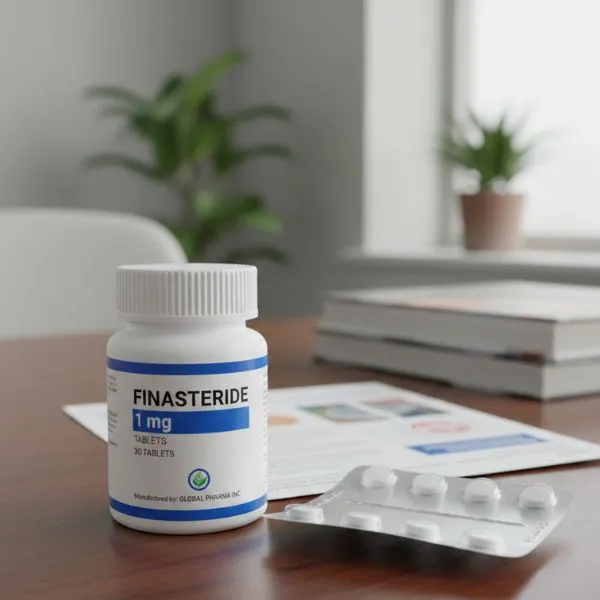
Finasteride is a prescription medication used to slow down genetic hair shedding. Along with Minoxidil, It is one of the 2 most commonly used medications for male pattern genetic hair loss. Finasteride works by reducing DHT, a hormone that slowly weakens hair follicles in people genetically predisposed to balding.
Although using finasteride after hair transplant isn’t a strict requirement, medical experts strongly advocate it to safeguard your surgery. Extensive research and global surgical authorities emphasise an important point: while transplanted follicles usually resist thinning, your original surrounding hair remains susceptible to the hormones that cause hair loss.
Why This Matters for You
- Starting a regimen helps to protect the scalp against shock loss.
- If you skip a blocker, your natural hair will often keep receding while the new grafts stay put.
- Practical evidence shows that combining a transplant with regular medication results in much thicker coverage and greater long-term satisfaction than surgery alone.
How does finasteride work to stop hair shedding?
Hair loss in men does not usually happen all at once. Over time, DHT affects certain hair follicles, causing them to produce thinner strands of hair that shed more easily. With so, these follicles may stop producing visible hair altogether. Right at this point, Finasteride works by blocking the enzyme that creates DHT, thereby helping to reduce this ongoing damage.
Finasteride is not a cure-all and will not suddenly produce new hair. Its primary function is to protect the hair you still have. Many people notice that hair loss decreases and thinning slows down after regular use. Therefore, finasteride should be considered a long-term treatment rather than a cosmetic solution that will increase hairline density.
What is the recommended dosage for finasteride?
Finasteride is often taken as a daily tablet at a low dose. In some cases, topical versions applied directly to the scalp under medical guidance are also used. Its use in treating hair loss is supported by years of clinical research and real patient data. This is why it has become one of the best-researched options for male pattern hair loss.
Other hair loss treatments vs. Finasteride after hair transplant
| Treatment | Effectiveness | Best For | Usage |
|---|---|---|---|
| Finasteride | ⭐⭐⭐⭐⭐ | Stopping Loss | DAILY PILL |
| Minoxidil | ⭐⭐⭐⭐ | Hair Growth | TOPICAL |
| Biotin | ⭐⭐ | Thickness | SUPPLEMENT |
| PRP | ⭐⭐⭐ | Strengthening | INJECTION |
| Mesotherapy | ⭐⭐⭐ | Scalp Health | INJECTION |
Finasteride is one step ahead of its competitors in stopping hair loss. However, it lags behind in promoting the growth of new hair follicles. It is behind PRP in strengthening hair, while Mesotherapy is the best for improving overall scalp health. Minoxidil, on the other hand, is excellent for hair growth. While biotin as a supplement yields good results for thickness, its effect is far behind that of finasteride, PRP, and minoxidil.
Risk and Cost Analysis of Finasteride Use Following Hair Transplantation
If you are concerned about the progression of your hair loss in the future and do not want to deal with a second surgery, using finasteride after hair transplant surgery may be the best option for you. If you would like to make a more in-depth assessment, including information on its effect on existing hair, risks and side effects, cost analysis, and comparisons with alternatives, you can review the following points.
Finasteride’s impact and benefits for existing hair.
Using finasteride after hair transplantation can provide certain benefits to both donor hair and your natural hair. For example, it can reduce shock loss in donor hair. It reduces the shedding of your existing hair, thereby preventing a noticeable difference in density between natural hair and transplanted hair.
Assessing Finasteride risks and side effects
Finasteride works by suppressing the DHT (dihydrotestosterone) hormone. While this increases the drug’s effectiveness, it may also bring some potential adverse effects. Negative effects and conditions include decreased libido, erectile dysfunction, mood swings, depression, anxiety, and the necessity of lifelong dependence on the drug.
Alternatives
If you do not wish to use oral Finasteride, the following alternatives are available: topical finasteride, minoxidil (Rogaine), natural supplements such as saw palmetto, and LLT (laser therapy).You can apply topical Finasteride directly to the scalp as a spray. It enters your bloodstream to a lesser extent, thereby reducing the risk of systemic side effects. On the other hand, Minoxidil nourishes the hair roots and increases blood flow. However, it does not directly affect DHT, and so hair grows thicker. Although plant-based supplements are known to suppress the DHT hormone, they may not be as effective as clinically proven medications.
Cost assessment: Is it worth it?
Whether it is 1 mg or 5 mg, Finasteride is a prescription medication, so a dermatologist or urologist’s approval is required to legally obtain it from pharmacies. Does this also apply to topical forms? The answer is yes. Pure topical finasteride formulations are generally not available as ready-made medicines in Turkey, but rather as magistral medicines prepared in pharmacies. These also require a prescription. However, some cosmetic hair serums on the market may contain finasteride-like herbal ingredients and are available without a prescription. In 2026, oral finasteride in Turkey costs between 350 and 750 Turkish lira, which is approximately 8 to 18 dollars at the current exchange rate. Minoxidil is slightly more expensive, costing around 9 to 20 dollars and hair vitamins start at 16 dollars.
What does science say about Finasteride after hair transplant in 2026?
A great deal of clinical and theoretical research has been conducted on the effects of the finasteride pill and topical finasteride. According to the Journal of the European Academy of Dermatology and Venereology, topical Finasteride can reduce DHT production by 68-75%, while the pill can reduce it by 62-72%. The paper also shows that a combination of topical and oral finasteride can effectively maintain hair density in the long term.

The Relationship Between Hair Transplantation and Finasteride
Those using finasteride often ask whether they need to stop taking finasteride before hair transplantation, whether they can still use finasteride during the hair transplant surgery, or about the effects of finasteride on existing hair and transplanted hair after procedures. We have provided expert answers to your questions one by one in this heading and subheadings.
Finasteride before Hair Restorations
Patients may use finasteride before hair transplantation, provided they have their doctor’s approval. In fact, it can be beneficial for stabilising hair loss. Finasteride does not interfere with the procedure. Therefore, it is safe to start taking it before surgery. In fact, some surgeons recommend starting finasteride before surgery, particularly if you have a weak or insufficient donor area. A clinical study investigating the effect of finasteride on maintaining hair density shows that taking finasteride for 1 month before and 48 weeks after surgery improves hair growth in non-transplanted regions. The study demonstrates that 94% of patients who took finasteride showed improvement in hair growth, compared to 64% of patients who underwent hair transplantation without taking finasteride.
Can I take Finasteride on the day of the operation?
Although each specialist’s approach may differ, experts generally see no harm in using oral finasteride on the day of surgery. As it does not have a blood-thinning effect, it does not pose a surgical risk. Experts are more cautious about topical finasteride and minoxidil. Topical products can increase blood flow to the scalp, posing a risk of increased bleeding during surgery. For this reason, many clinics recommend discontinuing topical applications 7-10 days before surgery.
Finasteride after Hair Restoration
The aim of hair transplantation is to free you from medications such as Finasteride and Minoxidil and to give you a fuller head of hair. However, if your natural hair continues to fall out, you may be left with transplanted hair at the front while your donor area begins to thin. To prevent this, you can take hair vitamin supplements or continue using medications such as Finasteride and Minoxidil.
To be effective, finasteride (also known as Propecia) must be used consistently. This means that, if you want to maintain your natural hair, you need to take Propecia for as long as necessary. Therefore, if you want to prevent hair loss throughout your life, you will probably need to take finasteride indefinitely. The medication has been on the market since 1992, and long-term studies show that it is safe to use. However, please consult your GP and discuss the effects of finasteride before deciding whether a hair transplant with or without finasteride would be more suitable for your case.
Finasteride Test – Should you take the medication?
FAQs
Is it possible to obtain finasteride through natural means?
Finasteride isn’t something you’ll find growing in the wild; it’s a lab-developed compound technically known as a 4-azasteroid. Think of it as a specialized blocker. Its main job is to step in and stop an enzyme called 5-alpha reductase from turning your testosterone into DHT, which is the real culprit behind hair thinning. When you take it as a pill, the active ingredient is combined with a few standard fillers (like lactose or cellulose) just to give the tablet its shape and help your body absorb it properly.
Nevertheless, should you wish to explore natural alternatives that may replicate finasteride’s efficacy in combating hair loss, you might consider incorporating saw palmetto, pumpkin seed oil, green tea, nettle root, or reishi mushroom into your regimen, provided you have obtained the requisite approval from your dermatologist or physician.
When should you start Finasteride after a hair transplant?
There is no strict schedule for this. You can start immediately or a few days later. It is not a matter of consensus among doctors. Consult your hair transplant doctor for the best answer.
I had a hair transplant. When should I stop taking finasteride?
Discontinuing finasteride use after hair transplantation may cause hair loss to resume, as the underlying causes of hair loss are not addressed by transplantation. Continuous use helps protect both transplanted and existing hair by reducing the effects of DHT. However, if you need to stop taking finasteride, you can do so gradually. During this transition period, follow your doctor’s recommendations regarding hair vitamins, alternative hair loss prevention medication, or a hair loss prevention diet plan.
Does DHT suppression affect all hair follicles or only specific areas?
Finasteride reduces DHT systemically, meaning it lowers the overall level of DHT in the body. Therefore, it is effective on all hair follicles in your body. However, you will probably not see any significant change in the DHT-resistant hair follicles in the donor area (the back and sides of the scalp).
How long after discontinuing the medication does hair loss begin?
After discontinuing finasteride, DHT levels return to their previous levels within 2 weeks to 1 month. Consequently, hair loss in DHT-sensitive hair typically resumes within 3 to 6 months. Within 6 months at the latest, it returns to its natural course prior to using the medication.
How long will my donor area last without finasteride?
The donor area retains its hair follicles for many years, and in most people for life, without the need for finasteride, as these follicles are genetically resistant to DHT. Finasteride is not essential for preserving the donor area. It is generally effective in areas affected by hair loss. For most androgenic alopeci patients, these areas are the front of the head, the temple region, and the crown.
References
- Piraccini, B. M., Blume-Peytavi, U., Scarci, F., et al. (2022). Efficacy and safety of topical finasteride spray solution for male androgenetic alopecia: a phase III, randomized, controlled clinical trial. Journal of the European Academy of Dermatology and Venereology, 36(8), 1267-1275. https://doi.org/10.1111/jdv.17738
Kaufman KD, et al. “Effect of finasteride 1 mg on visible hair maintenance and regeneration in men with male pattern hair loss undergoing hair transplantation.” Dermatol Surg. 2005 Dec;31(12):1643-7. doi: 10.1111/j.1524-4725.2005.31702. Link to Study
- StatPearls [Internet]. Finasteride. In: StatPearls Publishing; 2026. Available from: https://www.ncbi.nlm.nih.gov/books/NBK513329/
- Kaufman KD, Olsen EA, Whiting D, et al. Finasteride in the treatment of men with androgenetic alopecia. J Am Acad Dermatol. 1998;39(4 Pt 1):578-589. doi:10.1016/S0190-9622(98)70007-6. Source link
- Kaufman KD, Dawber RP. Finasteride, a Type 2 5alpha-reductase inhibitor, in the treatment of men with androgenetic alopecia. Expert Opin Investig Drugs. 1999;8(4):403-415. doi:10.1517/13543784.8.4.403. Read the Article
Recommended Reading
✦ Post-Op Growth Support: Minoxidil After Hair Transplantation — Learn when and how to safely reintroduce minoxidil following your procedure to boost follicle vitality and accelerate new hair growth.
✦ Scalp Protection: Can a Shampoo pH Level Affect the Hair? — Discover why standard drugstore shampoos can trigger a harsh ‘acid attack’ on sensitive scalps and why medical-grade pH balance matters.
✦ Long Hair Styles: 12 Long Haircuts Women Are Choosing This Year — Get inspired by this year’s most popular long hairstyles, featuring trending layers, face-framing cuts, and expert maintenance tips.


Receive offers, product alerts, styling inspiration and more. By signing up, you agree to our Privacy Policy.
- info@perseusstyle.com