8 current treatments to stop balding
Written by Perseus Editorial Team
Medically Reviewed by Heva Clinic Medical Board
Last Update: August, 2026
While “treatments to stop balding” may be a rather generic phrase, no cure has been discovered over the years that can completely solve the problem of baldness. The only permanent treatment that offers the highest success rate for this problem is currently hair transplantation.
In the begining of 2026, it is unlikely that a “cure” will be invented that will find a definitive remedy for baldness; instead, minimally -invasive methods that make use of innovations will develop further, and the tools used in hair restoration may develop more artificial intelligence-weighted.
Baldness, whether in women or men, is a common problem today. It can develop due to various common medical conditions including alopecia areata, androgenetic alopecia, anagen effluvium, tinea capitis, and hair shaft abnormalities.
Beyond these causes, stress, genetic factors, nutrition, vitamin deficiencies, poor hair care product choices, and harsh hair dyes can also contribute to hair loss together with thinning. Finding the specific reasons for hair loss among all these factors and the ideal treatment plan to stop balding can be quite difficult and often requires professional help. Below are the specific explanations of baldness in men and women, how bald patches develop and how can you treat your scalp.
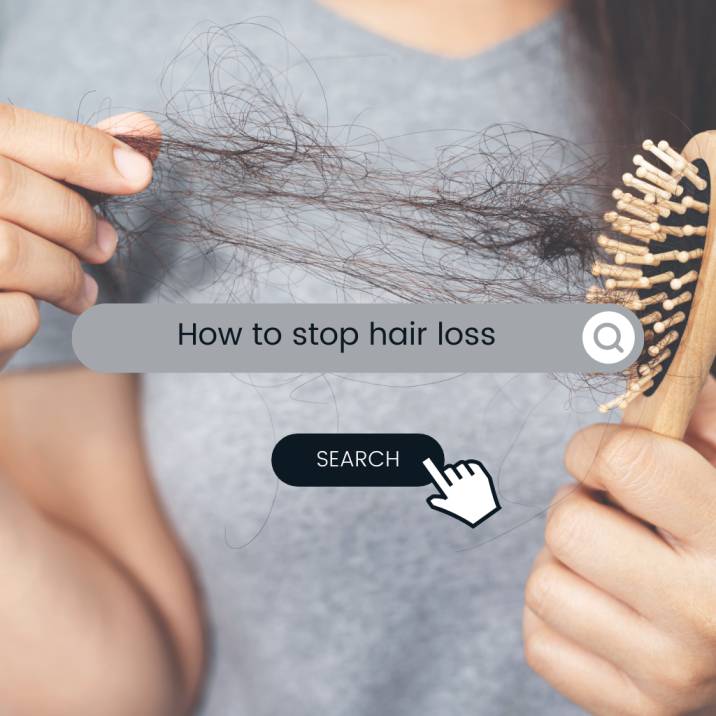
How to stop balding in men
Next time you pass a middle-aged guy losing his hair, remember he’s basically one in every two men. In other words, 50% of men in society suffer from hair loss. Scalp tests reveal that most men have male pattern baldness called androgenetic alopecia.
Until now, scientists have offered countless solutions; however, among all these natural treatments, they have not yet found an effective treatment method other than hair transplant operation. In man type hair loss, hair transplant surgery provides up to 98% success. The power of Minoxidil + Finasteride medications also stop hair loss by 85-90%, apart from the fact that they have very high side effects.
In addition to treatment, men can try the following to help regrowth:
- Treatment of any scalp condition,
- Psychological support to manage stress,
- Prefer conditioners, shampoos, hair oils and foams that contain hair nourishing products like aloe vera, biotin, panthenol,
- Limiting alcohol and smoking,
First and foremost, figure out how bald you are
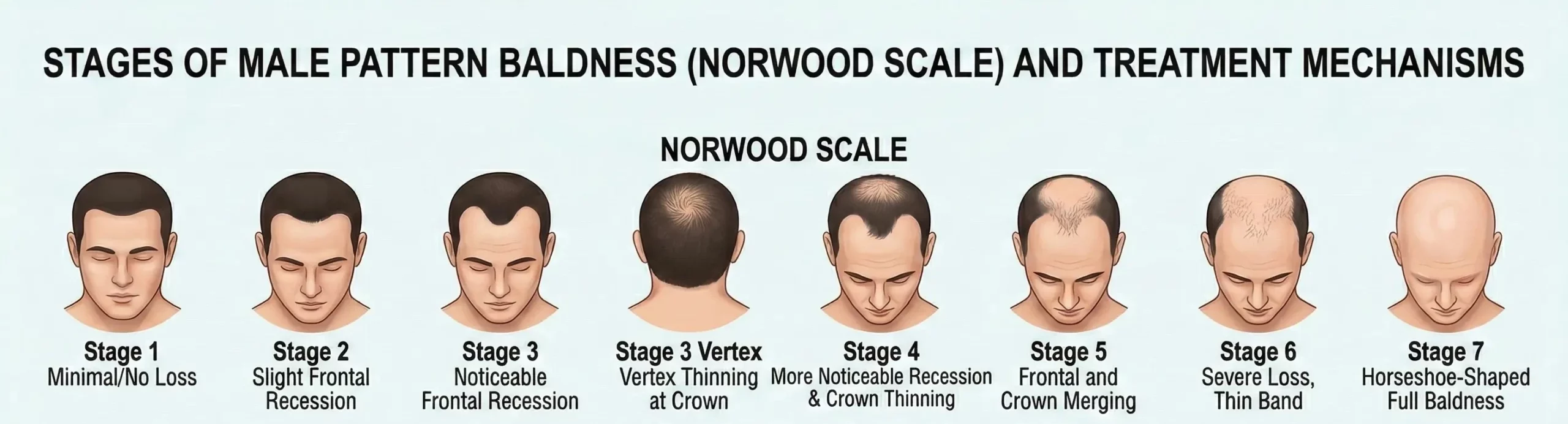
Before starting a current baldness treatment, you need to determine your level of baldness. Many men are bald, but not all to the same degree. If you are still at stages 1 to 3, it is much more likely that hair loss can be stopped and you can benefit from non-surgical treatments. However, at stages 5, 6, and 7, this becomes much more difficult, and you may not even have enough active donor follicles for hair transplants.
Norwood Scale: Identifying Your Hair Loss Stage
Stage 1: Minimal or No Loss
Individuals with level 1 baldness have either not yet started losing their hair or are experiencing very minimal hair loss. There is no noticeable hair recession, and hair thinning is either very slight and noticeable at the roots or non-existent. Although baldness has begun, the individual is not yet aware of it because there are no visible signs of loss, but things are not going well under the skin.
Stage 2: Frontal Recession Begins
Hair loss begins at the front in Norwood’s stage 2. This is when you first start to notice that your hair doesn’t look as thick as it used to. However, most people don’t worry too much at this stage. They think it’s temporary and that their hair will grow back. They blame the situation on stress and seasonal changes. The hairline begins to shift into a subtle “M” shape, often referred to as a “mature hairline”.
Stage 3: Frontal Scalp Hair Loss can Advance Rapidly
At this stage, frontal hairline recession accelerates. The recession at the temples becomes deep enough to be considered clinically bald in those areas. Many people start to seek solution to stop hair loss at this time. If they do not seek medical help, receding front hairline progresses may faster. The hairline forms a distinct “M”, “U”, or “V” shape.
Stage 3 Vertex: Vertex Thinning at Crown
Thinning may begin at the crown. In some men with grade 3 hair loss, vertex loss is added to frontal thinning and loss. Hair loss occurs in a spiral pattern, starting at one point and gradually spreading. Therefore, over time, most men develop a round bald patch at the crown. While the front hairline remains relatively intact, a bald area begins to form at the top of the head.
Stage 4: More Dramatic Recession and Crown Thinning
The receding hairline is more severe than in stage 3, and the bald spot on the crown has expanded. Now, when someone looks at you, they can easily see your hair loss. A bridge of thin follicles separates the receding hairline from the bald spot at the crown. However, you are not yet at a level where you would be labeled “bald.” Generally, people gain a bald appearance at stage 5 and beyond. At this stage, if you still have donor hair on the sides, it may be your last chance to stop hair loss and get a hair transplant.
Stage 5: Significant Balding has Begun
The front and top begin to merge. Your two bald areas become one, and baldness occurs across your entire head. Over time, the balding areas at the front and top continue to expand toward each other. The hair bridge separating the two areas becomes very narrow and sparse, almost disappearing.
Stage 6: The Final Stage before Complete Baldness
Severe Loss and thin band stage. The bridge of hair that once separated the front and crown is completely gone. The hair loss across the top of the head becomes a single large area, leaving hair only on the sides and back.
Stage 7: Horseshoe-Patterned of Shedding Around the Head
This level is the most advanced stage of Norwood man-type hair shedding scale.The top of the head is entirely bald, with hair remaining only in a “horseshoe” pattern around the ears and the base of the neck.
Treatments to stop balding in women
Every 1 out of 3 women ask how to stop hair loss in women. They must be aware that the hair loss system is quite different in female patients compared to males. So, the solutions as well. Bald spot on head woman, manifested in the form of diffuse thinning.
Main reasons behind hair loss in women can be related to giving birth, hormonal changes in menstruation, birth control remedies, and rapid weight loss. At the same time, research shows that women experience stress for much longer, more extensively and more quickly than men. As there is a positive correlation between stress and hair thinning, it is possible to say that women’s hair loss also has emotional causes.
Women can try following methods in order to stop balding in female patients:
- Thyroid treatment
- Dietary changes,
- Psychological support to reduce stress
- Hormone therapies
- Hair replacements for women
Best treatments to stop balding in postmenopausal women
Furthermore, women are looking for an answer to the question of ‘How to reverse thinning hair after menopause?’ can consider Minoxidil treatment, female hair transplants and scalp massage. Plus, they can also try hair growth oils and avoid heat styling.
Best treatments to stop balding
If you want to stop baldness, you first need to find out why it is happening. When you see a dermatologist or trichologist, they will carry out a physical examination and analyze your hair with a blood test. After that, depending on the test results, they will be able to draw up a medical treatment plan for you. Depending on your position on the Norwood (for men only) or Ludwig (for women only) hair loss scale, your surgeon starts treatment.
1. Iron tablets
Iron deficiency can lead to weakness, lack of energy, rapid heartbeat, spoon nail, and hair loss. In anemia hair loss, nutrients cannot reach the hair follicles and the cells cannot carry oxygen. As a result, the hair begins to fall out rapidly. Therefore, Iron supplements can help to raise low iron levels.
2. Light therapy
Doctors can use low level laser therapy to treat alopecia because the light energy can increase blood flow to the scalp. It is a non-invasive approach that uses a few wavelengths to stimulate hair follicles. It has the potential to promote hair regrowth and improve density in bald areas. In addition, there are some studies suggesting that it may be effective for hair loss conditions like AGA and telogen effluvium. This therapy is good for improving cellular metabolism and stimulating hair follicle activity.
3. Protein-rich diet
Truth be told, beauty comes from within. Keratin powders and supplements are useless in this sense. There is no substitute for a healthy diet and taking the right vitamins. What experts often point to among home remedies for hair breakage is actually a protein-rich diet. About 95% of hair structure is made up of a type of protein named keratin. Keratin is an essential component that makes hair firm and durable. The rest of the hair is made up of other components like water, lipids and certain minerals. Therefore, a high-protein diet can be beneficial for hair growth and strength.
4. Essential oils
Oils like coconut, jojoba, aloe vera, castor that are rich in vitamins and fatty acids nourish your hair follicles and promote healthier hair growth. Some of these oils can’t be consumed so you can benefit them as hair drops. Hair drops for hair growth can moisture skin and prevent dryness, enhance blood circulation, deliver more oxygen to the follicles, and make them more resilient to damage. You can try Perseus Ozonized Hair Oil & Oil Serum Complex as a hair serum that is sulfate & paraben free, enriched with natural ingredients and nourishes your hair from root to tip.

5. Antioxidants
For brittle and unhealthy strands, antioxidants can provide protection. Fried foods, alcohol, smoking, tobacco, pesticides and air pollutants are external triggers that cause baldness. This is where antioxidants can come to the rescue. Plus, Vitamin A, vitamin C, vitamin E, beta-carotene, phytochemicals, selenium and trace minerals are antioxidants for hair growth. Also, foods rich in antioxidants include berries, red wine, pomegranate, pecans, red wine and tomatoes.
6. Hair care products
In 2026, the global hair care market has seen a surge of interest in products such as hair growth spray, DHT blocker for women, and scalp-focused solutions. Rising names like Nutrifol, Trybello, Growplex, and Hair Growth Max are gaining visibility, alongside niche items like Hair Helper Spray, Hair Fertilizer, and even heritage products such as Baby Don’t Be Bald. Scalp health is also in the spotlight, with more consumers turning to tools like a scalp stimulator for improved circulation. While these international brands and categories are driving the trend, Perseus stands out by offering specialized post-transplant hair health solutions that combine gentle care with clinically backed ingredients.
Some of the top shampoo brands for post-transplant hair care include Perseus, Kérastase Genesis, DS Laboratories Revita, Alpecin Caffeine Shampoo, and Nioxin System Kits. These brands are known for gentle cleansing, scalp stimulation, and nourishing formulas that support hair growth while protecting newly transplanted grafts. Among them, Perseus is specifically formulated for post-transplant recovery, combining clinically-backed ingredients with a gentle, scalp-friendly approach.
7. Micropigmentation
If you want to easily create the appearance of fuller hair, this tattoo of tiny dots on the scalp can help. Best for short hairstyles like buzz cuts, the dots mimic hair follicles, making thinning areas appear fuller and reducing the contrast between the scalp and the hair. Don’t forget that this is not a medical treatment, it only solves the appearance of hair loss for a short time. For a longer lasting effect, you can do touch ups, and continue to your baldness treatment.
8. Hair transplant
Hair transplantation techniques are the most effective treatment to stop balding and regain the appearance of full and lush hair. There are many hair transplant techniques available today. These include FUE, U-FUE, NeoGraft and DHI. These techniques use punch tools that are minimally invasive. Surgeons use these surgical instruments to make small holes in your recipient area and transplant individual hair follicles from the hair-bearing area to the bald area. It can be done with a minimum of 500 hair grafts and a maximum of about 7000 hair grafts. Hair transplantation is usually done in one session, but rarely 2 or 3 sessions are needed. The average duration of a hair transplant surgery is 4 hours and is performed under local anesthesia. The recovery period is a few months, but you may need to wait up to 1 year to see the most effective hair transplant results. You can use post-transplant hair care products to stop the loss of your existing hair during the healing process and to ensure the rapid healing of the newly transplanted hair.
Hair Loss Treatment Comparison Table
| Treatment | Best For | Effectiveness | Side Effects |
|---|---|---|---|
| Hair Transplant | Norwood 4+ | Very High | Low (Surgical) |
| Minoxidil | Early Thinning | Moderate | Scalp Irritation |
| Finasteride | Pattern Baldness | High | Consult Doctor |
| LLLT Laser | Density Boost | Moderate | None |
| Micropigmentation | Visual Thickness | High (Visual) | None (Cosmetic) |
The Latest Hair Loss Treatments
While hair transplantation remains the only permanent solution for significant hair loss, 2026 has brought meaningful clinical advances in non-surgical options. Three treatments in particular are gaining ground backed by peer-reviewed data, not just marketing claims.
FAQs about Baldness Treatment in 2026
Can lost hair be regrown?
Yes, conditions like telogen effluvium and alopecia areata may allow for regrowth. Moreover, androgenetic alopecia (patterned hair loss) can also see some hair regrowth with treatments including medications and lifestyle changes.
Is stage 1 hair loss reversible?
Yes, stage 1 represents where the least shedding on the Norwood-Hamilton hair loss scale. There is no receding hairline, there are no prominent bald spots and no the pairing has thinned. As soon as balding is stopped, cells in the balding area can regenerate itself.
How to stop balding at 20?
Hair loss usually increases in the 30s. If you are experiencing hair loss in your 20s, stress, heredity, pattern type hair loss or underlying disorder should be evaluated. In this case, consult a dermatologist and consider the treatment options available to you.
Will I go bald if my dad is?
You should take AGA seriously if both parents have a bald head. However, this does not mean that just because your dad is bald, you will also suffer from balding. If there is a pattern of hair loss in the family and your hair is also falling out, you can contact a hair transplant specialist without wasting time.
Can a receding hairline be stopped in 2026?
Yes, through early intervention with DHT blockers, consistent scalp-focused nutrition, and innovative treatments like laser therapy, a receding hairline can be significantly slowed or even halted.
References
- Trueb RM. Dermatologic Aspects of Men’s Hair Loss. Cureus. 2022;14(7):e27140. doi:10.7759/cureus.27140
- Medically reviewed by Jennifer Huizen, M.D. How to Stop Hair Loss. Medical News Today. Published January 5, 2024. Accessed April 27, 2026.
- Hair Loss. National Health Service UK. Published April 11, 2023. Accessed April 27, 2026.
- World Baldness Map: Hair Loss Rates by Country. Hairfix Mexico. Published 2024. Accessed April 27, 2026.
- Men’s Hair Loss. American Hair Loss Association. Published 2025. Accessed April 27, 2026.
- Alopecia. StatPearls. U.S. National Library of Medicine. Published 2023. Accessed April 27, 2026.
- Hair Loss Statistics: Causes, Treatment & Trends. National Council on Aging (NCOA). Published 2024. Accessed April 27, 2026.
Recommended Reading
✦ Drug-Induced Hair Loss: Which Medications Cause Hair Loss? — Discover which prescription drugs, treatments, and toxic agents trigger anagen or telogen effluvium, and learn how to protect your scalp during treatment.
✦ Follicle Nutrition: Best Hair Vitamins After Hair Transplant — Discover essential vitamins that aid in stabilizing hair fall and promoting follicular growth post-transplant.
✦ Gentle Cleansing: What Is the Best Shampoo After Hair Transplant? — Learn how to choose a medical-grade, pH-balanced shampoo that protects sensitive post-op tissue without harming your new grafts.
✦ Targeted Recovery: Hair Growth Serum After Hair Transplant — Explore how specialized serums accelerate cellular healing, nourish the scalp, and enhance overall hair regrowth.


Receive offers, product alerts, styling inspiration and more. By signing up, you agree to our Privacy Policy.
- info@perseusstyle.com