What Causes Frizzy Hair? Hair Frizz Solution
Written by Perseus Editorial Team
Publication Date: August 2026
Last Update: August 2026
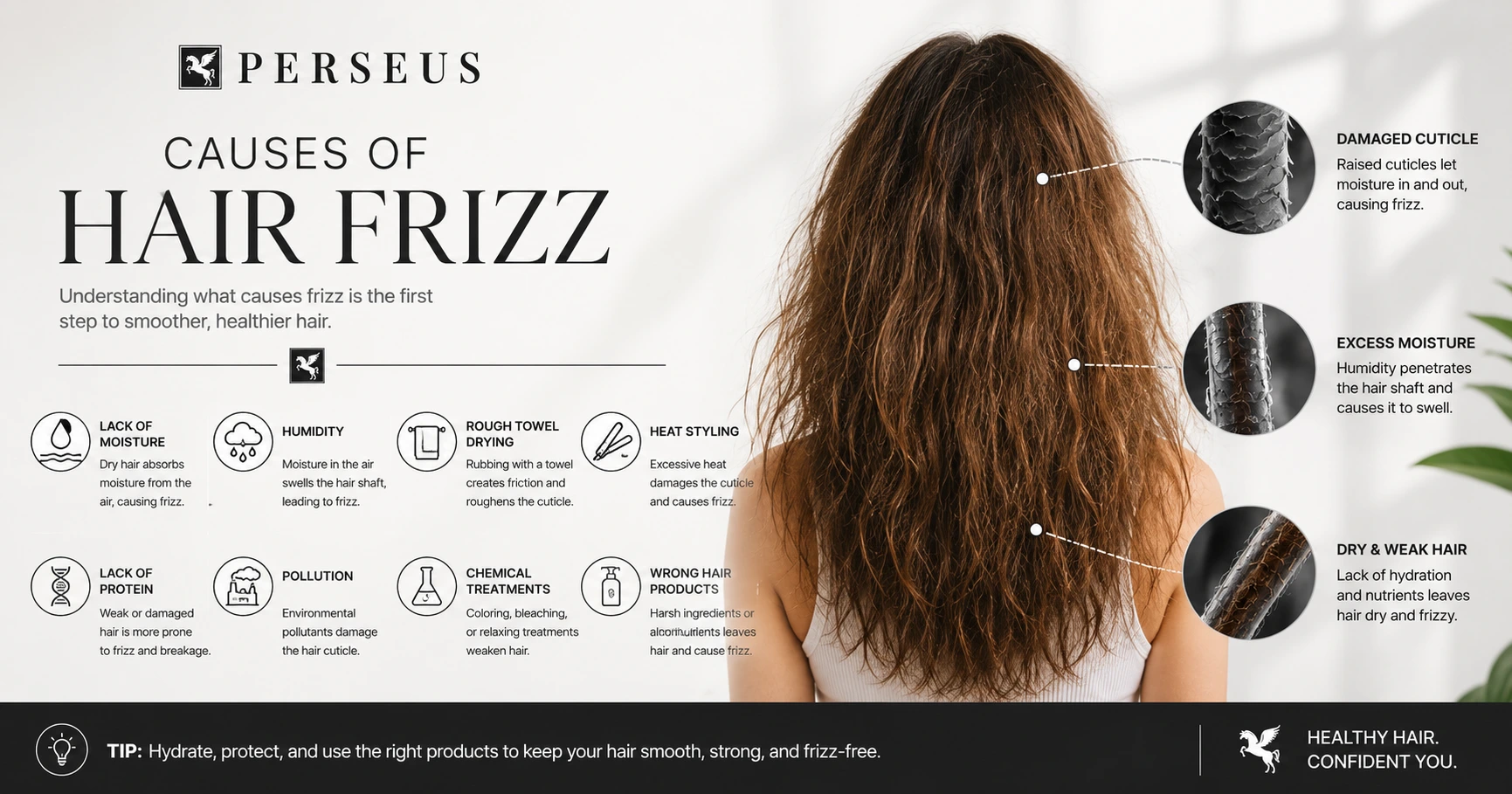
When investigating what causes frizzy hair, people generally blame dry air, bad hair genes, or their hair type. However, when the scientific reasons behind hair frizz are examined, it turns out that none of these are the actual causes of hair frizz. In fact, frizz is a superficial reaction that can occur in any hair when certain conditions come together on the hair shaft. Keep reading to find out what these conditions are and how they lead to frizz.
Table of Contents
- What actually happens when hair frizzes
- The main causes of frizzy hair
- Why new hair after a transplant often frizzes first
- Who says what about frizz
- Find your frizz type
- Is frizz a sign of damaged hair?
- How to calm frizz without overhauling your routine
- Watch: spotting your frizz type
- FAQs
- References
- Hair frizz happens when the hair's outer cuticle lifts and pulls in moisture unevenly from the air, not because of a hair type or the day's forecast.
- Dryness, heat and chemical damage, rough handling, and humidity all raise the cuticle. Genetics changes how visible the result is, not whether it happens.
- Hair that grows in after a hair transplant is thinner and more porous for the first several months, which is one of the most common reasons patients notice post-transplant frizz around the hairline before it settles.
- Frizz that never calms down, no matter the weather or how recently you washed, usually means the cuticle needs consistent repair rather than a new styling product.
What actually happens when hair frizzes?
The cuticle (a layer composed of overlapping cells) forms the structure of the hair shaft. In smooth, healthy hair, the cuticle layers lie flat against one another. A flat cuticle reflects light evenly and keeps the hair moisturized.
Frizzy hair begins when the cuticle layers separate.
When the overlapping cells no longer lie flat, the hair loses its smooth surface. Instead of holding onto its own moisture, it begins to absorb moisture from the air. This excess moisture causes the hair to swell slightly and disrupts its harmony with the surrounding hairs. When this happens to thousands of hair strands, it results in the uneven hair texture we call frizzy hair.
“Frizz is not a hair type. It’s what happens when the cuticle can no longer keep moisture where it belongs.”
A cuticle doesn’t lift on its own. Something has to disturb it first, and that something is usually one of a handful of everyday factors, often working together rather than alone.
The main causes of frizzy hair
Moisture
1. Dryness and porosity
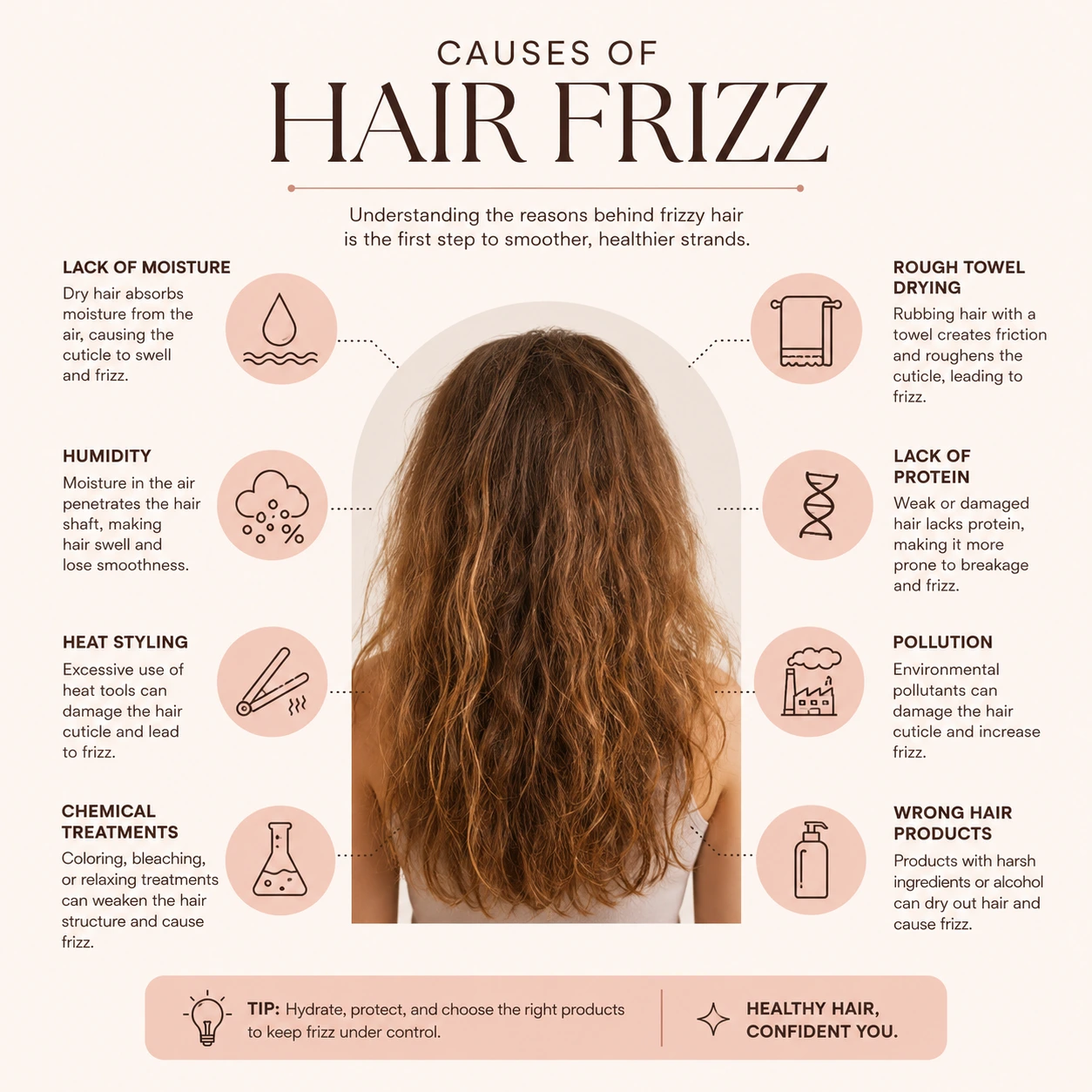
Hair that lacks moisture develops a rougher, more porous cuticle. Porous hair is more open at the surface, so it absorbs humidity from the air faster and more unevenly than well-moisturized hair does. Dry hair and frizzy hair go together for exactly this reason: one creates the conditions for the other.
Damage
2. Heat and chemical damage
Blow-drying, straightening, coloring, and bleaching can wear down the hair cuticle over time. Even if the damage isn’t visible in everyday life, a weakened cuticle frizzes more easily and takes longer to smooth out after washing. In this case, people often think the frizz has appeared all of a sudden.
Handling
3. Rough towel-drying and brushing
Rubbing wet hair with a standard cotton towel creates friction that lifts the cuticle before it’s even had a chance to dry. Brushing curly or wavy hair once it’s fully dry can break up natural clumps and scatter loose strands into a halo of frizz.
Wash routine
4. Hot water and harsh products
Very hot water strips the natural oils that keep the cuticle sealed. Shampoos with strong sulfates or high alcohol content do the same thing chemically, leaving the strand more exposed to whatever moisture the air happens to be carrying.
Environment
5. Humidity and weather
Humidity simply supplies the moisture that an already-lifted cuticle is ready to absorb. On a dry day, the same hair might look smooth. The weather is the trigger, not the root cause, which is why avoiding humidity works far less reliably than addressing the cuticle directly.
Genetics
6. Hair type and hair texture
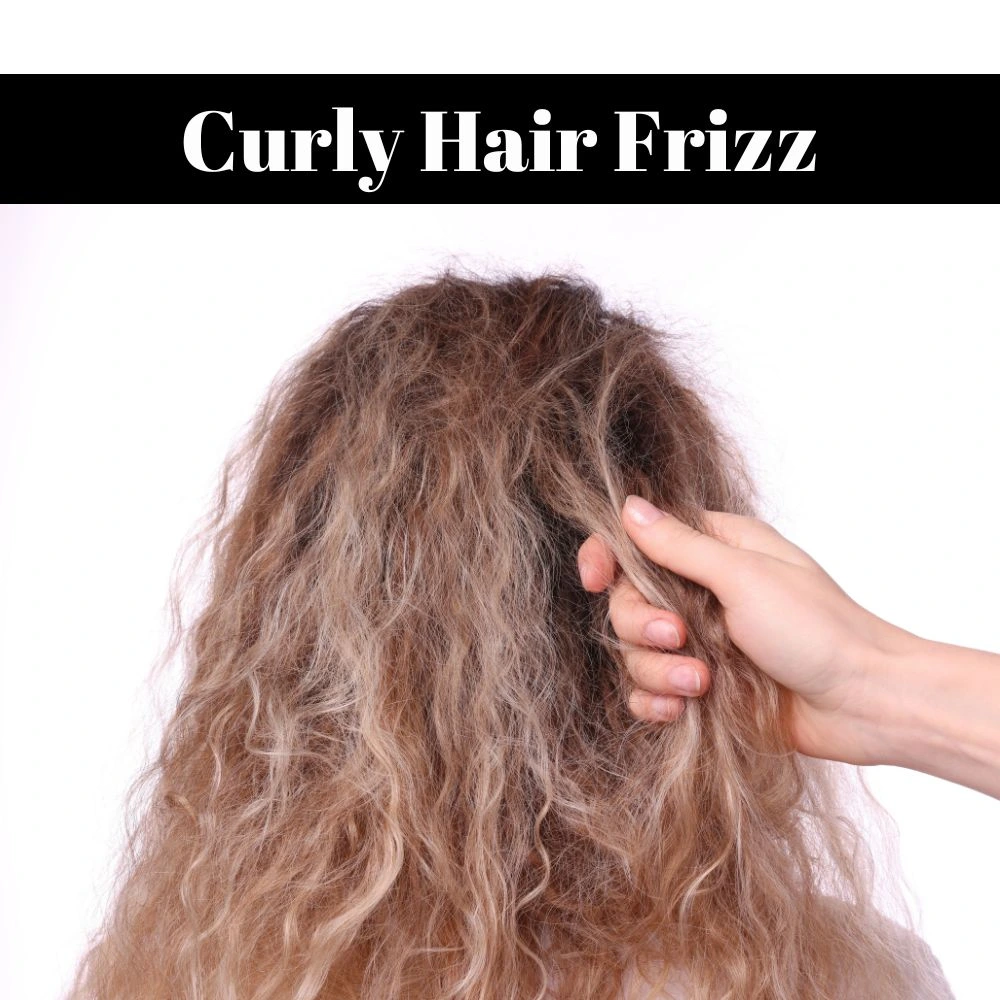
Curly and wavy hair has a naturally uneven cuticle structure along the bends of each strand, which is part of what gives curls their shape in the first place. That same structure makes it easier for moisture to slip in at the bends, which is why curlier hair types tend to show frizz more readily, not because their hair is more prone to problems.
New growth after a hair transplant
Hair that grows after a follicular unit transplant emerges with an immature cuticle. In the first few months following the transplant, new hair strands are generally finer, lighter in color, and more porous than the surrounding hair. This is because the follicle is trying to reestablish its normal growth cycle following the trauma caused by the surgery.
Sensitivity in the cuticles is a normal part of the healing process. It is not a sign that there is a problem with the graft. Most patients notice that their hair texture improves as the hair cycle matures, typically between the sixth and twelfth months.Most patients see the texture even out as the hair cycle matures, usually somewhere between month six and month twelve. In the meantime, a gentle, sulfate-free wash routine and a smoothing treatment such as hair botox after transplant can make the transition a lot less noticeable.
Who says what about frizz
Dermatologists
The cause: A raised cuticle, most often from dryness or heat exposure, not a flaw in the hair itself.
The fix: They generally recommend sealing in moisture with a leave-in conditioner and lowering wash-day heat before reaching for any styling product.
Hair Transplant Specialists
The cause: Studies on hair friction and fiber structure show that frizz is partly a mechanical issue, not just a moisture issue. It is related to how strands rub against each other as the cuticle roughens.
The fix: Smoothing treatments that temporarily realign the hair’s internal structure, rather than just coating the surface, tend to hold up better over time.
Find your frizz type
What's Driving Your Hair Frizz?
1. How does your hair feel when it's dry?
-
Rough, straw-like, or thirsty: You’re likely dealing with Moisture-Driven Frizz. Your cuticle needs deep hydration. The Fix: Start with a weekly deep conditioner and a leave-in treatment to seal in moisture after every wash.
-
Soft, just a little unruly: You have a Low-Frizz Profile. Occasional frizz is completely natural for most hair types.
2. Do you regularly use heat tools, color, or bleach?
-
Yes, at least once a week: You’re likely experiencing Damage-Driven Frizz. Heat and chemical treatments weaken the outer cuticle layer. The Fix: Incorporate a bond-repairing or protein treatment into your routine and lower your heat-styling frequency.
-
Rarely or never: Heat isn’t your main trigger. Look into humidity or general moisture levels instead.
3. Does your frizz mainly show up on humid or rainy days?
-
Yes, it’s very weather-dependent: This is Weather-Driven Frizz. Your cuticle is healthy but absorbs excess moisture from the air. The Fix: Apply a lightweight anti-humectant serum before styling to shield your hair against humidity.
-
No, it’s about the same every day: Your frizz is likely tied to your natural texture or internal moisture levels rather than the weather.
4. Is your natural texture curly, coily, or very wavy?
-
Yes, and it frizzes at the bends: You have Genetic Curl-Pattern Frizz. Curls naturally lift at the bends, making them more porous. The Fix: Focus on clump-friendly styling on wet hair and avoid brushing your hair when dry.
-
No, it’s straight or barely wavy: Focus on lightweight hydration without heavy oils that could weigh your hair down.
Note: This self-check is designed for general guidance. Consult a stylist or dermatologist for personalized advice.
Is frizz a sign of damaged hair?
Sometimes, but not always. Occasional frizz tied to humidity or a missed conditioning step is normal for virtually every hair type. Frizz that persists no matter the weather, paired with rough texture, split ends, or breakage, is a different story. That combination usually means the cuticle is chronically raised from damage, not just reacting to the day’s conditions.
The distinction matters because the fix is different. Weather-driven frizz responds well to sealing in moisture and small styling adjustments. Damage-driven frizz needs the hair fiber itself rebuilt, through protein treatments, trims, or professional smoothing, before frizz-control products can do their job properly.
How to calm frizz without overhauling your routine
You don’t need to replace your entire hair care routine to see a difference. Four changes cover most of what’s outlined above:
- Rinse with cool or lukewarm water instead of hot, to keep the cuticle sealed after washing.
- Switch to a microfiber towel or an old cotton t-shirt for drying, which cuts down on the friction that lifts the cuticle.
- Apply a leave-in or lightweight oil on damp hair, not dry hair, so it can actually seal in moisture rather than sit on the surface.
- Finish blow-drying on a cool shot if you use heat at all, since a cold burst of air helps the cuticle lie flat as it sets.
If your hair is newly grown in after a transplant, keep the routine even gentler for the first several months: a paraben-free, pH-balanced formula avoids stripping fragile new strands while they finish maturing.
Watch: spotting your frizz type
Our Perseus editors have carefully selected the following YouTube videos for you on what hair frizz is, how to fix it, and hairstyles suitable for frizzy hair. You can use these videos to learn how to manage frizz and style your hair appropriately for frizzy hair.
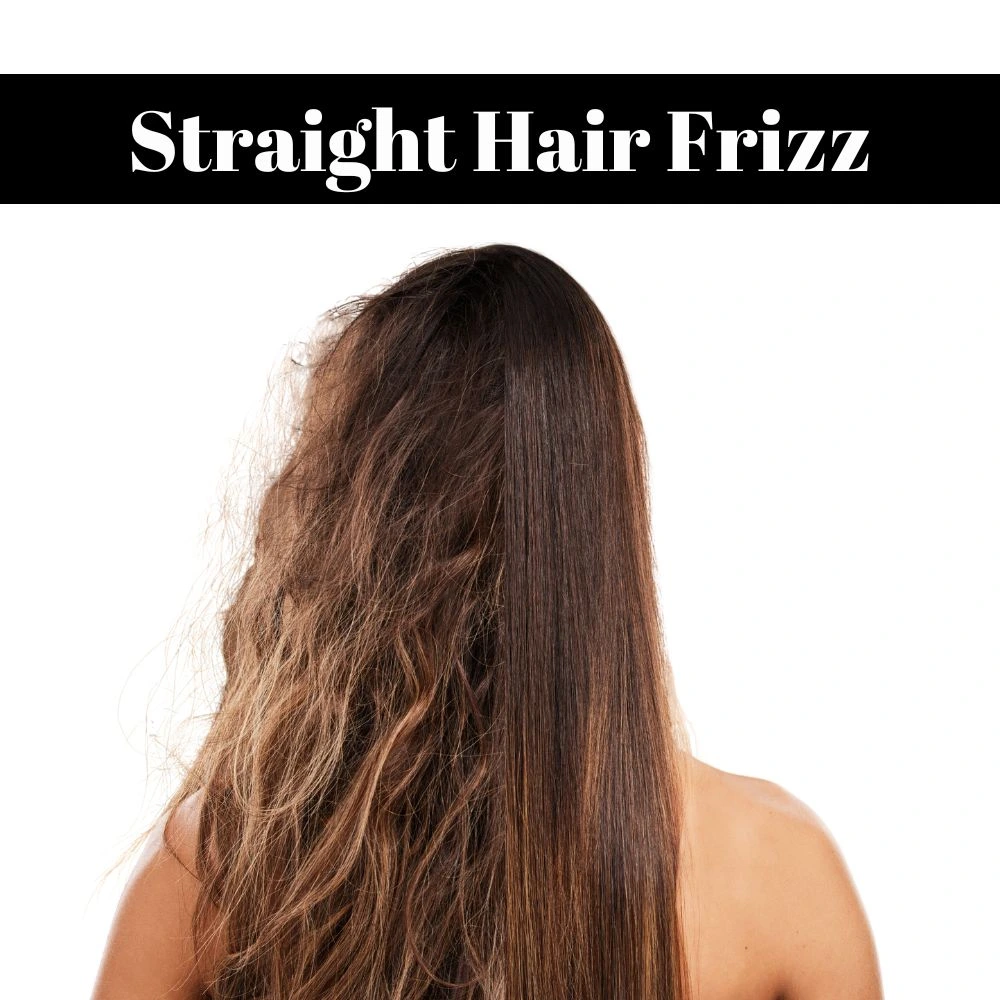
Frizzy Hair Images
FAQs About Hair Frizz Causes
What is the main cause of frizzy hair?
A lifted hair cuticle absorbing moisture unevenly from the air. Dryness, heat styling, chemical treatments, and rough handling are the most common reasons the cuticle lifts in the first place.
How can I stop my hair from frizzing?
Wash with cool or lukewarm water, dry with a microfiber towel instead of cotton, apply leave-in products to damp rather than dry hair, and finish heat styling with a cool shot to help the cuticle lie flat.
Why has my hair suddenly gotten frizzy?
A sudden change usually points to a new stressor: recent coloring or bleaching, a change in water hardness, a new hot climate, or, for transplant patients, a wave of new growth coming in around the hairline.
Does new hair after a hair transplant grow in frizzy?
It can, especially in the first six to twelve months. New grafts produce finer, more porous strands while the follicle re-establishes its normal cycle, which makes them frizz more easily than surrounding native hair. This typically evens out as the growth matures.
Citations
- Konno, S., Asanuma, K., & Nonomura, Y. (2024). Friction Dynamics of Straight, Curly, and Wavy Hair. Journal of Oleo Science, 73(6), 801–811.
- Sinclair RD. Healthy hair: what is it? J Investig Dermatol Symp Proc. 2007;12(2):34-38.
- Coates H. Embracing Frizzy Hair. Vogue UK. Published September 17, 2025. Accessed August 6, 2026.
- Gavazzoni Dias MFR. Hair cosmetics: An overview. Int J Trichology. 2015;7(1):2-15.
Recommended Reading
✦ Hair Trends: Top Men’s Haircuts of 2026 — Explore this year’s most popular men’s hairstyles, featuring modern fades, textured crops, and expert styling advice for every hair type.
✦ Growth Concerns: No Density 7 Months After Hair Transplant — Understand why hair growth can sometimes be delayed at the seven-month mark, what factors influence slow maturation, and when to consult your surgeon.
✦ Medication & Shedding: Does Ozempic Cause Hair Loss? — Explore the link between rapid weight loss drugs like semaglutide and telogen effluvium, and learn how to protect your hair density.


Receive offers, product alerts, styling inspiration and more. By signing up, you agree to our Privacy Policy.
- info@perseusstyle.com