Blood Tests Before Hair Transplant: Which Ones Are Required?
Mandatory screenings are a foundational part of pre-operative care. Undergoing comprehensive blood tests before hair transplant surgery is more than just a clinical formality; it is a vital step to ensure your safety throughout the procedure, mitigate risks to your general health, and maximize your final graft survival rate. Ultimately, your surgeon relies on these pre-transplant evaluations to tailor a precise and successful treatment plan. We will explore why these lab evaluations are conducted, break down the specific panels you will need, and explain what happens if your test results fall outside the normal range.
Why Are Blood Tests Required Before a Hair Transplant?
When the clinical team looks at your test results, they are looking to check 3 boxes.
- They want to make sure there isn’t a silent issue flying under the radar like a mild case of undetected anemia, a sudden blood sugar spike, or a sluggish immune response. Any of these could quietly slow down how well your donor and recipient areas heal, and we want your recovery to be as smooth as possible.
- A hair transplant involves continuous blood contact from start to finish, so routine viral screenings are there to protect everyone in the room.
- Your liver and kidney metrics give the anesthesia team a clear heads-up. They show exactly how your body will process and clear the medications used during and after the procedure. They help the doctor calibrate the perfect dosages.
The vitamins you take after the transplant will interact with the same metabolic pathways that were assessed in your blood tests before hair transplant. Thus, the results of your pre-surgery blood tests remain valuable long after the day of the procedure.
How Blood Work Helps Your Medical Team?
A hair transplant involves local anesthesia and thousands of tiny skin incisions. Even though these cuts are superficial, the procedure still carries real risks like bleeding, infection, or tissue damage.
Your doctor uses your blood tests to see exactly how your body will react on the day of the surgery. These numbers help the medical team predict your healing speed and formulate a structured recovery programme. The data also tells your doctor which medications to prescribe and which extra treatments will best support your new hair growth.
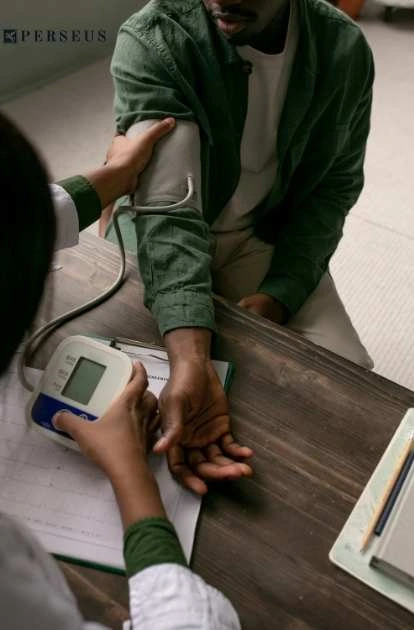
Your test results help your doctor guide your procedure in four ways:
- The tests detect viruses like Hepatitis, HIV, Syphilis, HSV, or HAV. This allows the clinic to take the right safety measures to protect both you and the medical staff.
- Checking your red blood cell levels shows how well your skin can repair itself. Chronic anemia slows down recovery because the blood cannot carry enough oxygen to the scalp, which lowers the survival rate of the new hair grafts.
- Finding problems like anemia or poor clotting before the surgery prevents heavy bleeding during the extraction and implantation phases. It also keeps you from feeling dizzy during the session.
- Blood traits and certain liver conditions change how your body processes numbing medications. Knowing this allows the team to select the right doses to keep you comfortable throughout the day.
What Blood Tests Are Done Before a Hair Transplant?
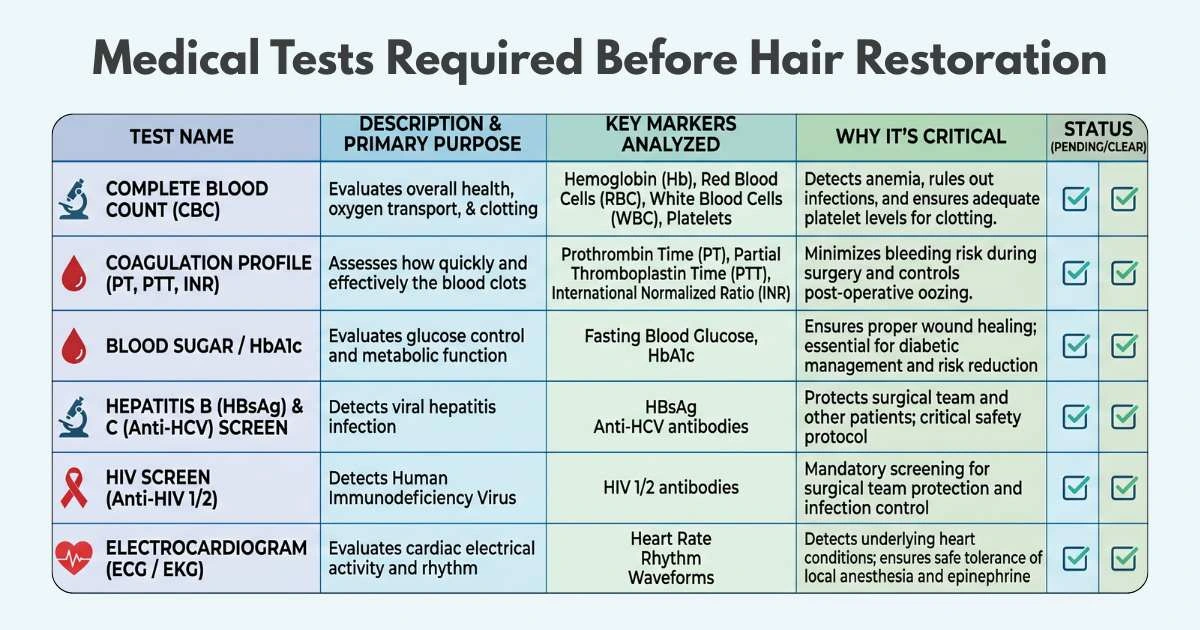
The medical tests that almost every clinic requires as a standard procedure before a hair transplant are as follows:
Complete Blood Count
This test is performed to check for anemia, the risk of infection, or immune system problems. Hemoglobin levels, in particular, are important for preventing complications during surgery.
Blood Glucose & HbA1c
This is done to monitor the patient’s diabetes. Diabetes can pose risks during surgery and may also delay wound healing or increase the risk of infection after surgery.
Coagulation Tests
Coagulation tests such as PT, aPTT, and INR are performed to ensure that the patient’s bleeding and clotting times are within the normal range and to prevent the risk of excessive bleeding during the procedure.
Infectious Disease Tests
Screening for bloodborne diseases such as hepatitis B, hepatitis C, and HIV is a standard procedure. It is mandatory for both the safety of the surgical team and compliance with clinical sterilization protocols.
Psychological Readiness and Mental Health
In cosmetic and surgical procedures, having realistic expectations and being psychologically prepared for both the pre- and post-operative periods directly affects the success of the procedure. As such, including this section is both professional and appropriate from the perspective of a holistic approach to health.
Optional Tests Before Hair Transplant
Liver & Kidney Function Tests
Tests like ALT, AST, Creatinine, or BUN. Your body needs to break down and flush out the numbing drugs and post-op painkillers. Your liver handles the breakdown, and your kidneys filter the waste. If your routine numbers show issues, your system might struggle to process these drugs safely. Doctors use this data to adjust your medication doses.
Thyroid Panel
TSH, Free T3, or Free T4. If you have surgery while your thyroid numbers are fluctuating, you will keep losing hair. You might lose your native hair and your new hair during recovery. Getting your thyroid stable first protects your final results.
Ferritin, Vitamin D3, B12 & Zinc
Ferritin measures your iron stores, which your skin uses to rebuild tissue. A bad ferritin deficiency can delay your new hair growth for weeks, even after your scalp heals. Vitamins D3 and zinc act as switches for your hair growth cycle. If you lack these vitamins, your new hair will struggle to start growing. Read on to learn in detail how zinc deficiency leads to hair loss.
Total Testosterone & Free DHT
This test shows how aggressive your genetic hair loss is. It also predicts how fast your remaining hair will thin out in the future. It does not change your safety on surgery day. However, it helps your doctor plan your long-term treatment. For example, if a young patient has very high DHT, the doctor will save some donor hair for a second session in the future.
Can a Hair Transplant Be Done Without Blood Tests?
According to the regulated medical standards, you should have mandatory blood tests before hair transplant. Without pre-operative blood work, the surgical team has no way to know whether you have a hidden bleeding disorder, an active viral infection, or a metabolic condition that could lead to graft necrosis or systemic complications during the hours of local anaesthesia administration. In Turkey, the UK, and the USA, pre-operative screening is a legal requirement for licensed surgical facilities.
How to Prepare for Your Pre-Transplant Blood Tests
Fasting for eight to twelve hours before a blood draw is a practice recommended by doctors before almost any surgery. You may drink water, but you should avoid food, coffee, and supplements. Your doctor will provide you with the most accurate information. Please follow your doctor’s recommendations. What we’ve discussed here are routine practices, but your doctor may request additional precautions depending on your overall health.
Generally, it is recommended that you stop taking high doses of biotin at least five days before the test. Biotin affects commonly used immunological tests and can skew thyroid and hormone results. Provide your clinic with a complete list of all medications and supplements you are taking, including aspirin, blood thinners, and herbal preparations. All of these can affect clotting results.
Blood Tests vs. Scalp Analysis
Both are essential. Neither replaces the other. Once your blood results clear and your scalp analysis is complete, your surgeon has everything needed to plan a procedure around your specific biology. Those are including how your hair will look and behave during the recovery months, and which hairstyles will work best as your transplanted follicles grow in.
Are blood tests included in hair transplant package pricing?
At most Istanbul clinics offering all-inclusive packages, pre-operative blood panels are included. At per-graft pricing clinics in Western markets, laboratory fees are typically itemized separately.
In the U.S. and Canada, the process is entirely based on a per-graft pricing model. The quote you receive per graft or per session rarely includes a pre-op blood panel. Often, clinics will ask you to have these tests done by your own doctor or to pay the laboratory separately (typically between $100 and $300).
Mexico follows a similar approach to Turkey regarding free blood tests before a hair transplant. However, in very low-budget clinics catering to the local market, this fee is sometimes waived.
FAQs about Blood Tests Before Hair Transplant
How long does it take to get results?
Standard pre-operative panels are processed within two to four hours at most surgical facilities, allowing international patients to complete blood work and consultation on the same morning as their procedure.
Can vitamin deficiencies delay my surgery?
Mild deficiencies will not stop your procedure. The team will prescribe supplementation to support recovery. Severe anaemia or critically low ferritin may delay surgery by four to eight weeks until levels reach safe thresholds.
Can an HIV-positive patient get a hair transplant?
HIV-positive patients can undergo a hair transplant, but it depends on their current health status and the clinic’s policies. For a safe procedure, the patient’s viral load must be undetectable, and their CD4 T-cell count must be within a healthy range to ensure a strong immune system and proper healing. While many standard clinics decline these cases due to strict safety protocols or lack of specialized equipment, specialized clinics perform the procedure using dedicated surgical setups to protect both the medical staff and the patient.
References
American Hair Loss Association. Preparing for Hair Transplant Surgery. Accessed June 17, 2026.
Dental Hair Clinic Turkey. Why Blood Tests Are Performed Before Hair Transplant Surgery. Accessed June 17, 2026.
- Hair Restoration Istanbul. HIV Positive Hair Transplant. Accessed June 17, 2026.
Related Articles
NeoGraft Hair Transplant in Turkey
What NeoGraft is, how it differs from manual FUE, and what to expect from the procedure in Istanbul.
Aloe Vera Gel After Hair Transplant
How aloe vera soothes post-operative irritation, reduces redness, and supports scalp recovery.
Best Hairstyles for Hair Transplant Patients
Which styles are safe at each stage of recovery — for both men and women.


Receive offers, product alerts, styling inspiration and more. By signing up, you agree to our Privacy Policy.
- info@perseusstyle.com