How to Wash Off Panthenol Foam After a Hair Transplant
Written by Perseus Editorial Team
Last Update: November, 2026
Medical Disclaimer:
This is an educational article, not medical advice. Every transplant, scalp and clinic protocol is different, and nothing here can be guaranteed to work for you. The suggestions below are general ideas only. Before you try any of them, talk to your post-op team and follow their instructions first. If anything in this article conflicts with what your surgeon or clinic told you, follow your clinic.
Is the foam on your scalp dry, white and a bit caked, even after you rinsed? You are not the only one. We frequently hear this from patients in the initial days following a transplant, and their concern is typically the same: “Is this hurting my grafts?”
Seeing foam residue on your scalp after washing can make you wonder whether you’re cleaning it properly or putting your new grafts at risk. Before trying to remove every last trace, it’s worth understanding why some residue is left behind and why being gentle with your scalp matters more than getting it completely clean.
Here's What Matters
Oil-based foam residue often resists water alone. Many patients find that lathering the post-transplant shampoo, waiting a moment, and rinsing slowly with lukewarm water works better than using more water or pressure. Rubbing, scratching, and strong water pressure are the main threats to fresh grafts.
Why Does the Foam Leave a Residue?
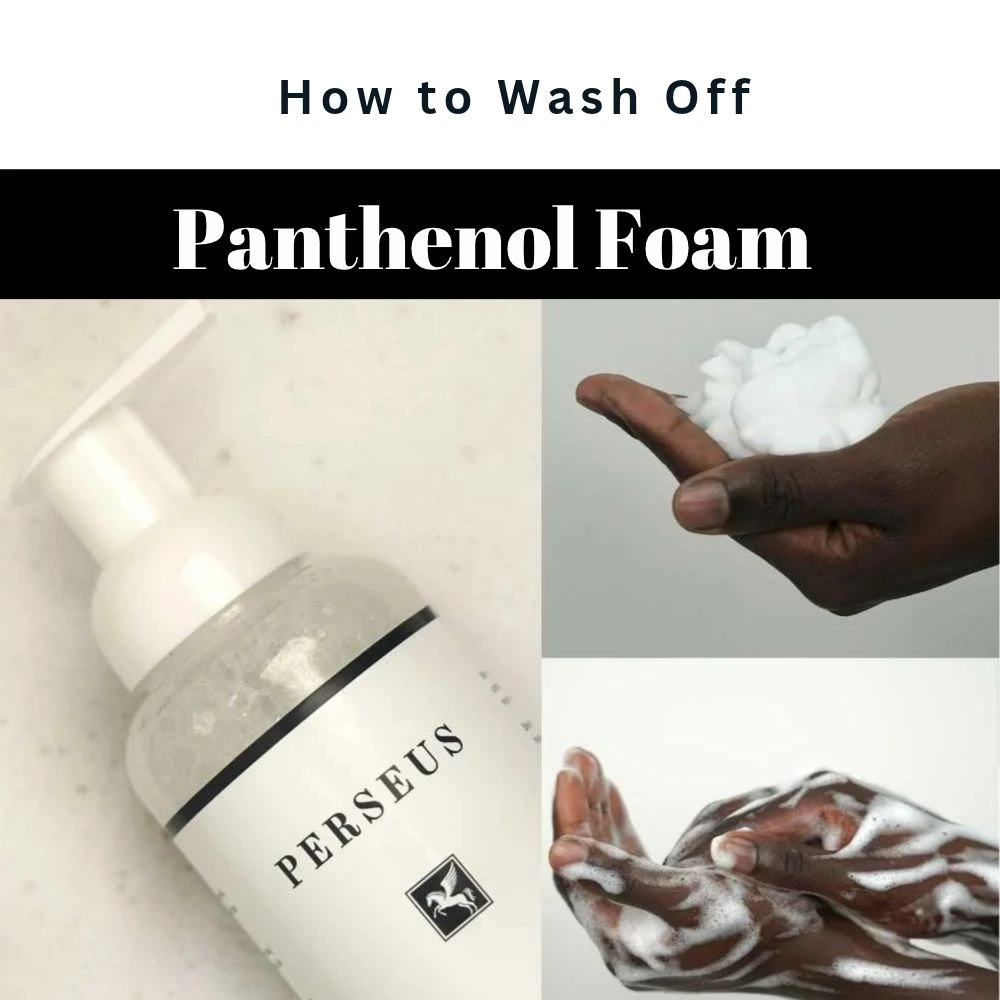
Panthenol (pro-vitamin B5) is a moisturizing ingredient. Our foam also contains oil-based ingredients, such as mineral oil and glycerin. Oil and water do not mix well. When the foam dries, the oily part can settle into a thin layer that looks white, dry or slightly waxy, and plain water often slides over it.
This is simply how this type of formula works. It doesn’t mean you’ve done anything wrong.
Will the Residue Affect My Grafts?
Typically speaking, a thin layer of scalp-care product is not expected to harm transplanted hair follicles. The main things to avoid are rubbing, scratching, picking at scabs, using hot water, or applying strong water pressure directly to the new grafts.
If you have any concerns, contact your post-op care team and send them a photo of your scalp. They can examine your situation and give you the right advice.
We specifically developed Perseus Foam formula for patients recovering from hair transplant surgery. It is gentle on the scalp and does not contain harsh ingredients such as alcohol, parabens, or sulfates that could cause irritation if used excessively.
No matter which hair foam you use, some of it will naturally be absorbed by your scalp. Therefore, there is no need to worry if a small amount of residue remains from a product specifically designed for post-op care and free of harsh ingredients that could irritate your scalp. On its own, this is very unlikely to cause damage severe enough to make your grafts fall out.
As long as you follow your post-op recovery instructions, please try not to stress about it. Stress itself can be a contributing factor to hair loss, so your peace of mind is important during recovery.
Your Clinic’s Instructions Come First
Clinics give different wash instructions. One may say a low stream of tap water. Another may say pour water with a cup. Some ask you to avoid touching the grafted area altogether in the first days. If your clinic’s method is different from the one below, use your clinic’s method.
If you have followed your clinic’s method and the residue is still there, do not wash harder or more often. Tell your post-op team.
What this data cannot tell you?
- It shows what patients ask, not how often a problem happens. It is not a complication rate.
- It comes from two clinics’ patients, so it may not describe other clinics or techniques.
- Patients only ask about what they think to ask, so rare but important problems can be missing.
A Gentle Wash Routine Some Patients Find Helpful
Check each step with your post-op team before trying it.
- Check the water – It should feel lukewarm. A simple test is to let it run over the inside of your wrist. It should not feel hot.
- Pre-foam the shampoo (ask first) – Some patients put a few drops of their post-transplant shampoo and some water in a small, clean, empty bottle, then shake it until it foams. This can be easier than lathering by hand. Use only the shampoo your clinic recommended.
- Lay the foam on top of the residue – Rest or lightly dab the shampoo foam over the area. Do not rub or massage.
- Let it sit briefly – Many clinics suggest around one minute, but follow your clinic’s timing. The shampoo’s cleansing agents need a little time to loosen the oily layer.
- Rinse slowly – Pour lukewarm water from a cup, or use the low stream your clinic described. Let it flow over the area instead of hitting the grafts directly.
- Pat dry – Press a soft, clean towel or paper towel very lightly. Do not rub.
Timing matters as much as technique. Our guide covers when to wash your hair after a hair transplant and how often.
What Not to Do
- More water and hotter water are not the fix. Several patients tell us they rinse for a long time with warm water, worry about dislodging grafts, and the residue still stays. The shampoo is doing more of the job than the water.
- Do not scratch or pick at the residue or at any crusts.
- Do not wash more often than your clinic recommends.
- Do not apply extra foam to cover the dry look.
Use Less Next Time
Most buildup comes from using more product than the scalp needs.
- Shake the bottle before each use.
- Spray from about 10 to 15 cm away onto a clean scalp.
- Start with less than you think you need. You should not see thick white mounds on the skin.
- Follow your clinic’s instructions on whether to massage it in or dab it on. Some clinics ask patients to avoid massaging in the early days.
- Use it on the schedule your clinic gave you.
More about the product: Panthenol Foam Scalp Care Lotion.
What If Some Residue Is Still There?
A thin leftover film is common, especially in the first days. Many patients are told to leave it until the clinic’s scab-removal wash. The timing varies between clinics, so ask yours when that wash should happen and how to do it.
When to Contact Your Post-Op Team
Contact them if you notice:
- Increasing redness, swelling or heat
- Pus or a bad smell
- Pain that is getting worse
- Fever
- Any graft that seems to have come loose
- Residue that is not improving after you have followed their method
What to include in your message:
- How many days it has been since your procedure
- Which products you use and how much
- How the residue looks (white, dry, caked, sticky)
- Photos of the area in good light
- Any redness, itching or pain
Having this ready helps them answer faster.
Frequently Asked Questions
Can I leave the foam on overnight?
It depends on your clinic’s schedule. Ask them whether to wash before the next application.
Does the residue block hair follicles?
We cannot say for any individual case. A thin layer of a scalp-care product is not generally expected to harm follicles, but your clinic can judge what is happening on your scalp.
I still feel sticky after washing. Is that normal?
It is common early on. Repeat the same gentle routine at your next wash, and ask your post-op team if it does not improve.
Should I use less foam?
Often a thinner layer rinses more easily. Ask your clinic if your amount or schedule should change before you adjust it yourself.
References
- An International Expert Consensus Statement Focusing on Pre and Post Hair Transplantation Care. Journal of Dermatological Treatment. 2023. doi:10.1080/09546634.2023.2232065. PMID: 37477225.
- Hair Transplantation. StatPearls. NCBI Bookshelf.
- Dias MFRG, Loures AF, Ekelem C, et al. Hair Cosmetics for the Hair Loss Patient. Indian J Plast Surg. 2021;54(4):507–513. doi:10.1055/s-0041-1739241. PMID: 34984093.
- Highly Efficient and Compatible Shampoo for Use After Hair Transplant. 2015. PMCID: PMC4517519.
- Proksch E, de Bony R, Trapp S, Boudon S. Topical Use of Dexpanthenol: A 70th Anniversary Article. J Dermatolog Treat. 2017;28(8):766–773. doi:10.1080/09546634.2017.1325310. PMID: 28503966.
- Gehring W, Gloor M. Effect of Topically Applied Dexpanthenol on Epidermal Barrier Function and Stratum Corneum Hydration. 2000;50(7):659–663. PMID: 10965426.
Recommended Reading
✦ Post-Op Care: Essential Hair Transplant Aftercare Questions Answered — A practical guide covering critical post-operative recovery timelines, wash routines, and key precautions for optimal graft survival.
✦ Soothe & Heal: Using Aloe Vera Gel After Hair Transplant — Exploring how topically applied aloe vera supports scalp recovery, reduces redness, and alleviates itching in donor and recipient sites.
✦ Natural Recovery: Saw Palmetto After Transplant: Natural DHT Blocker — An evidence-based look at using saw palmetto to minimize non-transplanted hair thinning and support long-term density.
✦ Shedding & Health: How Much Hair Loss Is Normal? — Understanding natural telogen shedding versus post-transplant shock loss to accurately evaluate your daily hair count.
✦ Style & Trends: Top Men’s Haircuts of 2026 — Modern styling options and haircut trends designed to showcase restored density and complement modern hair restoration results.
A Final Reminder
This article offers general suggestions, not guarantees, and cannot predict your results. Please check every step with your post-op team before you apply it, and follow their guidance over ours.
About the Perseus Editorial Team
Perseus develops post-hair-transplant care products focused on clean formulations and gentle scalp recovery. Our content is educational and does not constitute medical advice. Always consult your surgeon before making decisions about post-surgical care.


Receive offers, product alerts, styling inspiration and more. By signing up, you agree to our Privacy Policy.
- info@perseusstyle.com