Hair Botox: Prices, Recovery Timeline & Results Guide
Written by Perseus Editorial Team
Reviewed by Heva Clinic
Last Updated: August 2026
Hair botox is a deep-conditioning, injection-free treatment that repairs and nourishes hair strands using keratin, collagen, and hyaluronic acid. It is safe for hair transplant patients from month 6 onward. It does not affect follicles and requires no injections.
As treatments advance, the focus of hair restoration has shifted from simple graft counts to a treatment covering the health of the entire scalp. The recovery period is where the concept of hair botox enters the spotlight as a revolutionary post-op supportive therapy.
But what is hair botox exactly?
Hair Botox is a deep-conditioning treatment that provides intense moisture and protein to the hair. While it can be performed by hair specialists at beauty centers, those seeking a more reliable environment for this treatment can undergo hair botox therapy at a hair transplant clinic. It is called hair botox because its structure fills in the gaps in the hair strands and smooths them out. Keratin hair botox is particularly used to support the health of the donor scalp part and transplanted hair after hair transplantation.
Despite the clinical-sounding name, botox for hair has nothing to do with the muscle-relaxing toxins used in skincare. Instead, it is a high-performance, non-chemical, deep-conditioning treatment. No injections are required; it is a completely painless treatment.
What Does Hair Botox Do?
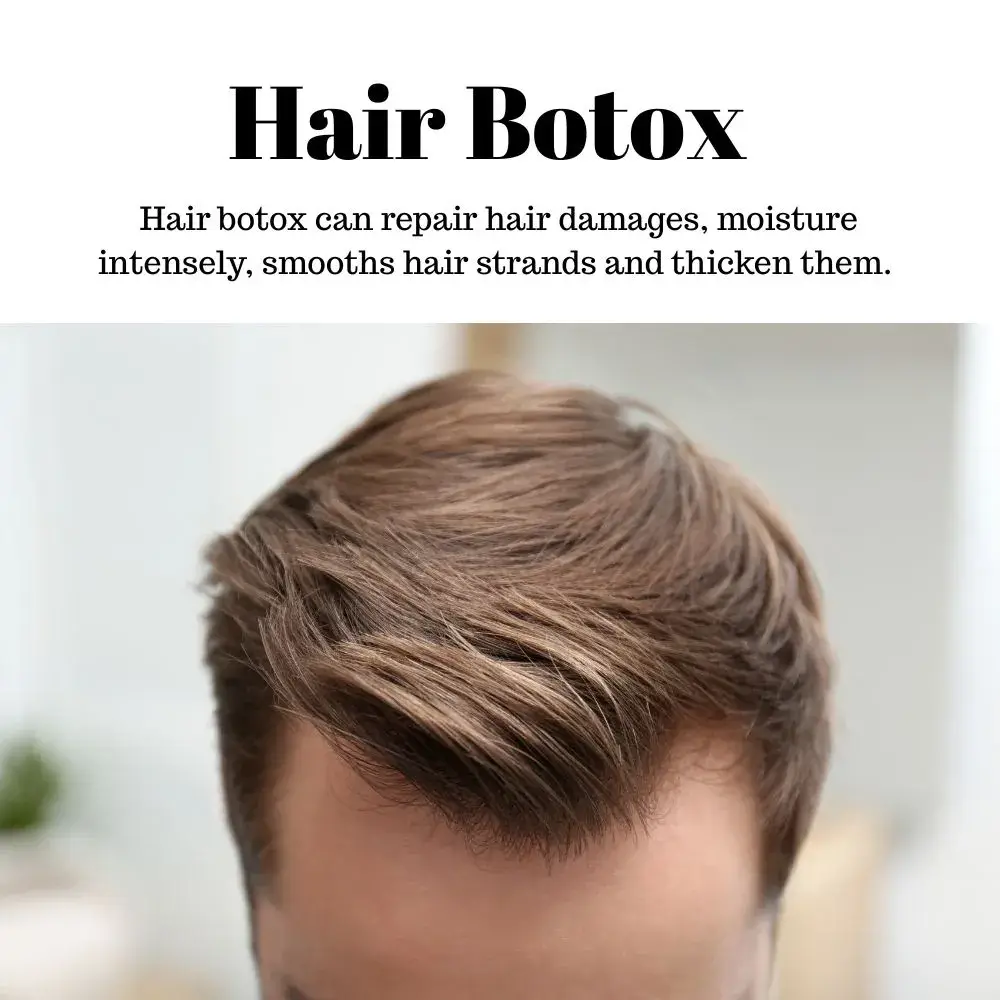
- Repairs hair damages: Repairs hair fibers damaged by chemical processes, heat, or environmental factors.
- Moisturizes intensely: Restores moisture lost by the hair, increasing its elasticity.
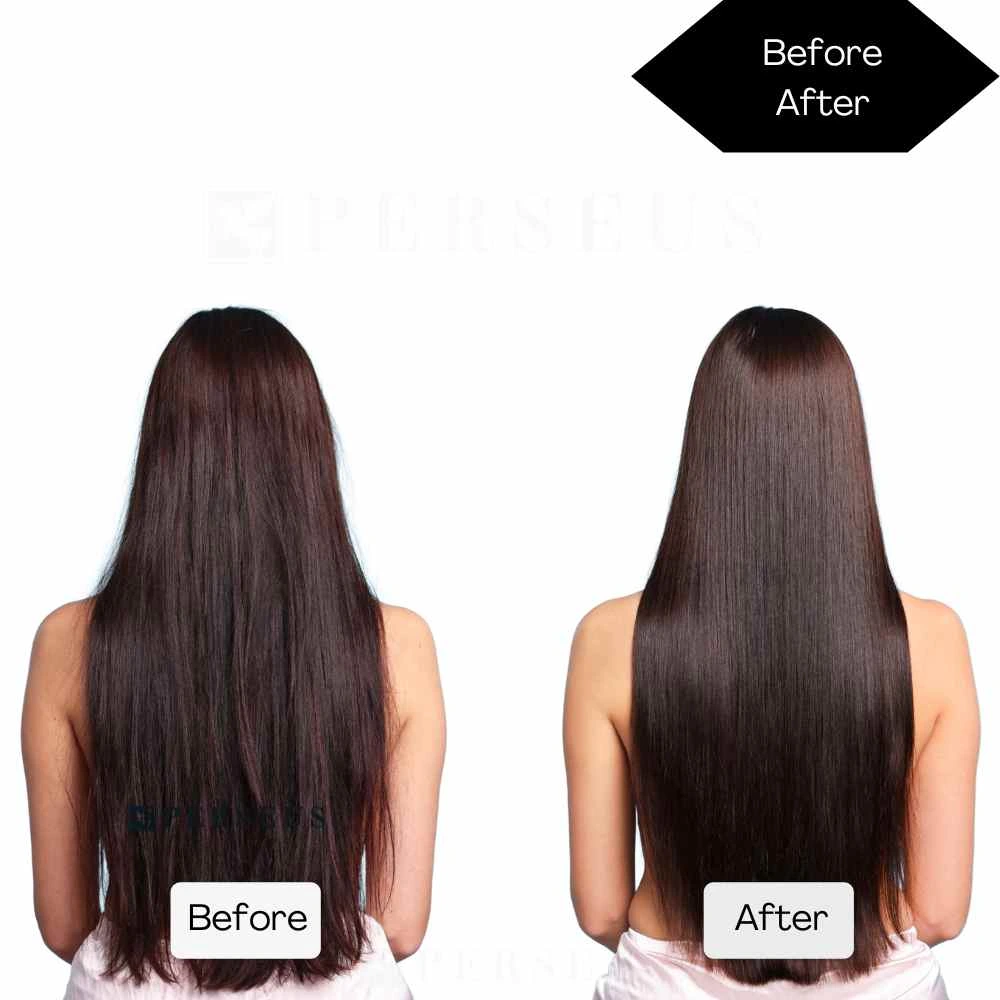
- Smooths hair strands: Eliminates frizz and gives hair a natural shine.
- Thicken them: Nourish hair strands with protein, vitamins, and amino acids for a thicker, healthier appearance.
Does hair botox straighten hair?
No, it doesn’t work in the same way as a Brazilian blowout. It doesn’t straighten hair like a chemical relaxer would. However, it eliminates frizz and makes hair lie flatter. By infusing hair with deep moisture and nutrients, it becomes slightly heavier, which can relax tight curls into loose waves. If you are considering hair botox, bear in mind that it is most effective on damaged, thinning or post-transplant follicles. If your hair is thick, frizzy or unmanageable, you may wish to consider methods such as keratin straightening.
Steps for Hair Botox
Hair Botox treatment involves infusing hair strands with a concentrated nourishing cocktail (amino acids, proteins, vitamins, and lipids). When performed during the follow-up period after hair transplantation, it is safest to carry out the process at a professional clinic under expert supervision.
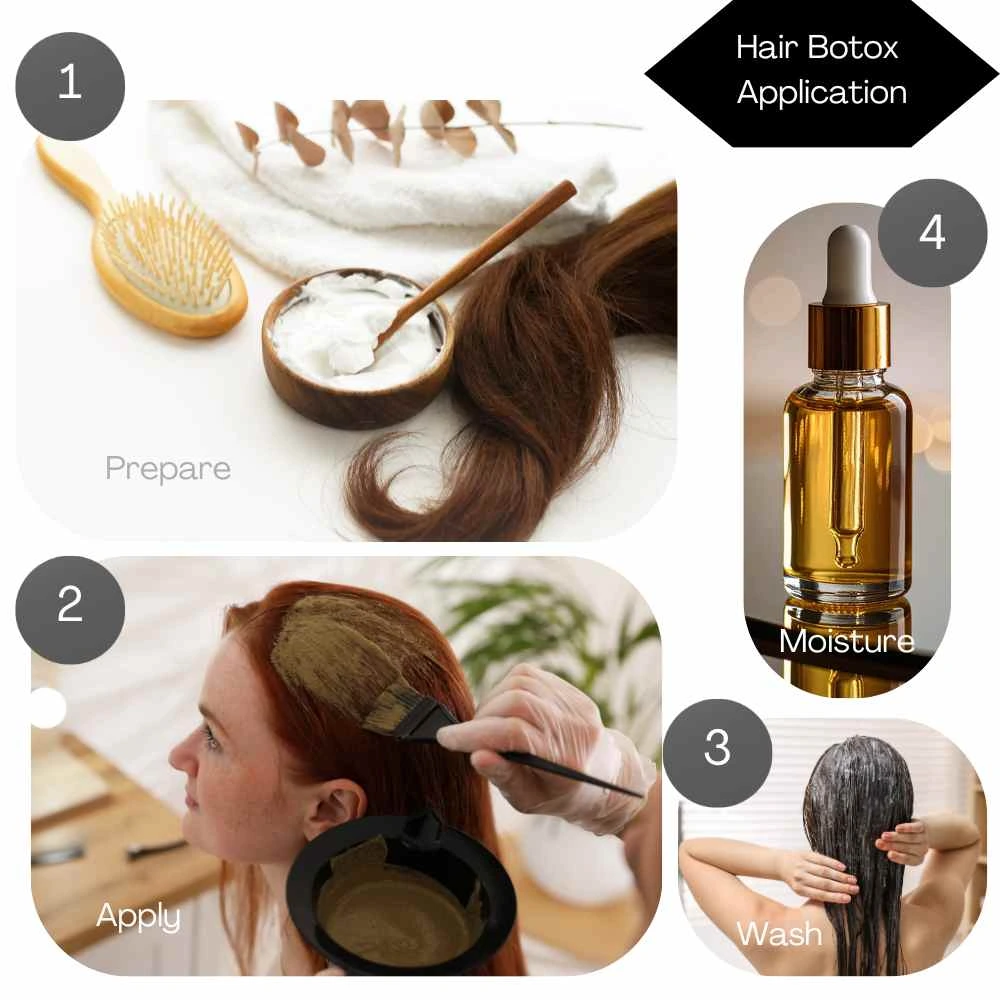
Here is the step-by-step Hair Botox application process:
Step 1: Cleaning the hair
The treatment begins by washing the hair with a purifying shampoo. The goal of this step is to open the hair cuticles, allowing botanical and nourishing ingredients to penetrate deep into the hair.
Step 2: Application of the product
The hair is gently dried with a towel but left slightly damp. Then, the Hair Botox mixture is applied strand by strand from the roots to the ends. However, if you are considering Botox after a hair transplant, the application technique should be adjusted by a specialist according to the sensitivity of the transplant area.
Step 3: Waiting for absorption
Allow approximately 30-45 minutes for the product to fully penetrate the hair strands. During this time, the hair can sometimes be heated using a bone or steam; heat helps the formula adhere better to the hair.
Step 4: Rinsing and drying
At the end of the waiting period, the hair is rinsed lightly, leaving some of the product in the hair. By the way, some brands may not be rinsed out completely. Then the hair is dried with a hair dryer.
Step 5: Heat Setting
This is the most critical step. Low or medium heat is applied to the hair using a hair straightener or blow dryer. This heat seals the proteins and vitamins into the hair shaft.
Is Hair Botox Safe After a Hair Transplant?
If you would like to have hair Botox after a hair transplant, you need to wait until the grafts have matured. Having hair botox following transplantation is safe. However, your scalp needs time to recover from the micro-trauma of the first few weeks after surgery. Most experts agree that the ideal time for hair Botox is six months after hair restoration. By this time, the newly implanted follicles will usually have taken root securely. So, your scalp’s natural barrier will be fully restored. Bear in mind that attempting any intensive treatment too early could disrupt the delicate healing environment, so give your scalp time to heal.
Key Safety Checklist:
Wait for 6 months: Ensure the scalp is no longer sensitive or inflamed.
Consult your surgeon: Everyone’s healing process, treatment, number of grafts, and doctor are different.
Avoid the roots: The treatment should be applied to the hair lengths, keeping the scalp clear to allow for natural breathability.
Hair Botox vs. Keratin: Which is Better for New Grafts?
| Feature | Hair Botox | Keratin |
|---|---|---|
| Goal | Repair & condition. | Smoothing. |
| Chemical | Safe/No Formaldehyde. | Harsh chemicals. |
| Curls | Keeps texture. | Flattens curls. |
| Best For | Damaged/Thinning. | Thick/Frizzy. |
Hair Botox vs PRP vs Keratin: Which Is Right After a Hair Transplant?
Most comparisons between botox, prp and keratin treatments focus on general hair health, frizz control, or cost. None of them ask the question that actually matters for transplant patients: which treatment is safe at which stage of recovery, and what does each one actually do to recently transplanted hair? The answers are meaningfully different.
| Treatment | Post-Transplant Safety | Duration |
|---|---|---|
| Hair Botox | Safe from month 6. Works on hair shaft only, does not affect follicles. Lower heat application than keratin. | 2–4 months |
| PRP | Safe from day of surgery. Clinic-administered only. Directly targets follicles and scalp tissue. | 3–6 months per session |
| Keratin | Safe from month 6. Requires high heat close to scalp more caution needed than hair botox. | 3–5 months |
PRP is the only one of the three that works at the follicle level. It uses the patient’s own platelet-rich plasma, injected directly into the scalp, to deliver concentrated growth factors to transplanted and native follicles. Clinical studies have shown that patients who received intraoperative PRP during FUE had significantly lower scalp redness at three months compared to those who did not, and faster hair growth onset. PRP is not a cosmetic treatment; it is a medical one, and it is typically performed at the transplant clinic, not a salon.
Hair botox and keratin are both surface treatments. Neither one reaches the follicle. This is both their limitation and their advantage in the post-transplant context: they cannot accelerate graft survival or stimulate growth, but they also carry no risk of follicle interference when applied correctly at the right time.
The key difference between hair botox and keratin for transplant patients is the heat requirement. Keratin treatment requires a flat iron applied close to the scalp to seal the formula. For a scalp that is still in the later stages of healing, that level of direct heat contact carries more risk than hair botox, which uses lower heat primarily on the mid-shaft and ends rather than directly on the scalp surface. This is why most specialists place hair botox as the preferred cosmetic treatment for months 6 to 12, with keratin as an option from month 6 onward but with more caution.
For patients asking whether they should do PRP or hair botox, the question is somewhat false. They serve different purposes and are not mutually exclusive. PRP supports the survival and growth of follicles. Hair botox improves the appearance and texture of the hair shafts that grow from those follicles. The ideal combination is PRP in the first 6 months as a medical protocol, and hair botox from month 6 onward as a cosmetic follow-up once the hair has enough length and the scalp has fully healed.
Ingredients & Application of Hair Botox
You can think hair botox like a nutritive cocktail. Below, there are the list of main ingredients found in professional hair botox treatments.
1. Collagen and keratin are structural proteins.
The treatment uses hydrolysed keratin to fill in microscopic cracks and holes in the hair shaft caused by damage. Collagen, on the other hand, provides elasticity and strength, preventing the hair from becoming brittle or breaking.
2. Hyaluronic acid is a hydrator.
Just as it is in skincare, hyaluronic acid is a moisture powerhouse. It can hold up to 1000 times its weight in water, helping to plump the hair fibre from the inside out.
3. Various vitamins
Vitamins B5 and E are particularly essential for hair botox therapy. Panthenol acts as a deep moisturiser and soothes the scalp, while vitamin E is a powerful antioxidant that protects the hair and scalp from oxidative stress.
4. Butters and natural oils.
Examples include argan oil, caviar oil, coconut oil and shea butter. These can be used to seal the cuticle and provide a protective barrier. They can also provide intense shine and silkiness.
5. Amino acids & peptides are the building blocks of proteins.
They help to strengthen the hair’s internal structure, making it more resilient against future heat or chemical damage.
What is NOT in Hair Botox
- Does not contain formaldehyde. Unlike traditional keratin treatments, it does not emit toxic fumes.
- Does not contain parabens. Reduces the risk of scalp irritation.
- Does not contain harsh sulfates. Ensures the treatment is gentle on newly transplanted follicles.
Hair Botox Benefits for Transplant Patients
Benefits of botox for hair:
✔ Strengthens newly transplanted hair grafts. Hair Botox infuses the first baby hairs with keratin and adenosine triphosphate, providing the structural strength.
✔ Deep hydration for the scalp & donor area. Hyaluronic acid in the botox treatment deeply hydrates the skin and hair follicles without clogging pores.
✔ Makes entire head of hair look uniform. It standardizes the hair texture of old and new hair.
✔ Gives volume without weight. For patients waiting for full density, Hair Botox gives an immediate illusion of fuller, more voluminous hair.
Why the Donor Area Benefits From Hair Botox
Almost every article about hair botox after transplant focuses on the recipient area. The donor area is rarely mentioned. This is a gap worth addressing, because the donor area often needs more cosmetic attention than the recipient zone, and sooner.
After FUE surgery, the donor area at the back and sides of the scalp undergoes thousands of punch extractions. The hair that remains in the donor zone has not been moved, but it has been through a traumatic environment: local anesthesia injections, mechanical pressure from extraction tools, and weeks of healing inflammation. By month 3 to 4, the donor area is fully healed from a medical standpoint. But the existing hair in that region is often noticeably drier, more brittle, and harder to style than it was before surgery.
This is where hair botox applied to the donor area from month 4 onward makes practical sense. The treatment does not touch the scalp in any way that would interfere with the healed extraction sites, it coats the existing hair shafts, improves their elasticity, and reduces breakage in an area that has been under sustained mechanical stress. Patients who have had large sessions of 3,000 grafts or more often notice the most visible improvement here, because the donor hair density reduction means each remaining strand is more exposed to friction and styling damage.
When getting hair botox specifically for the donor area, the application should avoid the scalp surface and focus on the mid-shaft to ends. This is particularly important if the hair is still short in that area. A skilled stylist familiar with post-transplant hair should be briefed before the session.
Are there any disadvantages?
Hair botox disadvantages are generally related to the limitations of hair botox.
Below are the major disadvantages and limitations:
❌ This is a luxury salon service. Based on the town and the clinic’s rep, a single session can be pricey. Also, since it needs to be repeated every 2 to 4 months to maintain the effects, the cumulative cost for a year of follow-up care can be high.
❌ Hair Botox is semi-permanent, so it gives only a temporary effect. Once the coating of proteins and vitamins washes out, the hair returns to its original state.
❌ It cannot permanently transform your hair structure like hair transplantation. For example, it cannot straighten kinky hair as in an Afro FUE hair transplant.
❌Even the best hair botox brand can cause greasy hair. If the product is applied excessively or not rinsed properly, it can weigh down hair or make it appear greasy, especially for people with very fine or naturally oily hair. Considering hair botox coiffure price, it may not be worth taking this risk.
❌Heat used to seal Botox can slightly alter the color of dyed hair. Additionally, the products used in Botox can rarely cause allergic reactions in some individuals.
| Expectation | Reality |
| Permanent Straightening | Temporary Smoothing (2-4 months) |
| One-time Fix | Requires Maintenance & Sulfate-free Products |
| Cheap DIY | Professional Application is Recommended |
- It does not last long relative to its cost. A single session costs between $150 and $350 in Turkey and $300 to $600 in Western Europe or the US. The results last 2 to 4 months. For patients in the active recovery phase who are already spending on post-transplant products, PRP sessions, and vitamins, adding a treatment that needs repeating every three months is a real cost consideration. PRP, which is more expensive per session, delivers effects that last longer and address a more fundamental biological need.
- Heat near a healing scalp carries risk even at month 6. The standard guidance of waiting 6 months is a baseline, not a guarantee of full safety for all patients. Patients with a history of slow healing, active folliculitis, or persistent scalp sensitivity should discuss with their surgeon before booking. The flat iron used in hair botox, while applied primarily to the hair shaft rather than the scalp directly, operates at temperatures between 180 and 230 degrees Celsius. For a scalp still undergoing microvasculature development, even indirect heat transfer through the hair shaft is a variable worth controlling.
- Product quality varies enormously. The term hair botox is not regulated. Any salon can call any deep conditioning treatment a hair botox. The actual active ingredients, their concentrations, and the presence or absence of formaldehyde-releasing compounds vary widely by brand and country. In Turkey, most reputable clinics and hair transplant centers use professional-grade products from brands such as Felps, Richée, Perseus or L’Oreal Professionnel. At budget salons, the product may be a basic keratin mask marketed under the hair botox name. Patients should ask specifically which product will be used and verify the brand before agreeing to treatment.
- It is not suitable for very short hair. Hair botox requires sufficient shaft length to apply, process, and seal the formula. If the transplanted hair is still under 3 to 4 cm in length, the treatment has limited surface area to work on and the heat sealing step may need to be applied closer to the scalp than is ideal. Most specialists recommend waiting until there is at least 5 cm of growth before attempting hair botox on the recipient area.
- Sulfate shampoos wash it out faster. Most post-transplant shampoos are already sulfate-free, which is fortunate, sulfates are the primary reason hair botox results fade quickly. Patients already on a sulfate-free protocol from their transplant aftercare will automatically extend the results of their hair botox treatment without any additional effort. Switching back to a regular commercial shampoo, however, can halve the duration of the treatment’s effects.
Perseus Recommends
A sulfate-free shampoo is essential after hair botox. Sulfates and sodium chloride in regular shampoos strip away the botox layer quickly — reducing results from months to weeks. Perseus Post Hair Transplant Repair Shampoo is sodium chloride-free and sulfate-free, making it the ideal choice to extend and protect your hair botox results.
Shop Repair Shampoo →Hair Botox Aftercare
- Do not wash your hair for the first 2-3 days after the hair botox treatment. To allow the product to fully penetrate the hair strands and seal the proteins, do not wash your hair for at least 2 days after the treatment. Your doctor will tell you the ideal duration. The information here is intended to provide general guidance only. Therefore, contact the person who performed the treatment for the most accurate information specific to your situation.
- A sulfate-free shampoo is essential. Sulfates and sodium chloride (salt) in regular shampoos quickly strip away the Botox layer. Use professional products labeled sodium chloride-free to ensure the longevity of the Botox treatment. You can check out Perseus aftercare shampoo, which meets this criterion exactly.
- Stop using heat for a while. Hair botox is already heat-sealed, but using a flat iron at high temperatures every day afterward can disrupt the hair’s water balance.
- Avoid chlorine and salt water: Chlorine in pools and salt in the sea dry out the botox layer. If you must swim, wet your hair with fresh water beforehand and wear a swim cap. Stop using hair sprays that contain salt water for a while.
- Moisturize regularly. Applying a hair botox hair mask once a week preserves the shine and softness of your hair. You can give yourself high-moisturizing 15-minute mesotherapy sessions at home by applying Perseus mesotherapy serum with a dermaroller.
How to wash and care for the hair?
Choose a shampoo with a very low or no salt and sulfate content. Make sure the water temperature is lukewarm, especially for your first wash. Avoid using hot water, as it opens the hair cuticles and causes proteins to leach out. Clean your scalp gently with your fingertips, massaging it without scratching, just as you would after your first hair transplant wash. Do not wash your hair every day; 2-3 times a week is ideal. When drying, do not rub your hair; gently pat it dry with a microfiber towel.
Hair Botox Costs in Turkey & Beyond
In 2026, the average hair botox cost in Turkey is more value-priced than Europe and the US. Considering as a deep conditioning and keratin-like repair treatment cost for hair in Istanbul, here are the average prices in Turkey:
Low-end salons: $50 – $80
Mid-range salons / clinics: $80 – $120
Luxury salons or medical aesthetic clinics: $120 – $150+
So the typical price most international patients pay is around $80–$120 per session.
Compared with Other Countries
USA: $250 – $500
UK: $200 – $400
UAE: $180 – $350
Turkey remains significantly cheaper due to lower operating costs and strong competition in the beauty industry.
Where to Get Hair Botox After a Hair Transplant?
For patients who had their transplant in Istanbul, the most practical and cost-effective option is to return to Turkey for hair botox at the 6-month mark or to have it done locally at a clinic familiar with post-transplant hair. The key is finding a provider who understands the specific context of transplanted hair, not just a general salon offering the service as an add-on.
Turkey, and Istanbul in particular, has become the global center for hair transplant medical tourism. The same ecosystem that supports high-volume FUE procedures also supports a well-developed network of post-transplant cosmetic services.
Hair botox in Istanbul is available at three types of providers:
- Hair transplant clinics that offer hair botox as part of a follow-up package. These are the most suitable option for transplant patients because the staff understand the recovery context and will apply the treatment appropriately. Clinics such as Heva Clinic, Vantage Cosmetic Clinic, etc. in Istanbul offer post-transplant cosmetic services alongside their surgical work.
- Dedicated hair salons in Nişantaşı, Şişli, and Beyoğlu that specialize in professional hair treatments. In Istanbul’s higher-end salon market, Brazilian and professional-grade hair botox brands are widely available. Prices at these establishments range from 800 to 2,500 TL depending on hair length, with the equivalent of $25 to $80 USD at current exchange rates.
- Medical aesthetics clinics that bundle hair botox with other scalp treatments such as mesotherapy or PRP. These are particularly relevant for patients who want to combine a PRP maintenance session with a hair botox treatment in the same appointment, which some Istanbul clinics now offer as a combined package.
For patients outside Turkey who want hair botox closer to home, the treatment is widely available across major cities globally. The price range, however, is significantly higher.
- In the United Kingdom, professional hair botox sessions at London salons such as those in Mayfair or Chelsea typically range from £150 to £280. Clinics such as the Vera Clinic London or DHI Global Medical Group offer post-transplant hair botox within a clinical setting and are familiar with the specific requirements of transplant patients.
- In Germany, the treatment is available at hair clinics in Berlin, Munich, and Hamburg, ranging from €120 to €250 per session. Clinics such as Haarklinik Hamburg and Moser Medical in Vienna offer hair botox as part of structured post-transplant programs.
- In the United States, the treatment ranges from $200 to $500 per session at professional salons in New York, Los Angeles, and Miami. Post-transplant hair care is offered at clinic-adjacent salons associated with centers such as Bosley and Ziering Medical in California.
- For patients in the Middle East, Before the Iran-U.S. war, Dubai have had a strong market for professional hair botox at medical aesthetics clinics. JLT and DIFC areas had several well-reviewed providers familiar with post-transplant hair conditions.
Hair Botox Photographs
FAQs about hair botox treatment
Can hair botox be done at home?
Some versions can be made at home. If you are using hair botox as an intensive care mask containing only keratin, collagen, hyaluronic acid, vitamins, and amino acids, you can apply the botox mask to your damp hair after washing it. You should apply the product from the middle to the ends, avoiding contact with the roots. The waiting time for your mask varies from brand to brand. It is often left on for 20 to 40 minutes. Depending on the product, a bonnet or even a warm towel may be recommended for some products. Rinsing may also vary depending on the product; it may be a light rinse or require complete cleansing. Products applied at home generally moisturize the hair, reduce frizz, and add shine. However, they may not provide results as intense and long-lasting as professional hair botox done at a salon.
How long does a hair botox treatment take?
For short hair, it can take between 45 minutes and 1 hour, while for long and thick hair, this time can extend up to 2 hours. On average, it is a 1 to 2 hour process.
Is hair botox sold in stores?
Yes, hair botox complex hair care creams, leave-in hair care products for home use, botox hair masks, or some products that provide a botox effect may be sold at stores such as Gratis, Watsons, Sephora, Ultra Beauty, CVS, or Rossman.
When does hair botox not damage transplanted hair?
Most surgeons suggest waiting at least 3-4 months after your transplant before getting hair botox cure. It is not advised during the early recovery period after FUE or DHI because:
1. The grafts are still stabilizing in the scalp.
2. The follicles are sensitive to heat and chemicals.
3. Styling tools (flat irons used in hair botox) can irritate the scalp.
Does hair length affect the price?
Yes, hair length for botox is the determining factor for the price at most salons and clinics. Example price by hair length in a typical Turkish salon:
Short hair: $50 – $70
Medium length: $70 – $100
Long hair: $100 – $150
References
Gavazzoni Dias MF. Hair cosmetics: an overview. Int J Trichology. 2015;7(1):2-15. doi:10.4103/0974-7753.153450
- Fourteenjay. Hair botox is a thing, but it’s not what you’re thinking. Fourteenjay News. Accessed March 6, 2026.
Sinclair R. Healthy hair: what is it? J Investig Dermatol Symp Proc. 2007;12(2):2-5. doi:10.1038/sj.jidsymp.5650046
Marsh J, Gray J, Tosti A. Healthy Hair. Springer Science & Business Media; 2015.
- Theis L. What is hair botox? everything you need to know about the deep conditioning treatment. Southern Living. Updated June 12, 2024. Accessed March 6, 2026.
Shapiro R, Unger WP. Hair Transplantation. 5th ed. Boca Raton, FL: CRC Press; 2011.
Unger WP, Shapiro R, Unger RH, Unger M. Hair Transplantation. 6th ed. Boca Raton, FL: CRC Press; 2015.
Avram MR, Rogers NE. Hair transplantation. In: Bolognia JL, Schaffer JV, Cerroni L, eds. Dermatology. 4th ed. Philadelphia, PA: Elsevier; 2018.
True RH, Dorin RP. Postoperative care following follicular unit transplantation and follicular unit extraction. In: Unger WP, Shapiro R, Unger RH, Unger M, eds. Hair Transplantation. 6th ed. Boca Raton, FL: CRC Press; 2015.
Sadick NS, Rothaus KO. Advances in hair restoration surgery. J Drugs Dermatol. 2017;16(11):1045-1051.
Trüeb RM. Cosmetics for the hair and scalp. In: Trüeb RM, Tobin DJ, eds. Aging Hair. Berlin: Springer; 2010. doi:10.1007/978-3-540-89656-5.
Monselise A, Cohen DE, Wanner M, Shapiro J. What causes hair loss? J Cosmet Dermatol. 2017;16(3):369-376.
Jimenez-Acosta F, Ponce-Rodriguez I. Hair transplant: the state of the art. Actas Dermosifiliogr. 2017;108(4):293-302. doi:10.1016/j.ad.2016.10.012
D’Souza P, Dhurat RP. Hair cosmetics: what’s new? Indian J Dermatol Venereol Leprol. 2011;77(6):644-648.
Recommended Reading
✦ Advanced Regenerative Therapy: Exosome After Hair Transplant — Discover how exosome therapy accelerates tissue repair, reduces inflammation, and stimulates dormant follicles during post-op recovery.
✦ DHT Blocker Integration: Finasteride After Hair Transplant — Learn when and how to safely start or resume finasteride to protect your native hair and secure long-term transplant density.
✦ Milestone Recovery: 1 Month After Hair Transplantation: Real Photos — A close look at the critical first 30 days of healing, navigating the shedding phase, and distinguishing normal scalp changes from issues.


Receive offers, product alerts, styling inspiration and more. By signing up, you agree to our Privacy Policy.
- info@perseusstyle.com